Core Principles and Classification Logic of Centrifugal Pumps
In the field of modern industrial fluid transportation, the centrifugal pump is one of the most widely used mechanical devices. Its core operating principle is based on the law of centrifugal force: the mechanical energy of the driver (usually an electric motor) is transferred to the liquid through a high-speed rotating impeller, simultaneously increasing the liquid's kinetic energy and pressure energy. Subsequently, the liquid is guided by the volute-shaped pump casing toward the outlet, achieving continuous fluid delivery.
Based on the arrangement of the pump shaft relative to the ground, centrifugal pumps are clearly divided into two main camps: the Horizontal Centrifugal Pump and the Vertical Centrifugal Pump. This axial definition determines not only the appearance of the equipment but also fundamentally affects the installation mechanics, hydrodynamic characteristics, and the convenience of long-term maintenance.
In the current market distribution, the Horizontal Centrifugal Pump remains the "evergreen" of the industrial world, accounting for over 70% of the global industrial pump market due to its simple structure, low center of gravity, and ease of maintenance. However, with rising land costs in urbanization and increasing demand for specific working conditions (such as deep well water lifting or pressure boosting in limited spaces), vertical structures have demonstrated irreplaceable value. Understanding the differences between these two is the first step in ensuring the efficient and stable operation of a fluid system.
In-Depth Analysis of the Horizontal Centrifugal Pump
Structural Characteristics and Mechanical Layout
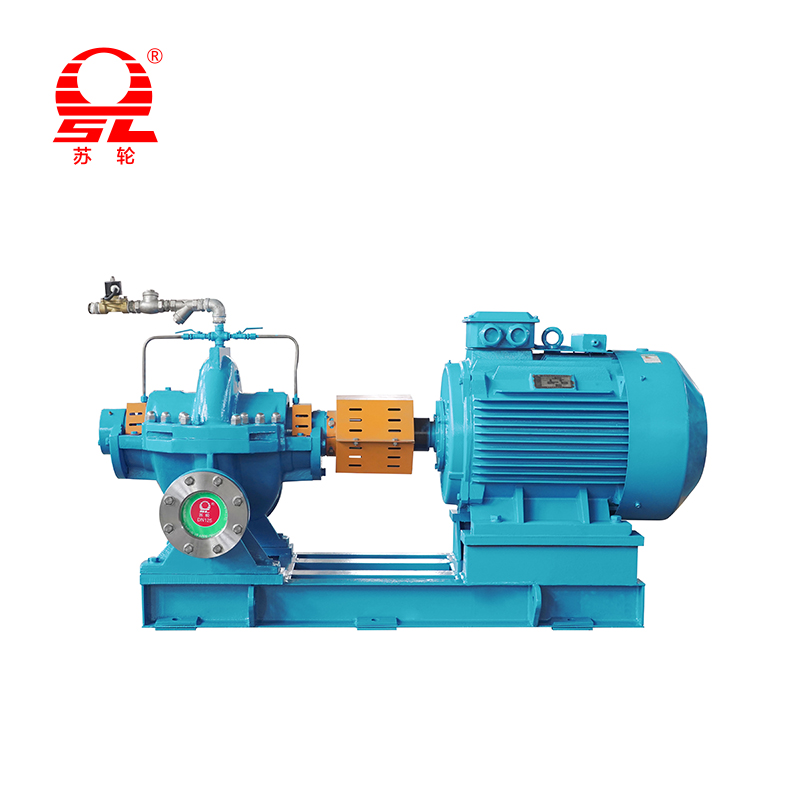
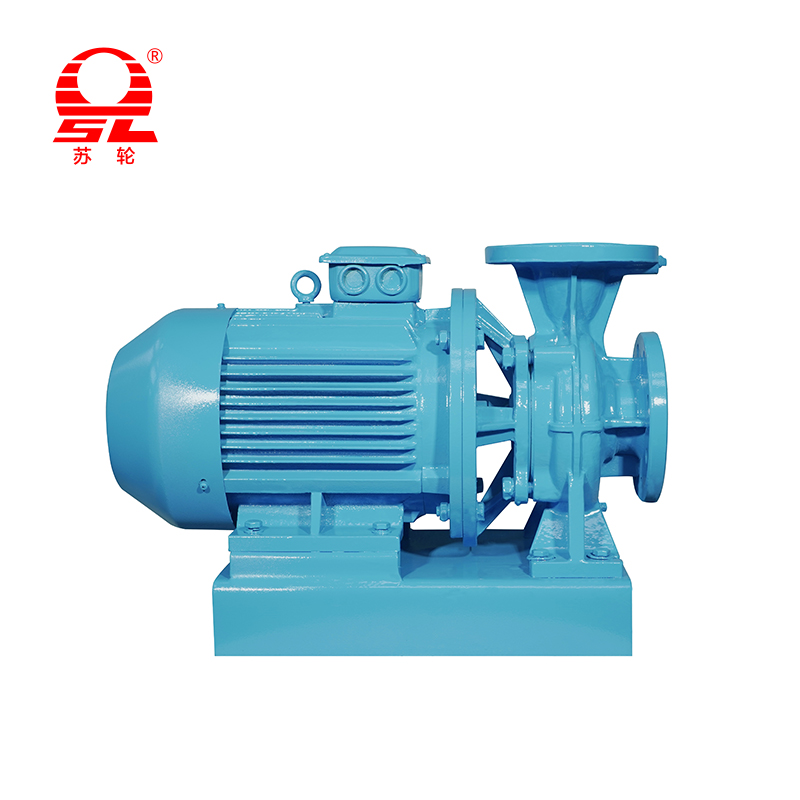
The prominent physical feature of a Horizontal Centrifugal Pump is that its pump shaft is arranged horizontally. Typically, the pump body, bearing housing, and driving motor are arranged sequentially in a horizontal line on a common metal baseplate. This "linear" layout keeps the motor output shaft and the pump shaft on the same horizontal plane through a coupling.
Due to its low center of gravity, this type of pump exhibits excellent mechanical stability during operation. The suction and discharge nozzles are usually located on the sides or top of the horizontal centerline, making the piping layout very intuitive in most industrial plants.
Technical Advantages
- Superior Stability and Low Vibration: Since the overall center of gravity of the Horizontal Centrifugal Pump is close to the ground and the baseplate has a large contact area, it can effectively absorb radial forces and residual vibrations generated during operation. This is crucial for extending the life of bearings and mechanical seals.
- Extreme Ease of Maintenance: This is the primary reason for its popularity in factories. During routine inspections or when replacing wearing parts (such as impellers or seals), operators can usually remove the rotor components from the top or back simply by disconnecting the coupling and pump cover, without moving the motor or dismantling the inlet and outlet piping.
- Wide Performance Range: Because it is not constrained by vertical space, the design of the Horizontal Centrifugal Pump can be very flexible, covering almost all industrial requirements from low flow and low head to ultra-large flow and high head.
Typical Application Scenarios
The Horizontal Centrifugal Pump is the preferred solution for industrial circulation systems:
- Municipal Water Supply and Drainage: Horizontal pressure systems in large-scale water plants.
- Petrochemical Industry: Installations that require extremely high reliability and frequent online monitoring with fast repair capabilities.
- Agricultural Irrigation: Outdoor installations where maintenance space is abundant and environmental adaptability is strong.
- Paper and Light Industry: Transporting slurries with certain concentrations, as the horizontal structure is easier to clean.
In-Depth Analysis of the Vertical Centrifugal Pump
Structural Characteristics and Vertical Advantages
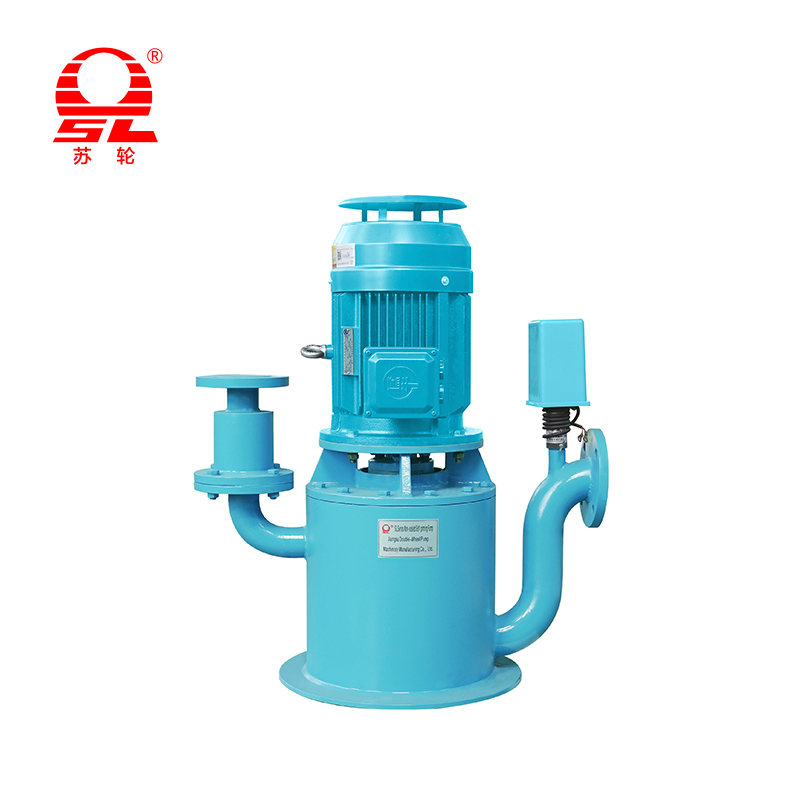
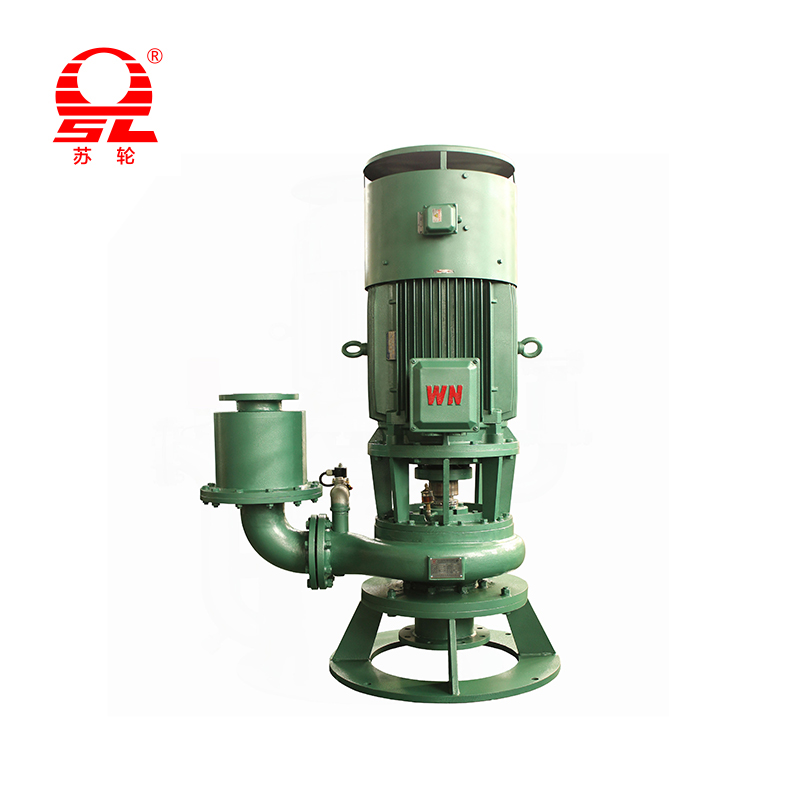
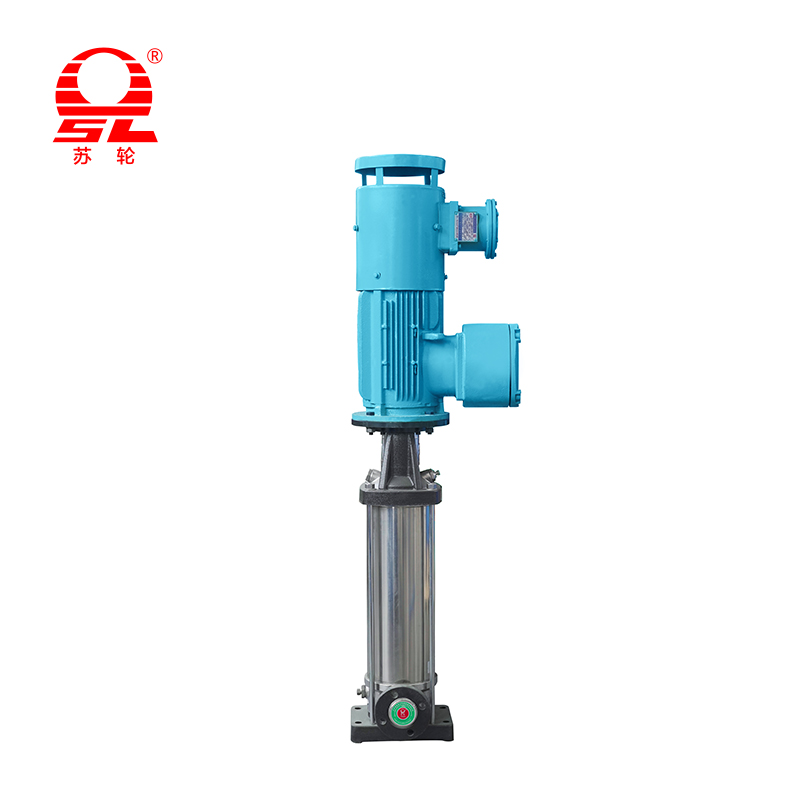
Contrary to the horizontal pump, the axis of a Vertical Centrifugal Pump is perpendicular to the ground. Its motor is usually mounted on top of the pump body, transmitting torque through a vertical shaft. Depending on the application, it can be categorized into vertical inline pumps (installed like a valve) and vertical long-shaft pumps (such as deep well pumps or submerged pumps).
Technical Advantages
- Minimal Footprint (Space-saving): In expensive indoor machine rooms or cramped engine rooms, the vertical structure can save up to 75% of floor space.
- Excellent Suction Performance: When handling low-pressure water sources or liquids prone to vaporization, the Vertical Centrifugal Pump can have its pump head submerged below the liquid level. This allows the liquid to flow in naturally via gravity, perfectly solving cavitation problems.
- Compact Piping Layout: For vertical inline pumps, the inlet and outlet are on the same horizontal line, allowing them to be installed directly in the middle of a pipeline, which greatly simplifies installation engineering.
Typical Application Scenarios
- High-rise Building Pressure Boosting: Saving expensive commercial real estate space.
- Deep Well Water Lifting and Mine Drainage: Meeting vertical depth requirements.
- Offshore Platforms: Fluid transportation in space-constrained environments.
Core Dimension Comparison: Vertical vs. Horizontal
NPSH and Suction Performance
The Horizontal Centrifugal Pump: Since its inlet is usually at the side and the installation position must be higher than or equal to the liquid level base, it has limitations in suction lift. If the inlet pressure is insufficient, cavitation is likely to occur, leading to impeller damage.
The Vertical Centrifugal Pump: Its natural advantage is that the first-stage impeller can be submerged below the liquid (as in deep well or tank-bottom pumps). By increasing the submergence depth, the vertical structure significantly reduces the system's NPSHr (Net Positive Suction Head required), performing excellently when handling volatile or low-level media.
Mechanical Stress and Bearing Life
The mechanical models of the two are vastly different, directly affecting the frequency of consumable replacement:
- Horizontal Centrifugal Pump: Bearings primarily bear radial loads (the weight of the impeller and the radial thrust of the liquid). Since gravity is perpendicular to the shaft axis, bearing lubrication and cooling are relatively uniform.
- Vertical Centrifugal Pump: Bearings must not only bear radial forces but also overcome the axial load (gravity) of the entire rotor assembly. Long-shaft vertical pumps often require multiple guide bearings, placing high demands on the motor's thrust bearings. If alignment is inaccurate, the risk of vibration is generally higher in vertical pumps than in horizontal ones.
Installation Space and Engineering Cost Comparison
| Dimension |
Horizontal Centrifugal Pump |
Vertical Centrifugal Pump |
| Shaft Orientation |
Parallel to ground |
Perpendicular to ground |
| Center of Gravity |
Very low, high stability |
Higher, requires focus on stability |
| Footprint |
Larger (Horizontal extension) |
Minimal (Vertical extension) |
| Maintenance Difficulty |
Low (No motor removal needed) |
High (Requires lifting equipment) |
| Installation Base |
Heavy rectangular concrete base |
Smaller base or flange support |
| NPSH Performance |
Limited by suction height |
Excellent (Can be submerged) |
| Manufacturing Cost |
Lower (Mature, universal design) |
Higher (Vertical loads/lubrication) |
| Main Load Direction |
Primarily radial force |
Both axial thrust and radial force |
Performance Differences of Key Components
Mechanical Seals
For a Horizontal Centrifugal Pump, the mechanical seal is in a horizontal position, allowing lubricating oil or flush fluid to cover the seal face evenly. In a vertical pump, if the seal is at the very top, air can easily accumulate (forming an air pocket), leading to dry running and seal ring burnout. Therefore, vertical pumps often require more complex venting designs or external flushing schemes.
Drive Systems and Couplings
- Horizontal Centrifugal Pump: Can be flexibly matched with electric motors, diesel engines, or even steam turbines. Its couplings are usually flexible, allowing for minor axial alignment errors.
- Vertical Centrifugal Pump: Most can only be matched with vertical motors. Their couplings often require high rigidity or semi-rigid connections to ensure precise alignment in the vertical direction.
How to Choose the Right Pump Type for Your Project
Decision Matrix
- Is there a footprint limitation?
- If it is an offshore platform, high-rise building machine room, or underground mine, the Vertical Centrifugal Pump is the only choice.
- If it is in an open industrial area, the Horizontal Centrifugal Pump is the more economical and maintainable first choice.
- What are the physical properties of the medium?
- When handling high-temperature or high-pressure fluids, horizontal pumps have better expansion compensation capabilities.
- When handling low-pressure water sources or requiring deep-well pumping, vertical pumps have superior anti-cavitation capabilities.
- What is the expected maintenance frequency?
- If your project lacks large lifting equipment and requires operators to quickly replace seals, the low center of gravity and easy-to-disassemble structure of the Horizontal Centrifugal Pump will save significant downtime costs.
Industrial Knowledge: The "Heart" of the Pump - The Impeller
Impeller Types and Performance Impact
Regardless of the installation method, the impeller design defines the performance boundaries:
- Closed Impeller: Highest efficiency, suitable for clean water or low-viscosity fluids; this is the most common configuration for the Horizontal Centrifugal Pump.
- Open/Semi-open Impeller: Not easily clogged, suitable for transporting sewage containing solids; widely used in vertical sewage pumps.
- Axial Force Balance: In a Horizontal Centrifugal Pump, pressure is usually offset through balance holes or back vanes. In vertical pumps, the balance of axial force often relies directly on robust motor bearings.
- Energy Optimization: Variable Frequency Drives (VFD) can effectively adjust the operating curves of both types of pumps, saving significant electricity during non-full load states.
Frequently Asked Questions (FAQ)
Common Technical and General Questions
- Q: Can a Horizontal Centrifugal Pump be used outdoors without cover?
A: Yes, but you must ensure the motor has an appropriate protection rating (such as IP55 or higher) and use a rain cover. Due to its low center of gravity, the horizontal structure is more stable than a vertical pump in outdoor environments with high wind loads.
- Q: Why is a vertical pump more prone to vibration than a horizontal pump?
A: The motor of a vertical pump is at the top, creating a high center of gravity and a long lever arm. Any minor misalignment or impeller imbalance is amplified by the "lever effect," creating resonance.
- Q: Can I install a horizontal pump vertically?
A: This is strictly prohibited without consulting the manufacturer. The bearings and lubrication system of a horizontal pump are designed for horizontal forces. Vertical installation will cause bearings to fail rapidly due to excessive axial loads, and the seal area is highly susceptible to air locking.
- Q: Which pump is more efficient?
A: Efficiency depends more on the hydraulic model design, impeller precision, and surface roughness than on the installation orientation. At the same flow and head, the theoretical efficiency of both can be designed to be very similar.
- Q: Which pump produces less noise during operation?
A: Theoretically, the Horizontal Centrifugal Pump has lower high-frequency noise because its base rigidity is better. If a vertical pump is not installed correctly, it can produce low-frequency vibration noise similar to a "shaking long pole."
- Q: Why is the initial investment for a vertical pump sometimes higher than a Horizontal Centrifugal Pump?
A: Although it takes up less space, vertical pumps often require custom vertical high-thrust motors, and the pump body often uses a more sophisticated multi-stage guide vane design, making the manufacturing process more complex than a simple horizontal volute pump.


 language
  русский
 عربى
عربى Indonesia

 2026.02.16
 Industry News