language
 русский
 عربى
 Indonesia
Home / Blog / Industry News / Centrifugal or Self-Priming Pump: Which One Is Better for Your Process
News


 2026.10.19
 Industry News
A chemical transfer station is installed at floor level, but the storage tank sits 2.5 meters below the pump inlet. A standard centrifugal pump without a flooded suction line will not deliver liquid on startup because the impeller needs the suction pipe to be full and under positive pressure. A self-priming pump, by contrast, removes the air from that suction pipe during the first few seconds and replaces it with liquid. That single operational difference explains why the answer to “Which is better, centrifugal or self-priming pump?” is rarely a matter of brand loyalty. It depends on the suction condition, the amount of air in the line, the fluid temperature, the required flow, and the operating pattern of the process.
When the liquid level is above the pump centerline, a standard centrifugal pump is usually the better choice. When liquid has to be lifted from an open pit, a chemical drum, or an underground basin, a self-priming pump avoids the need for a foot valve, a vacuum pump, or a manually filled priming chamber. In many plants, the failure is not caused by a bad pump. It is caused by selecting the pump type before measuring the available suction lift and the available net positive suction head. This article explains the difference from a manufacturer and factory engineering perspective, then gives the selection rules that apply to real industrial installations.
Suction condition is not just one of many parameters. It determines whether a pump will start reliably after every shutdown, after a piping repair, or after a switch from one tank to another. A standard centrifugal pump is designed for flooded suction. A self-priming pump is designed to handle the air that would otherwise block a standard centrifugal pump. If you focus only on flow and head, you may choose a pump that works on paper but fails on the first startup because the tank level is lower than the pump inlet. That is why a responsible product comparison must start with the hydraulic system, not with the pump name.
A centrifugal pump converts the rotating energy of an impeller into kinetic energy, then into pressure. Once the casing is full of liquid, the impeller produces a continuous stream with little pulsation. Industrial users choose centrifugal pumps for large water volumes, stable pressure, compact construction, and smooth operation. For services where the liquid is clean and the suction head is positive, a standard centrifugal pump is the most economical option both in first cost and in energy consumption.
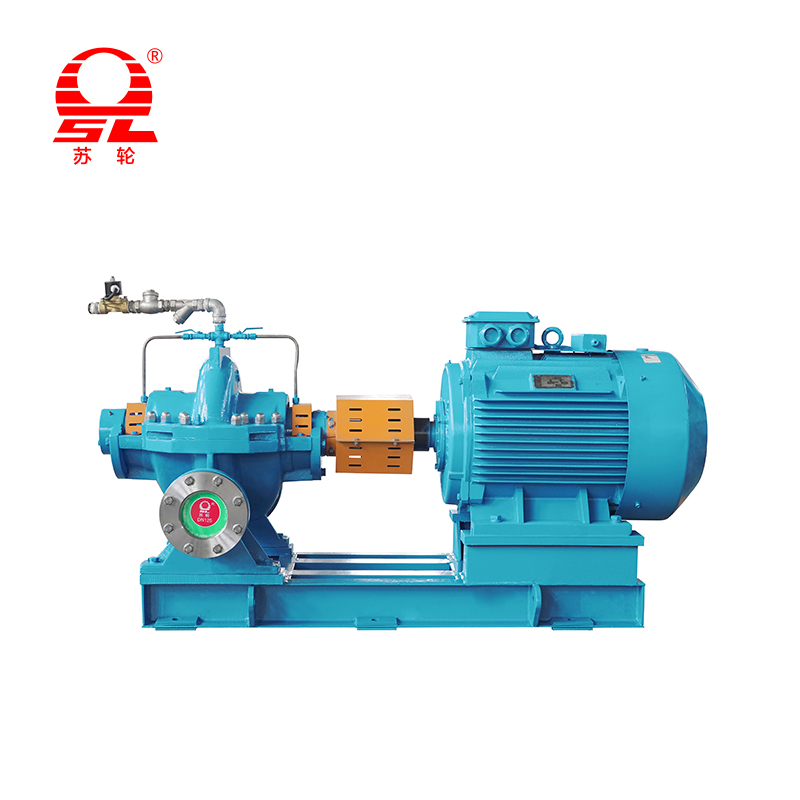
For those reasons, plant engineers usually install standard centrifugal pumps below the liquid source or in pump stations where the water level remains above the impeller eye. In this service, the SLW series horizontal centrifugal pump is a common workhorse for cooling water circulation, pressure boosting, and general plant transfer. It can be supplied with various mechanical seal arrangements and impeller types depending on the liquid condition. For clean water and moderate heads, it delivers reliable operation with a familiar maintenance routine.
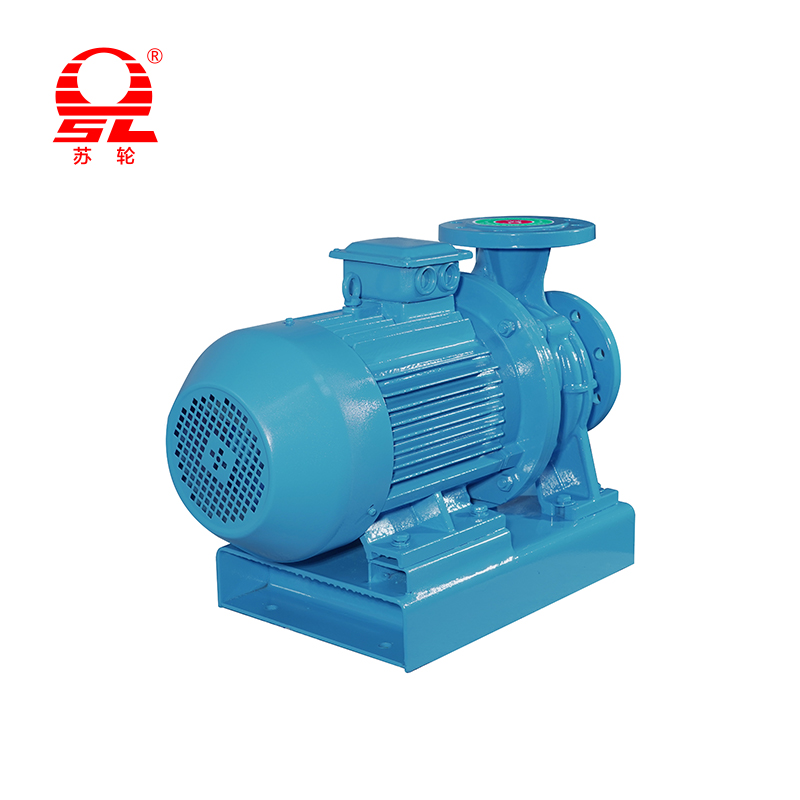 SLW Series Horizontal Centrifugal Pump[email protected] / [email protected]View Product →
A standard centrifugal pump is not a weak option. It is the right solution when the hydraulic environment supports it. The problem appears when engineers try to force a centrifugal pump into a suction lift situation without adding a priming system. In that condition, the pump may spin, the impeller may shear air, but the liquid will not move. The discharge pressure stays low, the motor may run hot, and the operator assumes the pump is broken. In most cases, the pump is fine technically; the pump type is wrong for the application.
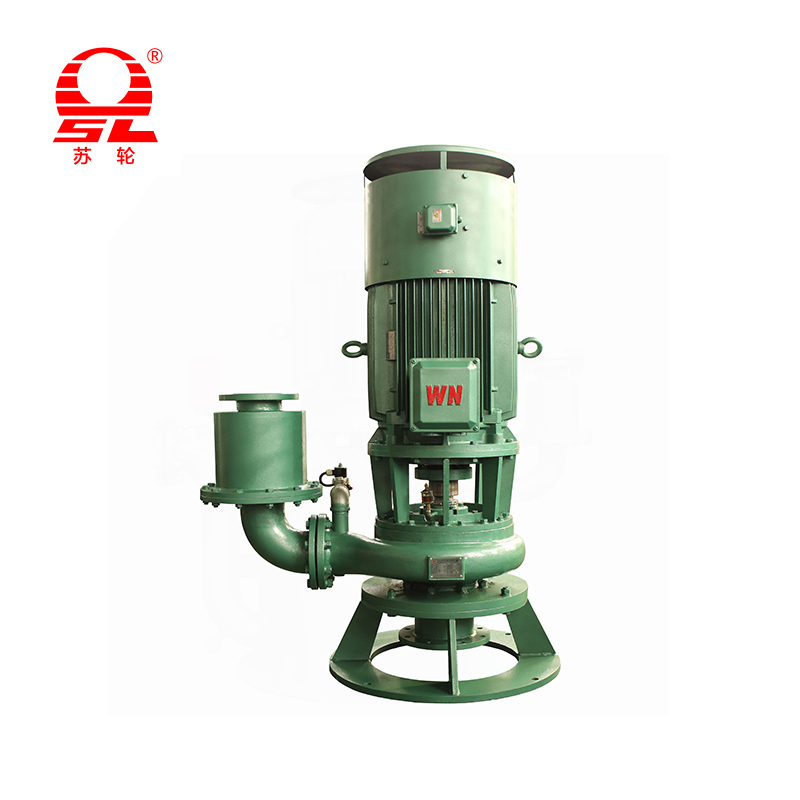
A self-priming pump is usually a centrifugal pump with a modified casing and an internal liquid separation chamber. On the first run, you fill the pump casing manually. After that, the impeller mixes air with liquid, and the separation chamber allows air to escape while the liquid falls back toward the impeller. This process creates a low-pressure zone and pulls more air from the suction pipe. Once the pipe is filled with liquid, the pump works like a centrifugal pump and moves fluid at a pressure determined by the impeller geometry and speed.
The main advantage is practical: you can place the pump above the tank or pit and still transfer liquid from below. This reduces excavation work, keeps the motor dry, and simplifies daily inspection. For chemicals, wastewater, and abrasive liquids, the ability to avoid a deep pump pit is a serious safety and maintenance benefit. Because the pump does not have to be lowered into the liquid, operators can access the casing, valve, and impeller without entering a confined space.
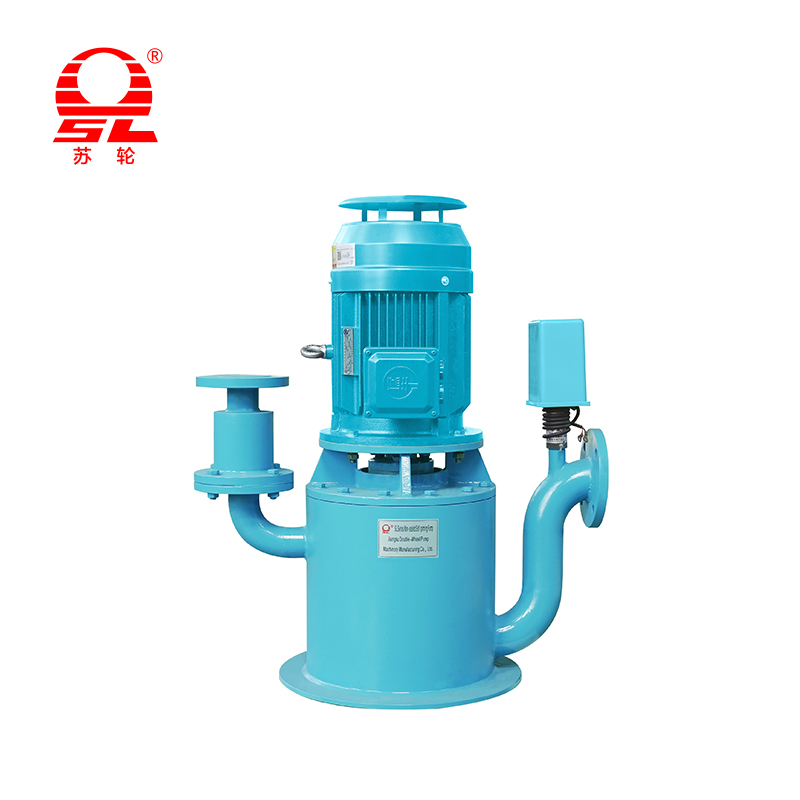
There are several self-priming pump designs. Some use a mechanical shaft seal and depend on a reservoir around the seal area. Others, such as the WFB sealfree self-priming pump, remove the conventional shaft seal entirely. This reduces leakage risk in corrosive or solids-laden service because there is no rotating seal face that can fail when the liquid contains particles. The WFB design is particularly useful for chemical sumps, plating lines, and wastewater transfer where seal leakage is a frequent cause of downtime.
Other configurations, such as the GJB high-efficiency automatic self-priming pump and the GZB series high-efficiency energy-saving self-priming pump, use improved hydraulic designs to reduce priming time and limit the energy loss that older self-priming pumps often showed. The operating point still carries some performance penalty because the pump has to handle an air-liquid mixture during priming and has a recirculation path that is not always hydraulically ideal. For applications that require very high discharge pressure, it is worth reviewing a high-head self-priming pump option before you commit to a multi-stage arrangement.
You should also note that a self-priming pump is not a completely different technology from a centrifugal pump. It is a centrifugal pump with a priming system built into the casing. That is why you can compare them side by side on flow, head, efficiency, and maintenance. The table in the next section gives the practical comparison that a buyer should use during the selection process.
The following comparison is based on typical industrial service conditions, not on a single hydraulic model. It represents the difference you can expect when both pumps are built with the same manufacturing quality and the same attention to material selection. A related article on centrifugal pump vs self-priming pump key differences for industrial buyers provides additional operating data if you want to continue reading after this page.
| Parameter | Standard Centrifugal Pump | Self-Priming Pump |
|---|---|---|
| Priming requirement | Flooded suction or external priming device | Self-priming after initial casing fill |
| Practical suction lift | Zero positive suction head preferred | About 6 to 7.5 meters depending on liquid temperature |
| Air handling during startup | Poor; air blocks normal operation | Good; designed to remove air from the suction line |
| Flow stability | High over a wide range | Good but less stable at extreme off-design points |
| Efficiency at best efficiency point | Higher, typically 5 to 8 points higher | Lower because of separation chamber and recirculation |
| Shaft seal exposure | Conventional shaft seal; leakage possible | Sealed or seal-less design depending on series |
| Footprint | May need priming tank, foot valve, or vacuum unit | Compact and can be mounted above basin level |
| Installation depth | Often installed below-grade or with flooded suction | Can be installed above the liquid surface |
| Maintenance routine | Seal, bearing, coupling alignment | Check valve, separation chamber, seal if present |
| Initial cost | Lower for equivalent material and flow | Higher because of casing complexity |
| Typical service | Cooling water, condensate, clean transfer | Chemical sumps, sewage pits, tank unloading, flood water |
The efficiency picture changes as the flow moves away from the best efficiency point. A self-priming pump tends to lose more efficiency at low flow because the recirculation flow stays roughly constant while the useful flow decreases. At high flow, the internal liquid separation becomes less efficient, and the discharge pressure drops faster.
| Flow rate as % of best efficiency point | Centrifugal pump efficiency (%) | Self-priming pump efficiency (%) |
|---|---|---|
| 50% | 62 | 53 |
| 60% | 68 | 59 |
| 75% | 74 | 64 |
| 90% | 77 | 68 |
| 100% | 79 | 70 |
| 110% | 77 | 68 |
| 120% | 72 | 63 |
The bar chart below shows relative performance indicators. The blue bars represent the self-priming pump, and the gray bars represent the standard centrifugal pump. The values are normalized for explanation, not taken from a single pump curve.
A standard centrifugal pump is the better choice when the suction line stays flooded, the liquid is clean, and the pump runs continuously near its design point. In that situation, the centrifugal pump delivers higher efficiency, simpler maintenance, and a lower purchase price than a self-priming pump of equivalent material.
If the fluid is relatively clean and the system provides a positive suction head, a closed-impeller centrifugal water pump is usually the most efficient hydraulic design. The closed impeller has low internal leakage and produces a stable pressure curve. This type of pump is often the first choice for industrial cooling systems and clean water distribution networks. The mechanical seal becomes the main wear point, but with the correct material selection and proper piping support, seal life can be very long.
A self-priming pump is the better choice when the liquid level is below the pump, the operation is intermittent, or the suction line can lose its liquid charge during shutdown. It is also a strong option when the pump must sit above the liquid because of flood risk, space limits, or confined space regulations.
For wastewater and light sludge, a self-priming pump with a semi-open impeller or a recessed impeller design handles solids better than a standard closed-impeller centrifugal pump. The wider internal passages reduce the chance of clogging. If the liquid contains significant solids and the pump must be installed above the pit, an automatic-priming wastewater pump is a practical solution because it combines self-priming capability with an impeller shape designed for fibrous material.
For a site where the pump can be submerged, a submersible sewage pump may be even more practical than a self-priming pump. The motor sits in the basin with the pump, no priming system is needed, and the installation is quiet and automated. This is a different operating concept, but it is worth comparing when the pump pit is deep and the operator wants to avoid a long suction pipe.
 WQ Series Submersible Sewage PumpThe WQ series submersible sewage pump has an integrated motor and pump design with low vibration and noise. It is mainly used in municipal engineering, industrial cons...View Product →
Do not assume that self-priming always means reliable suction lift. A self-priming pump still requires sufficient net positive suction head. If the liquid is hot or the suction lift is too high, the liquid will flash inside the suction pipe and the pump will lose prime. The practical suction limit depends on atmospheric pressure, liquid temperature, friction losses, and the vertical distance from the liquid surface to the impeller eye.
Purchase price is only one part of the decision. A cheaper pump that needs a deeper pit, a vacuum priming system, or frequent seal replacement can cost more over five years than a self-priming pump with a higher first price. The comparison below shows a typical pattern for an industrial service of about 60 cubic meters per hour at 30 meters of head.
| Cost item | Standard centrifugal pump | Self-priming pump |
|---|---|---|
| Initial pump price | Lower | 15 to 25% higher for the same material |
| Foundation and piping | May need a flooded pump pit, foot valve, or priming tank | Simpler mounting above the basin; suction lift is built into the pump |
| Energy consumption | Lower because the efficiency is higher | Higher by roughly 3 to 8 percentage points |
| Maintenance workload | Bearings, shaft seal, coupling alignment | Check valve, separation chamber, shaft seal if present |
| Downtime after air entry | Pump may stop transferring; operator must vent or refill | Pump can re-prime automatically if the suction lift is within limits |
The annual energy difference matters most in continuous operation. A pump that runs 8,000 hours per year with a 5 point efficiency disadvantage can consume thousands of additional kilowatt-hours. In that case, the extra efficiency of a standard centrifugal pump pays for the priming system within the first year. In intermittent operation, the energy difference is smaller, and the reliability benefit of self-priming becomes more important.
Maintenance cost is also related to the liquid. A self-priming pump handling a chemical sump may need a clean separation chamber and frequent inspection of the internal recirculation opening. A standard centrifugal pump handling clean water may run for years with nothing more than a seal inspection. The reverse is true when the liquid is dirty and the pump is installed in a pit: the centrifugal pump may require difficult maintenance access, while the self-priming pump can be lifted out of the pit without draining the basin.
Use the following checklist to compare a centrifugal pump and a self-priming pump before requesting a quotation. This list reflects the most common mistakes we see when a pump is selected without sufficient attention to the whole system.
If the suction lift is above 3 meters and the pump will start frequently without operator assistance, a self-priming pump becomes the safer selection. If the suction side is flooded and the process demands 100 hours of continuous operation per week, a standard centrifugal pump will usually give a lower energy cost and a simpler maintenance routine. The decision is not about which pump is more advanced; it is about which pump matches the hydraulic conditions of the site.
A selection process is not complete without verifying that the pump can perform at the required point. As a pump manufacturer, we treat the selection parameters as design inputs. Our factory has two production bases with a total area close to 60,000 square meters. We operate six machine workshops, two assembly workshops, and a dedicated test workshop. The pump performance test platform can test pump diameters from 32 mm to 1200 mm, motor powers from 1.1 kW to 1200 kW, and voltage from 380 V to 10 kV. This means self-priming pumps, large vertical long-shaft pumps, and high-power industrial centrifugal pumps can be tested under load before delivery.
Factory testing normally verifies the flow-head curve, input power, efficiency, vibration level, and noise level. For a self-priming pump, the test should also verify priming time, maximum restart ability, and behavior when the suction line contains air. For a standard centrifugal pump, the main point is to confirm that the selected operating point sits close to the best efficiency point. A pump that is oversized by one impeller trim may still reach the design head with a throttle valve, but it will consume more power and cause a higher inlet velocity in the casing, which can shorten bearing life.
Our engineering team cooperates with university fluid research groups and uses test data to refine impeller geometry, casing dimensions, and sealing arrangements. When you send us the suction pressure, discharge pressure, flow rate, liquid temperature, and solid content, we can recommend a pump concept and show how the operating point sits on the performance curve. This is especially important for a self-priming pump because the suction lift limit is affected by altitude, vapor pressure, and suction pipe losses.
Most self-priming pumps are centrifugal pumps with a modified casing and an internal recirculation channel. They work like a centrifugal pump after the suction pipe is filled with liquid. The main difference is that the pump can remove air from the suction line on startup. Some self-priming pumps use a positive displacement mechanism, but industrial self-priming pumps are usually of the centrifugal type.
A standard centrifugal pump can lift liquid only if the suction pipe is first filled and maintained full with liquid. It does not have the internal air-removal capability of a self-priming pump. If you add a vacuum pump, a foot valve, or a priming tank, the centrifugal pump can work with a limited suction lift, but the system becomes more complicated and requires careful maintenance.
At the same hydraulic design quality, a standard centrifugal pump is generally 5 to 8 percentage points more efficient. The self-priming pump loses some energy in the separation chamber and in the internal recirculation that is needed to remove air from the suction line. The gap can be smaller at the best efficiency point and larger at partial load.
Common causes include an air leak in the suction flange, a leaking suction pipe, a stuck check valve, a pump casing that was not filled completely on the first start, excessive suction lift, or liquid temperature that is close to vapor pressure. The priming chamber must stay sealed, and the suction pipe must not have any low-point pockets where air can collect.
Some self-priming pumps can operate dry for a few minutes without permanent damage if they use a seal-less design or a special dry-run protection system. The WFB sealfree self-priming pump is an example of a design that avoids a conventional mechanical seal, which is the part most vulnerable to dry running. However, no pump should be operated dry for an extended time because the heat generated by the impeller can damage the casing, the wear rings, and the bearings.
For a shallow sump with moderate solids, a self-priming pump with a semi-open impeller or a trash-handling impeller is practical and easy to maintain. For a deep sump where the pump can be submerged, a submersible sewage pump is usually simpler and quieter. For a large municipal station, a vertical long-shaft pump or a mixed-flow pump may be more efficient. The liquid type, pit depth, and maintenance access should determine the choice.
At sea level with cold water, the practical limit is about 6 to 7.5 meters. At higher altitude, hot liquid, or a long suction pipe, the limit is lower. The theoretical maximum is about 10 meters, but friction losses, vapor pressure, and the pump design reduce that value in real installations. Always calculate the available net positive suction head before approving the pump layout.
The right answer depends on your suction conditions, flow profile, liquid properties, and maintenance strategy. A standard centrifugal pump gives better efficiency and a lower purchase price when the suction side is flooded. A self-priming pump gives reliable restart and simpler installation when the liquid is below the pump or the operation is intermittent.
If you need more technical detail, read the article on centrifugal pump vs self-priming pump key differences for industrial buyers. It covers the hydraulic behavior of both pump types from an engineering perspective and will help you prepare a clear comparison document for your project team.
When you have the flow, head, suction lift, liquid temperature, and fluid description, send the data to our engineering team. We will confirm the pump type, review the performance curve, and recommend the material and sealing arrangement for your operating conditions. In some cases, we can also run a factory test to verify the pump at your specified point. The best pump is not the one with a more familiar name. It is the one that starts reliably, operates efficiently, and keeps the production line moving in your specific system.

+86-0523- 84351 090 /+86-180 0142 8659


Add 1: Hongguang Industrial Park, Jingjiang City, Jiangsu Province, China
Add 2: No.68, Xinyi Road, Industrial Park, Jingjiang City, Jiangsu Province, China
+86-0523- 84351 090
+86-180 0142 8659
+0523-8435 5588