language
  русский
 عربى
عربى Indonesia
Home / Blog / Industry News / How to Work a Self-Priming Pump: Startup Steps, Priming Time and Fault Fixes
News


 2026.10.12
 Industry News
A WFB-series sealless self-priming pump lifting water 4 m from a sump normally reaches full flow in 45 to 90 seconds. If the discharge pressure is still flat after three minutes, stop the motor. A pump that keeps chasing an air leak will heat up, wear its rotating parts and still deliver nothing, and the cause sits on the suction side in the great majority of cases.
The reason the suction side dominates is simple. A self-priming pump is not a vacuum pump. It has no separate air-handling device mounted beside it. It uses the liquid already inside its own casing to drag air out of the suction pipe in repeated passes. Anything that lets air back in, or that reduces the volume of liquid available for those passes, slows the process or stops it completely.
Inside the casing there is an oversized priming chamber that surrounds and sits above the impeller. Before the first start, that chamber has to be filled with liquid through the priming plug until it reaches the marked level or overflows. That stored liquid is the only tool the pump has for moving air.
When the motor starts, the impeller throws the stored liquid outward. Pressure at the impeller eye falls below atmospheric pressure, so air from the suction line is drawn in and mixed with the liquid. The mixture is pushed into the separation chamber on the discharge side, where it slows down, the air separates and escapes through the discharge connection, and the liquid drops back to the impeller eye to be thrown again. Each pass removes part of the air column in the suction line. When the line is full of liquid, priming is complete and discharge pressure climbs to the duty point.
That cycle explains three things operators often get wrong. Priming time is proportional to the volume of air that must be removed, which is why a long or oversized suction line takes longer than a short direct one. A small air leak that would never show on a pressure test can add a minute or more, because the pump keeps refilling the same pipe. And the liquid level in the casing matters as much as any mechanical part, because a half-filled casing has fewer passes available per minute.
A sealless design removes one of the largest sources of trouble. In WFB and similar non-sealed self-priming pumps, the shaft does not pass through the casing wall on a rotating seal, so there is no mechanical seal face to score, no gland to drip and no seal cavity to bleed air. On pumps that do use a mechanical seal, the seal is a normal wear item and becomes an air path once the faces are worn.
The difference shows up at commissioning. The nonsealed automatic self-priming pump family is built for duties where the suction line is long, the pump sits above the liquid surface and nobody is available to re-charge the casing every shift.
Priming performance is measurable, and it is worth writing the numbers into the commissioning record. The table below gives realistic ranges for clear water at 20 degrees Celsius with the casing charged to the marked level and the suction line one size larger than the pump inlet.
| Suction lift | Suction line volume | Expected priming time | What to inspect if the time is exceeded |
|---|---|---|---|
| 2 m | Under 15 L | 25 to 45 seconds | Priming plug seal, flange gaskets |
| 4 m | 15 to 30 L | 45 to 90 seconds | Foot valve seating, casing charge level |
| 6 m | 30 to 50 L | 90 to 150 seconds | Suction pipe joints, strainer blockage |
| 7 to 8 m | Over 50 L | 150 to 240 seconds | Lift beyond rated range, liquid temperature, worn wear rings |
Most priming failures are created before the motor is switched on. Six checks take about ten minutes and remove the majority of them.
Fill through the priming plug until the liquid overflows or reaches the level mark. On most WFB, GJB and GZB casings this means roughly 60 to 80 percent of the internal volume. A casing charged to half that level will still turn, but it has fewer liquid passes available and priming time stretches accordingly.
Wrap every flange and threaded joint on the suction side. A gap of one millimetre in a gasket at 4 m lift is enough to keep a pump in permanent partial prime, because the air drawn in equals the air removed. Tighten flanges evenly and replace hardened gaskets rather than adding sealant on top of them.
Measure it, do not estimate it. Most industrial self-priming pumps are rated for 4 to 6 m of lift, and the atmospheric ceiling of roughly 10.3 m at sea level falls quickly once you subtract friction losses, vapour pressure and the required net positive suction head. A practical limit for clear water is about 7 m, and less at higher liquid temperatures.
The foot valve holds the liquid column between stops so the next start is short. If it does not seat, the line drains and every start becomes a full priming cycle. The strainer mesh should be two to three times smaller than the smallest passage the liquid must pass, and it must be cleaned before its open area drops below half.
Open the suction valve fully. Crack the discharge valve about a quarter to a third open during priming so trapped air has a path out of the casing. A completely closed discharge makes the pump recirculate the same liquid, and casing temperature rises within minutes.
Check the direction arrow on the casing and bump the motor before coupling it. Reverse rotation produces almost no head and will never prime. Confirm the thermal overload setting against the nameplate current and check that the supply voltage matches the winding, especially on 380 V to 10 kV motors.
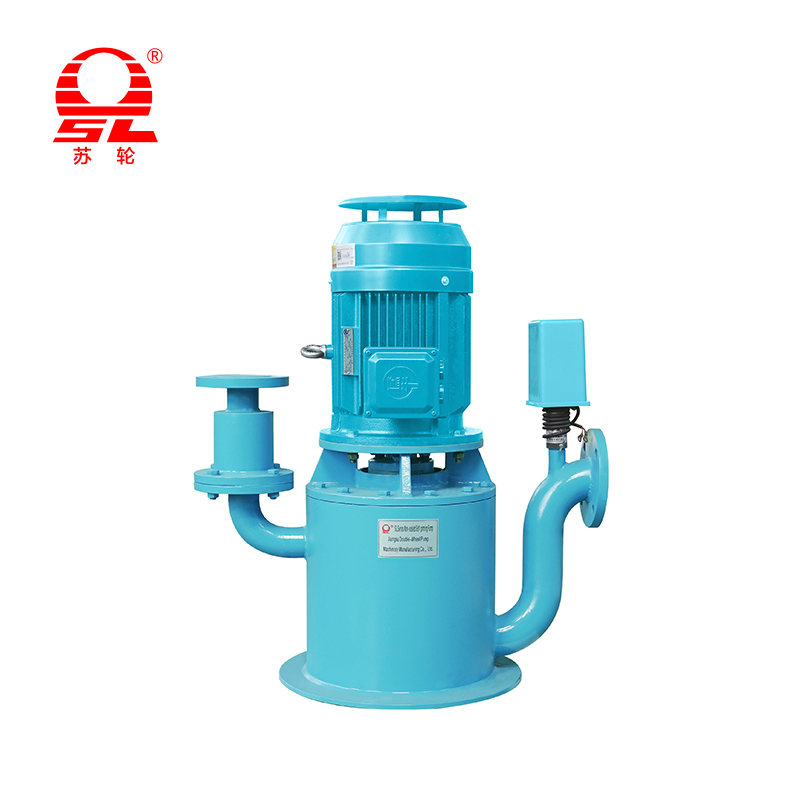
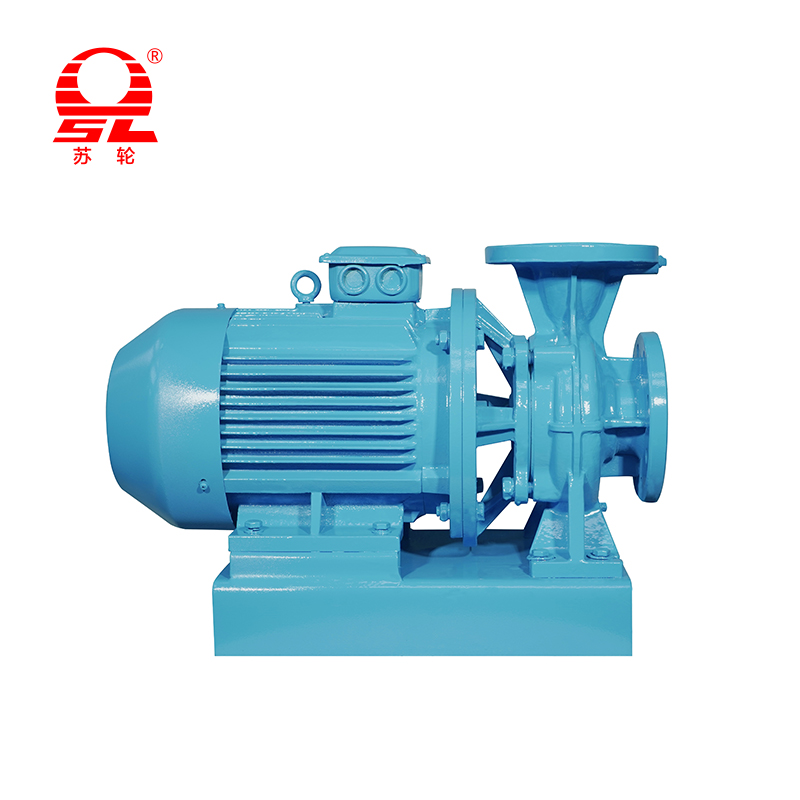
 WFB Seal-Free Self-Priming Pump SeriesSeal-free self-priming pump series for chemical, municipal and water purification duties; its no-seal design reduces leakage risk when priming and maintenance matter.View Product →
Two of these checks deserve a permanent place in the operator routine: casing level and suction line tightness. Between them they account for the bulk of calls that start with a pump that will not lift water.
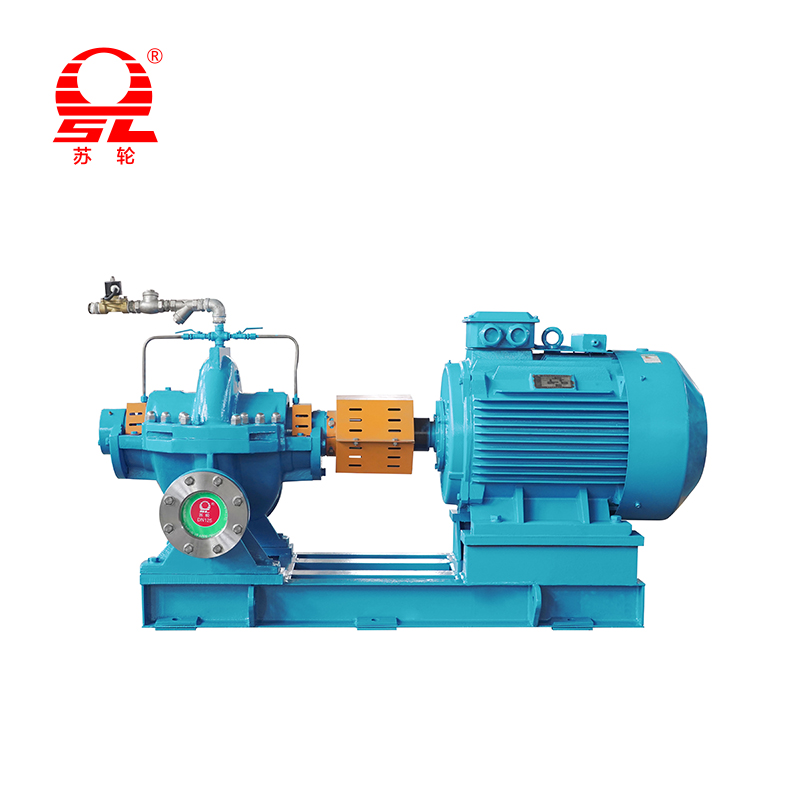
The procedure below suits a horizontal self-priming pump on a wet sump with a foot valve, which covers most drainage, transfer and wastewater duties. Vertical and long-shaft installations follow the same logic with the valves arranged differently.
One rule covers most of the risk: if the pump has not primed inside its expected window, stop it. Every extra minute of air-only running costs more in wear than the ten minutes needed to find the leak.
Commissioning records are only useful if the operator knows which readings indicate healthy operation. On a pump lifting 4 m of clean water at its design point, the following pattern is typical.
Deviation from that pattern is the earliest warning a self-priming pump gives. Rising vacuum with falling discharge pressure points to a blocked strainer or a partly closed suction valve. Falling vacuum with unchanged discharge pressure usually means the suction source level has dropped and the pump is beginning to draw air. Rising current with unchanged flow points to mechanical drag or higher liquid viscosity than the pump was selected for.
A pump that primed in 60 seconds during commissioning and now takes four minutes has not changed its design. Something in the system has changed. The chart below shows the relative contribution of the usual causes, measured on a 4 m lift with a 22 litre suction volume.
The ranking is consistent across installations, and it is the reason the suction line is checked before the impeller. A leak at a gasket costs nothing to fix and accounts for more delay than a worn impeller. Internal wear does matter, though, and it changes the shape of the curve rather than the starting point: a pump with opened wear ring clearance loses both priming speed and peak head.
The factors that affect the water priming time in more detail, including temperature and pipe geometry, are covered in this note on factors that affect priming time, which is worth reading alongside a commissioning record.
Field diagnosis works best when the symptom is matched to the most probable cause before any part is dismantled. The table below covers the faults reported most often on self-priming installations.
| Symptom | Most likely cause | Corrective action |
|---|---|---|
| No water after five minutes, high vacuum, no discharge pressure | Air leak on the suction side, or casing charge too low | Re-charge the casing, pressure-test the suction line, re-torque flanges |
| Primes, then loses prime within minutes | Vortex at the suction inlet, or a leak that opens under vacuum | Increase submergence, fit a baffle plate, re-check joints under running vacuum |
| Long priming time, normal flow once primed | Blocked strainer, oversized suction volume, worn foot valve | Clean the strainer, shorten the suction run, replace foot valve seat |
| Low flow with correct discharge pressure | Partially closed valve, air entrained in the liquid, worn impeller | Fully open the discharge, check sump level, measure wear ring clearance |
| High motor current at reduced flow | Viscosity higher than design, solids binding the impeller, misalignment | Verify liquid properties, clear solids, re-align the coupling |
| Casing hot during priming, no flow | Discharge valve fully closed, liquid recirculating | Open the discharge valve, allow the casing to cool before restarting |
| Crackling noise and vibration | Cavitation from insufficient net positive suction head | Reduce lift, increase suction pipe size, lower liquid temperature |
| Seal leaking after a dry run | Seal faces scored by running without liquid | Replace the seal, restore the casing charge, add dry-run protection |
| Won't prime after maintenance | Gasket on the wrong side, check valve reversed, casing not refilled | Verify assembly marks, confirm valve orientation, re-charge the casing |
Self-priming ability and dry-running tolerance are two different properties, and confusing them is expensive. A pump that pulls its own prime still needs liquid inside the casing to cool and lubricate the rotating parts. Ten to sixty seconds of air-only running during a normal priming cycle is harmless. Ten minutes of it is not.
Where the process cannot guarantee liquid at the suction, two options work reliably. The first is a liquid-level control that stops the motor before the sump empties, using float switches or electrodes wired into the starter. The second is a design that tolerates intermittent dry operation, which is one reason the sealless WFB construction is common in drainage and effluent service: with no rotating seal face to score, the failure mode under brief dry running is far less severe.
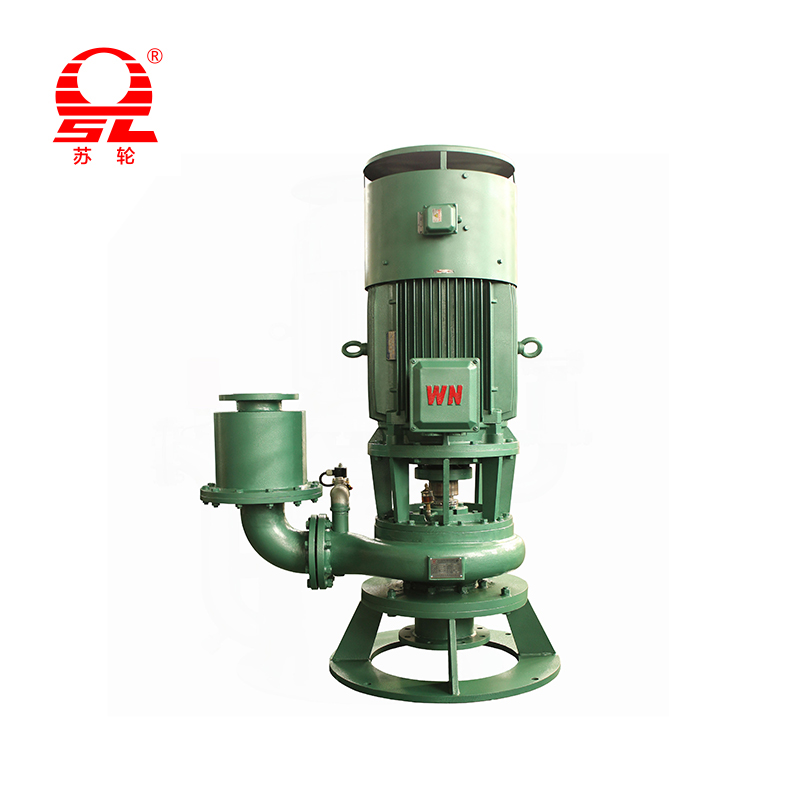
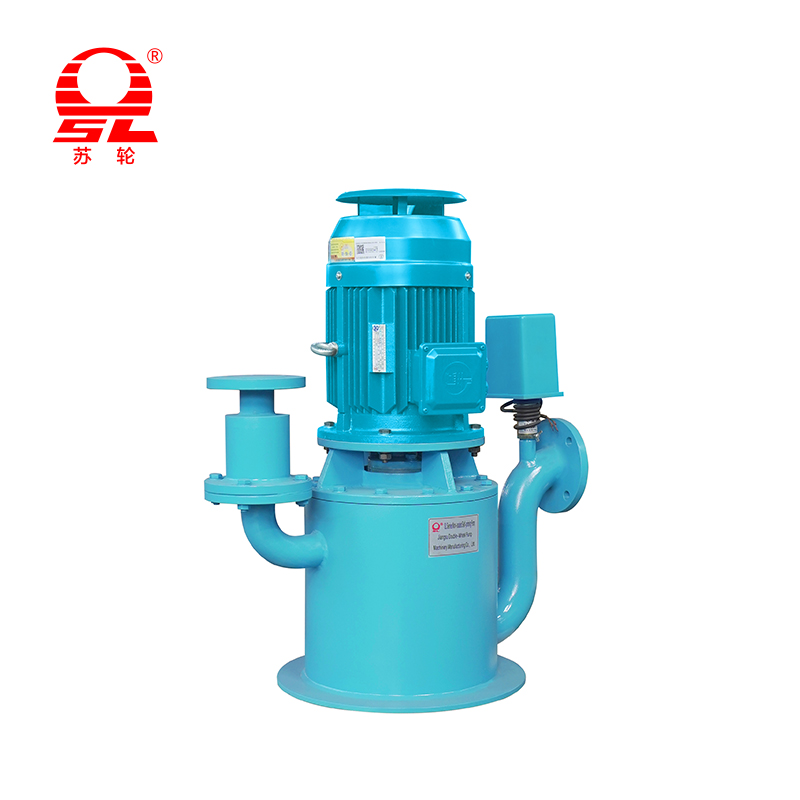
 GJB High Efficiency Automatic Self-Priming PumpAutomatic self-priming pump with intelligent control and compact vertical structure, suited to chemical, pharmaceutical, sewage and irrigation duties with varied materials.View Product →
Solids handling is a separate selection question. Trash-duty self-priming pumps pass spheres from roughly 25 mm up to 76 mm depending on the model and impeller type, and the strainer on the suction line has to be coarse enough not to blind on the same solids. On slurry duties, the impeller material and the clearance between impeller and wear plate decide service life more than the pump size does.
Stop a self-priming pump the same way every time, because an inconsistent shutdown is what turns a short restart into a full priming cycle.
Restarting after a long idle period deserves its own routine. Turn the shaft by hand to confirm nothing has seized, check that the casing is still charged, confirm the discharge valve is in the priming position and then treat the start as a first start. If the pump has been idle for months, expect a longer priming time on the first run and watch the ammeter more closely than usual.
Self-priming pumps rarely fail suddenly. They lose performance in small increments, and the increments are visible in routine checks.
| Interval | Task | What to look for |
|---|---|---|
| Daily | Read gauges, listen, feel bearing housing | Changed vacuum or pressure, new noise, temperature above 75 degrees Celsius |
| Weekly | Check casing level, clean strainer | Level drop without leakage, strainer more than half blocked |
| Monthly | Inspect seal and couplings, check alignment | Seal weeping, coupling insert wear, soft-foot condition |
| Monthly | Record vibration and current | Rising trend rather than a single high reading |
| Quarterly | Lubricate bearings, measure wear ring clearance | Clearance above the manufacturer's limit calls for replacement |
| Annually | Overhaul, replace seal and bearings, check impeller balance | Erosion, corrosion pitting, cracked wear rings |
Two measurements are worth more than any visual inspection. Wear ring clearance, taken with feeler gauges through the suction opening, tells you whether the pump can still build the vacuum needed to prime quickly. Bearing vibration trend tells you whether a mechanical problem is developing weeks before it becomes a breakdown. Both are quick to take and both belong in a written log.
The specification sheet is where most operating problems are prevented or created. A pump selected on flow and head alone will prime badly and wear quickly if the suction condition and fluid properties are left blank.
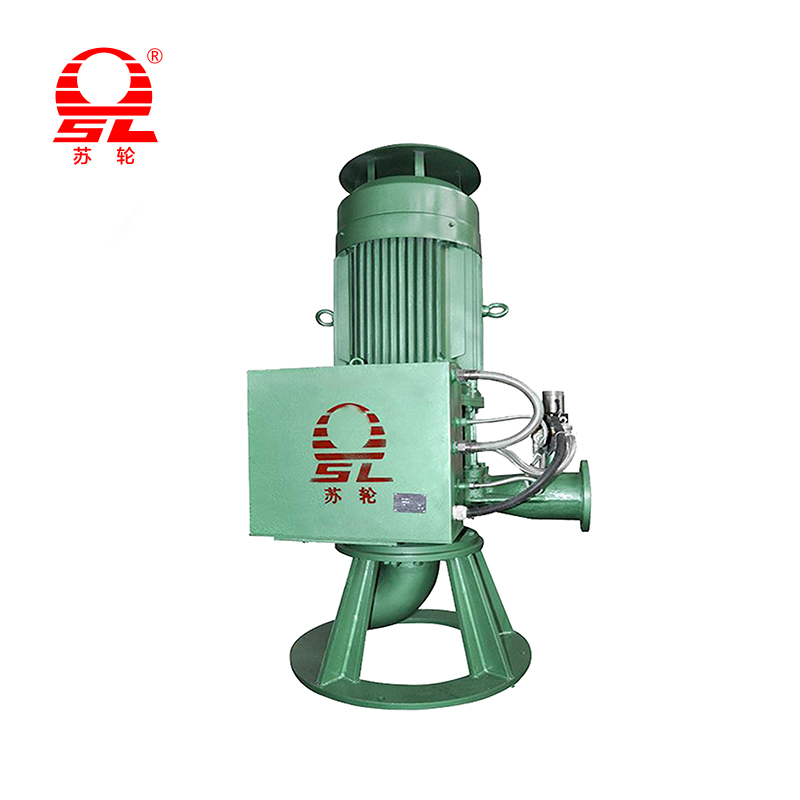
 GZB High Efficiency Self-Priming Pump SeriesEnergy-saving self-priming pump with labyrinth airflow seal and no mechanical seal wear, for chemical transfer, sewage treatment, mining drainage and irrigation.View Product →
The energy question also belongs in the specification. A self-priming pump running well to the right of its best efficiency point consumes more power for the same flow and loads the bearings harder. Trimming the impeller or changing speed with a drive often recovers the difference within a year, particularly on cooling, transfer and drainage duties that run continuously.
Priming behaviour is measurable on a test bench, and pumps that are performance-tested before shipment arrive on site with far fewer commissioning problems. A comprehensive pump test platform can verify flow, head, power and priming characteristics across a wide range of sizes rather than relying on a single spot check.
On the production side, this means testing capability that covers pump diameters from roughly 32 mm to 1200 mm, motor power from 1.1 kW to 1200 kW, and supply voltages from 380 V up to 10 kV. A platform with that range allows the same pump family to be verified across small transfer units and large drainage or process machines without sending the customer's order to a third party.
Production capacity matters for the same reason. Two manufacturing bases with a combined area approaching 60,000 square metres, six production workshops, two assembly workshops and one dedicated test workshop, equipped with more than 160 sets of machining equipment, allow casing and impeller work, assembly and performance verification to stay under one roof. Design work carried out with university fluid technology research teams feeds back into impeller geometry, which is the part that determines both priming speed and efficiency.
For the buyer, the practical value is simple. Ask for the test record with the delivery: flow at the duty point, head, power absorbed and the priming time measured on the bench. Those four numbers tell you whether the pump on your foundation will behave the way the selection calculation promised.
Only briefly. The pump needs liquid in the casing to create the vacuum that pulls air from the suction line and to carry heat away from the seal and bearings. Short dry periods of ten to sixty seconds during a normal priming cycle are part of the design. Running dry for minutes at a time will damage seals, wear rings and bearings, so fit level or dry-run protection where the liquid supply is unreliable.
For clear water at 20 degrees Celsius with a correctly charged casing, expect 25 to 45 seconds at 2 m lift, 45 to 90 seconds at 4 m, and 90 to 150 seconds at 6 m. Longer suction lines and higher lifts extend those figures. Anything beyond roughly twice the expected time points to air ingress, a blocked strainer or insufficient casing charge.
If the pump sits above the liquid surface, a foot valve keeps the suction line and casing flooded between stops, so the next start is short. Without it, the line drains back and every start becomes a full priming cycle. The foot valve must seat properly; a worn seat turns a closed line into a leaking one and the pump behaves as if it has no foot valve at all.
Two causes cover most cases. A vortex forming at the suction inlet pulls air down from the surface when the sump level drops, and a joint that holds under static conditions can open slightly under running vacuum. Increase submergence or fit a baffle plate, then check the suction joints while the pump is running.
No. Throttling the suction side lowers the pressure at the impeller eye and pushes the pump toward cavitation, which shows up as noise, vibration and rapid wear of the impeller and casing. Control flow with the discharge valve, with a variable frequency drive, or by trimming the impeller at selection stage.
A mechanical seal pump has a rotating seal where the shaft passes through the casing; it works well when the liquid is clean, the seal is flushed properly and dry running is avoided. A sealless design removes that penetration entirely, which eliminates the seal as an air path and reduces sensitivity to short dry periods. Sealless construction is common where the pump lifts from a sump and starts automatically.
In theory, atmospheric pressure supports about 10.3 m of water at sea level. In practice, friction losses, liquid vapour pressure and the required net positive suction head reduce this to roughly 6 to 7 m for clear cold water, and less for hot or volatile liquids. Most industrial self-priming models are rated between 4 and 6 m, and staying inside that range keeps priming fast and reliable.

+86-0523- 84351 090 /+86-180 0142 8659


Add 1: Hongguang Industrial Park, Jingjiang City, Jiangsu Province, China
Add 2: No.68, Xinyi Road, Industrial Park, Jingjiang City, Jiangsu Province, China
+86-0523- 84351 090
+86-180 0142 8659
+0523-8435 5588