language
  русский
 عربى
عربى Indonesia
Home / Blog / Industry News / Which Water Pumps Don't Need Priming? Self-Priming & Submersible Guide
News


 2026.10.05
 Industry News
The moment a new pump is switched on, every hidden installation flaw becomes visible. Air trapped in the suction line, an empty pump casing, or a leaking foot valve will stop an ordinary centrifugal pump from moving any water at all. That is why plant operators, irrigation planners and maintenance engineers keep asking the same practical question: what type of water pump does not require priming?
The direct answer is that three families of pumps are capable of producing flow without a manual pre-fill of the suction line: self-priming centrifugal pumps, positive displacement pumps, and submersible pumps. A fourth category, the vertical long-shaft pump, also avoids priming because its impeller is installed below the liquid level. These designs differ fundamentally in how they remove air from the suction path, and each has specific strengths and limits that affect real-world selection.
Retains liquid in the casing and uses recirculation to pull air out of the suction pipe. Typical suction lift: 6 to 8 metres.
Diaphragm, gear and lobe pumps create a mechanical vacuum and can lift water without priming. Suction lift: up to 9 metres for diaphragm pumps.
Motor and pump sit below the liquid surface, so there is no suction line and therefore nothing to prime.
The impeller stays submerged at the bottom of the pit, driven through a long shaft from an overhead motor. No priming is needed.
Priming is the process of filling the pump casing and the suction pipe with the liquid being pumped before the pump is started. A standard centrifugal pump rotates an impeller, and the pressure it produces is proportional to the density of the fluid inside the casing. Air has a density of roughly 1.2 kg per cubic metre, while water is about 1,000 kg per cubic metre. When a standard pump starts with air in the casing, the impeller simply spins in a low-density gas and generates almost no suction. Atmospheric pressure cannot push water up the suction pipe, and the pump delivers zero flow.
This is why conventional centrifugal pump installations need a foot valve at the end of the suction pipe, a priming pot, or a manual filling procedure. Every time the pump stops and the suction line drains, the operator must re-prime before the next start. In applications where the pump is expected to start and stop automatically, such as drainage stations and irrigation systems, that manual step defeats the whole purpose of automation. The pumps discussed in this article eliminate that step in different ways, and understanding those mechanisms is the key to choosing the right one.
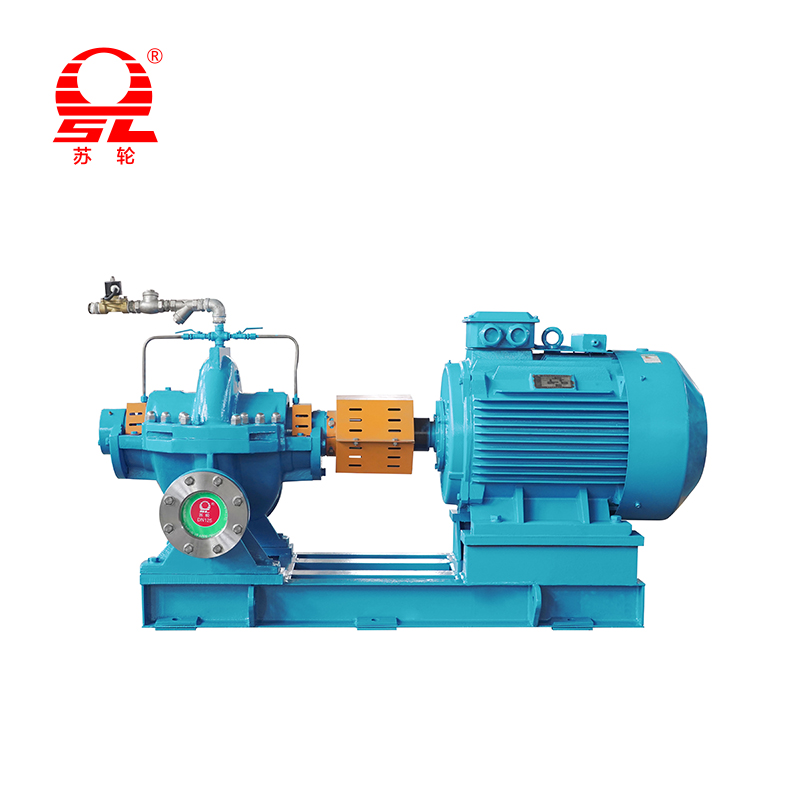
A self-priming centrifugal pump looks similar to a standard centrifugal pump on the outside, but its casing is designed to hold a permanent reservoir of liquid. When the pump starts, the impeller recirculates this retained liquid. Air from the suction pipe mixes with the recirculating liquid, rises into a separation chamber, and is discharged out of the pump. After a short period, usually less than two minutes at a moderate lift, the air is completely removed and the pump operates as an ordinary centrifugal pump.
Because the casing retains liquid after shutdown, these pumps can handle a suction pipe that is empty or full of air at the next start. That behaviour makes them well suited to self-priming centrifugal drainage applications, where the water source may disappear and reappear during operation. The main limit is practical suction lift: atmospheric pressure limits the theoretical maximum to about 10 metres, and reliable continuous operation is normally achieved at 6 to 8 metres.
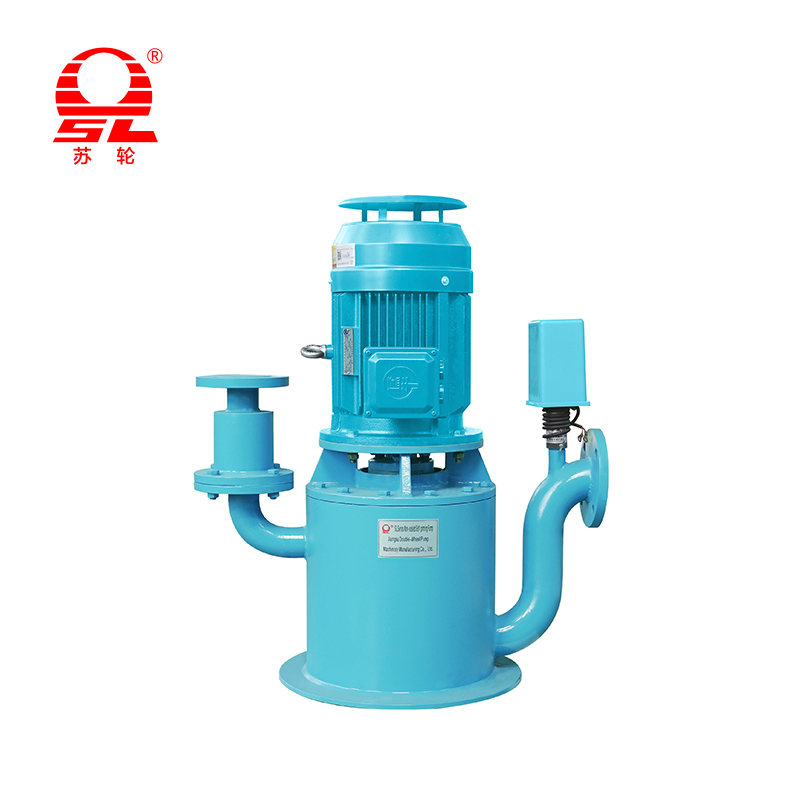
For industrial users, the WFB series sealfree self-priming pump deserves particular attention because it removes not only the priming problem but also the mechanical seal. The sealfree design uses no dynamic seal between the shaft and the casing, which prevents the seal failures that are a common source of leakage in ordinary pumps. Waste water containing solids, chemicals and other difficult media can be handled without the constant risk of seal wear.
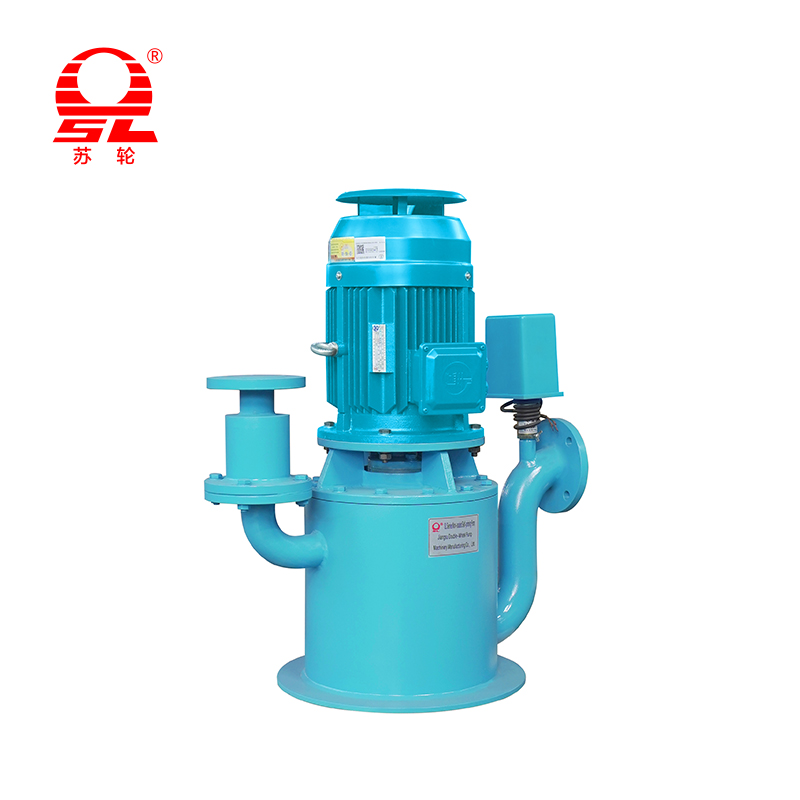 Seal-Free Self-Priming Pump for Tough Fluids and SolidsThis pump removes the dynamic mechanical seal between shaft and casing, eliminating a common leak source. Its wear-resistant, self-priming design handles wastewater with solids and chemicals, making it a reliable option for industries dealing with seal failures and difficult media.View Product →
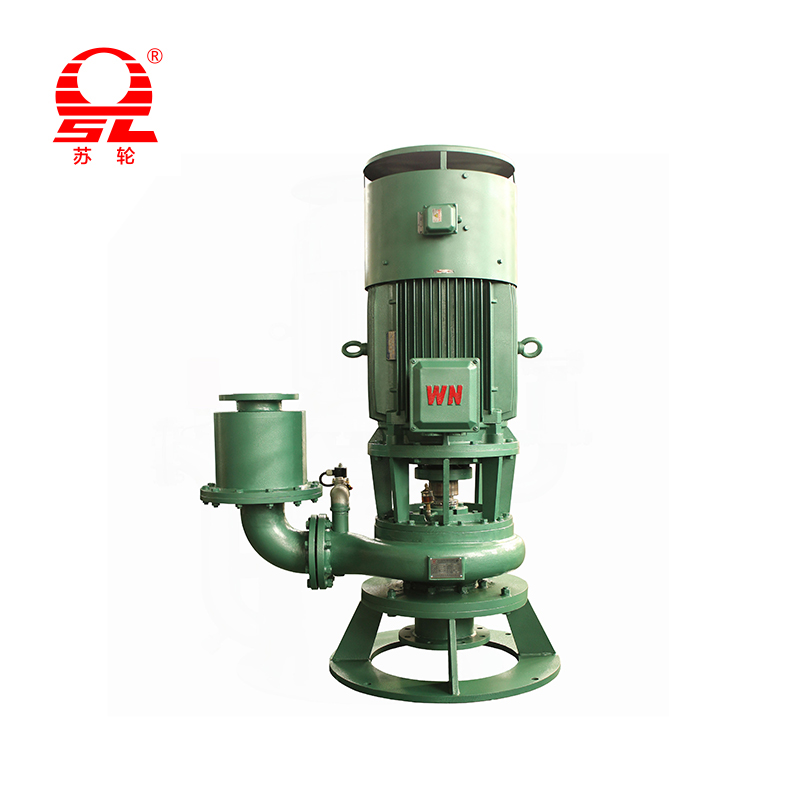
The GJB and GZB series add efficiency-oriented refinements such as an optimised hydraulic design and a compact footprint, which reduce energy consumption during normal operation. These pumps are frequently used for irrigation, industrial circulating water and emergency drainage.
Positive displacement pumps do not use centrifugal force at all. They create flow by expanding a chamber to draw liquid in, closing the chamber, and then compressing it to push liquid out. The expansion of the chamber lowers the pressure inside directly, which means these pumps can evacuate air from a suction line and pull liquid upward without any external priming.
The most common priming-free positive displacement types are:
Positive displacement pumps have two practical cautions. First, most cannot run dry for extended periods; the liquid they pump provides lubrication and cooling for internal parts. Second, because of their mechanical vacuum mechanism, solids or vapour locking can occur if the suction filter is blocked. For clean, viscous or shear-sensitive fluids, however, they offer a genuinely priming-free operation that centrifugal pumps cannot match.
Submersible pumps solve the priming problem by being lowered directly into the liquid. The motor and pump are constructed as one sealed unit, and the liquid enters through an inlet screen at the bottom or side. Because the pump is already below the liquid surface, no vacuum is needed to lift water. The impeller simply pushes liquid up the discharge pipe.
This design is especially practical for wastewater and flood control. The WQ series submersible sewage pumps used in municipal drainage and industrial effluent systems can pass solids without clogging and are started and stopped automatically by float switches. As long as the water level remains above the minimum submersion depth, every start is effectively a primed start.
 WQ Submersible Sewage Pump for Municipal and Industrial DrainageThis submersible pump integrates motor and pump in one unit, passing solids and long fibers without clogging. Float switches enable automatic start and stop, making it practical for wastewater, rainwater, and industrial effluent where submersion ensures immediate priming.View Product →
Submersible pumps do have operational constraints. They are difficult to inspect without lifting them out of the pit, so cable sealing and moisture monitoring are important. They also have a minimum operating level; in very shallow water, a vertical long-shaft or self-priming pump may be a better choice.
Vertical long-shaft pumps are a common sight in deep pits, water intake stations and flood control facilities. The hydraulic end, including the impeller, is installed at the bottom of the pit, below the liquid level. A long shaft transmits power from a motor mounted on a support plate at ground level. Because the impeller is already submerged, these pumps start without priming.
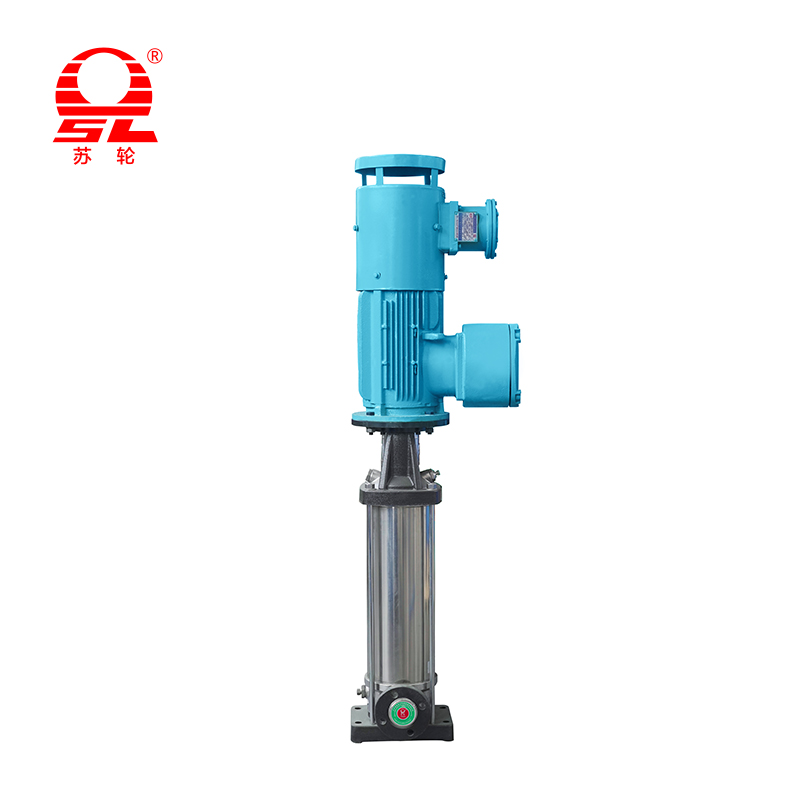
The SCY vertical submersible pump and SLC vertical long-shaft pump from Double-wheel reflect two arrangements: the SCY has a short submersible motor arrangement suitable for tanks, while the SLC uses a long shaft to bridge deep distances. Both designs are used in coastal rainwater drainage stations, circulating water systems and industrial sumps. Their main advantage over submersible pumps is that the motor remains accessible at the top, making inspection and bearing maintenance easier.
Vertical long-shaft pumps require careful alignment during installation, and the shaft bearings need lubrication. Once installed, they are highly reliable for continuous duty in deep pits where a self-priming pump cannot achieve the required suction lift.
The table below summarises the priming behaviour and typical operating range of each no-priming pump type, along with the situations where each design is most suitable.
| Pump Type | Priming Required? | Typical Max. Suction Lift | Best Application | Main Limitation |
|---|---|---|---|---|
| Self-Priming Centrifugal | No, after one initial casing fill | 6-8 m | Drainage, wastewater, chemical transfer, irrigation | Slightly lower efficiency than standard centrifugal pumps |
| Positive Displacement (diaphragm, gear, lobe) | No | 6-9 m | Viscous fluids, metering, slurry handling | Dry-running may damage internal components |
| Submersible | No | Not applicable; operates submerged | Sewage, wells, flooded pits, stormwater | Must remain submerged; retrieval needed for service |
| Vertical Long-Shaft | No | Not applicable; impeller submerged | Deep pits, intake stations, flood control | Tall structure; critical alignment |
Choosing among the four types depends less on priming and more on the fluid, the installation geometry and the operating pattern. The following guidelines cover the common situations in which priming-free operation is essential.
Use a WQ submersible sewage pump for buried pits with fluctuating levels. For above-ground installations, choose a heavy-duty self-priming trash pump so solids can pass through the impeller.
Select a sealfree self-priming pump with corrosion-resistant materials such as stainless steel or engineered alloys. The absence of a mechanical seal eliminates a common leak point in aggressive duty.
High-efficiency self-priming pumps such as the GJB series combine fast priming with energy-saving hydraulics, making them a good match for open channels and seasonal water sources.
Emergency flood control rain pumps and vertical long-shaft pumps handle large volumes at low head while remaining ready to start without operator attention.
When the liquid level is too deep for a self-priming pump, use a vertical long-shaft or a submersible pump placed close to the bottom of the pit.
Gear, lobe or peristaltic pumps are inherently priming-free and keep the liquid gently handled. Confirm the viscosity range with the pump manufacturer before selection.
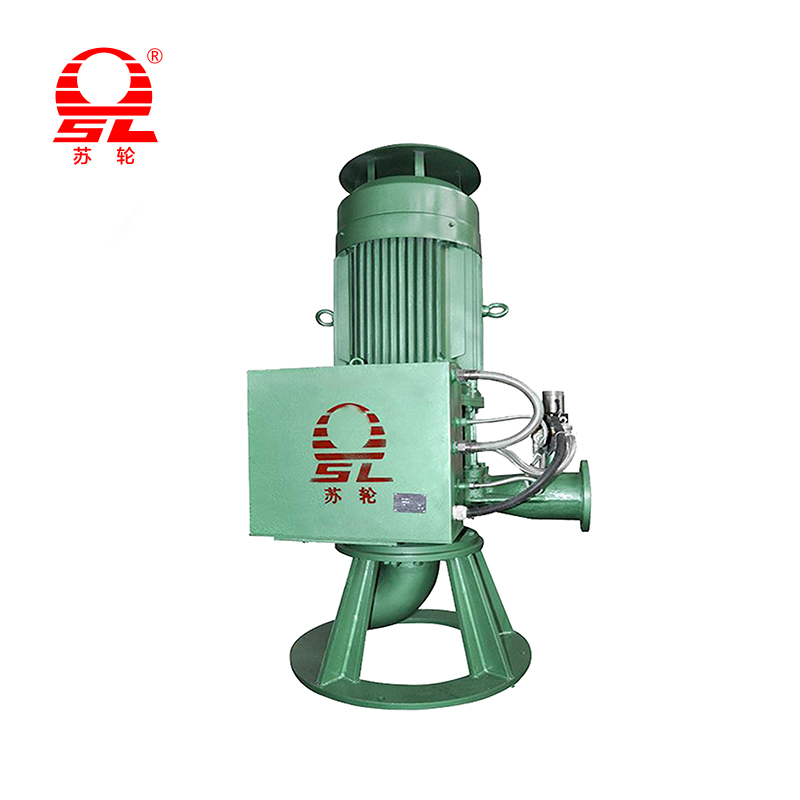 High-Efficiency Automatic Self-Priming Pump with Compact Vertical DesignThis pump features a vertical derrick-type fixed structure with a small footprint and simple maintenance. An intelligent automatic control device upgrades its efficiency, while the suction port can be positioned flexibly. Ideal for installations where space is limited or lifting equipment is unavailable.View Product →
Removing the priming step does not remove the need for good installation practice. For a self-priming centrifugal pump, the casing must be filled with liquid once before the first start. The suction pipe should be as short and straight as possible, with a slight upward slope to avoid air pockets, and all threaded joints must be sealed with PTFE tape or liquid thread sealant. If the suction line leaks, air will enter continuously and the pump will lose prime.
Pipe sizing matters as much as sealing. For a 50 m3/h pump, use a suction pipe of at least DN100 and keep the velocity below 2 m/s. Every bend adds equivalent pipe length and increases the risk of air accumulation at high points. A common mistake is to use a flexible suction hose of the same diameter as the pump inlet; flexible hose often collapses under vacuum and extends priming time.
For submersible pumps, installation checks focus on the cable entry, the minimum submersion depth and the float switch range. The pump must not rest directly on the bottom of a sludge pit, because solids may block the inlet screen. A small riser or hanging chain usually solves this.
Positive displacement pumps need a relief valve on the discharge side, because the mechanical vacuum can generate very high pressure if the discharge line is blocked. A vacuum gauge on the suction side is useful for monitoring the actual suction lift.
The time needed to establish flow depends on the suction lift, the diameter and length of the suction pipe, and the air tightness of the installation. The factors that control water priming time are discussed in more detail in our technical article on priming time factors.
Operators often worry that self-priming pumps are less efficient than standard centrifugal pumps. The concern is valid for the priming phase: during the few seconds or minutes when the pump is evacuating air, a portion of the recirculating liquid represents wasted energy. Once priming is complete, the efficiency gap is small, usually within a few percentage points of a standard centrifugal pump with the same impeller diameter.
The comparison changes when the complete installation is considered. A standard centrifugal pump with a foot valve experiences a continuous pressure drop across the foot valve and an additional loss if the suction pipe is long. Consider a 7.5 kW pump operating 4,000 hours per year. A foot valve can consume 1.5% to 3% of total head, which translates into roughly 110 to 220 kWh lost per year for this motor size. At typical industrial electricity prices, that is a measurable annual cost. A self-priming pump with an open suction line avoids this loss entirely, offsetting the small efficiency penalty of the recirculation chamber.
Submersible and vertical long-shaft pumps have no suction lift losses because the impeller is submerged. Their motor efficiency is comparable to other designs. For long operating hours at constant flow, the vertical long-shaft pump often proves the most energy-efficient way to move water from a deep pit.
Scale: 200 seconds represented as 100% chart width.
Each no-priming design has a different maintenance profile, and this should influence the purchase decision when service access is difficult.
Self-priming centrifugal pumps are the easiest to service for most industrial users. There is no foot valve to inspect, which removes one of the most frequent causes of slow flow and lost priming in conventional installations. In the WFB sealfree design, there is no mechanical seal to replace, so the most common wear item is simply the impeller and casing lining in abrasive duty.
Submersible pumps require less frequent maintenance because the motor is cooled by the surrounding liquid, but when service is needed, the pump must be lifted out of the pit. Moisture detectors inside the motor housing warn of insulation breakdown, and checking the cable and the float switch should be part of the scheduled inspection.
Positive displacement pumps need routine inspection of diaphragms, check valves and seals. A diaphragm that ruptures will flood the air side of an air-operated pump and cause a loss of performance. Peristaltic pumps require periodic replacement of the hose, which is a short and inexpensive task.
The specific advantage of a priming-free pump can be measured by the failures it prevents in a conventional pump installation.
The first is air binding. A standard centrifugal pump whose suction line contains trapped air will rotate without moving liquid, and the impeller can overheat the small volume of liquid in the casing until it flashes into vapour. If the pump is forced to continue running in this condition, the mechanical seal fails within a short time. Self-priming and positive displacement pumps evacuate the air automatically, so air binding does not occur.
The second common failure is loss of prime through a leaking foot valve. Every time a standard pump stops, the foot valve must hold the liquid column in the suction pipe. Sand, scale and debris prevent the valve from seating; the liquid drains back, and the next start requires a re-prime. Self-priming pumps simply re-prime themselves and continue running.
The third is dry-running damage to the shaft seal. In a standard pump, a dry start overheats the seal faces quickly, producing distortion and leaks. Since the WFB sealfree pump has no mechanical seal, it removes this failure mode completely.
No. A self-priming pump is designed to evacuate air from the suction line at every start, and the casing retains liquid between runs. Adding a foot valve is not necessary and can actually create additional head loss. A check valve on the discharge line is more useful because it prevents backflow through the pump when it stops.
In practice, a self-priming centrifugal pump can sustain a reliable suction lift of 6 to 8 metres. Atmospheric pressure limits the theoretical maximum to about 10 metres at sea level, but factors such as pipe friction, vapour pressure and air content reduce the practical limit. If the lift is above 8 metres, use a submersible or vertical long-shaft pump instead.
Most rotary and reciprocating positive displacement pumps are capable of self-priming, including diaphragm, gear, lobe, screw and peristaltic pumps. However, the suction line must be airtight, and the pump should not be run dry longer than the manufacturer allows. Some positive displacement pumps need a small amount of liquid in the casing to create the initial seal between the rotor and the housing.
No. The pump and motor are submerged in the liquid, and liquid enters the pump inlet directly. Priming is physically non-existent because there is no suction pipe to fill. The important requirement is that the liquid level stays above the minimum submersion depth and that the float switch is set correctly.
At an average suction lift of 4 to 5 metres, most self-priming pumps reach full flow in 60 to 120 seconds. The exact time depends on the volume of air in the suction pipe, the lift, the pump speed and the air tightness of the installation. A collapsed or undersized suction hose will noticeably lengthen the priming time.
In many cases yes, but it is usually better to buy a true self-priming pump from the start. Retrofit options include adding a priming chamber or a vacuum pump that evacuates the casing before start-up. These devices add cost and complexity, and they must be maintained separately. The recommended alternative is to select a WFB, GJB or GZB self-priming pump designed for the application.
Choosing a pump that does not require priming starts with defining the suction condition. If the water level is below the pump and within 6 to 8 metres, a self-priming centrifugal pump is the most straightforward solution, especially when the fluid contains solids and the installation is above ground. If the fluid is viscous or needs accurate metering, choose a positive displacement pump. If the pump can be submerged, a submersible pump removes the priming question entirely. For deep pits where the motor must remain accessible, a vertical long-shaft pump is the proven option.
Double-wheel Pump factory manufactures WFB sealfree self-priming pumps, GJB and GZB high-efficiency self-priming pumps, SCY and SLC vertical long-shaft pumps, and WQ submersible sewage pumps, all of which start without priming when installed according to the duty requirements. Submit your flow, head, suction lift and fluid properties to our engineering team, and they will match a priming-free design to your site conditions.

+86-0523- 84351 090 /+86-180 0142 8659


Add 1: Hongguang Industrial Park, Jingjiang City, Jiangsu Province, China
Add 2: No.68, Xinyi Road, Industrial Park, Jingjiang City, Jiangsu Province, China
+86-0523- 84351 090
+86-180 0142 8659
+0523-8435 5588