language
  русский
 عربى
عربى Indonesia
Home / Blog / Industry News / How can the pump shaft length and stiffness of a vertical pipeline centrifugal pump be designed to avoid vibration problems
News


 2025.12.16
 Industry News
Shaft length is a critical parameter in the design of vertical pipeline centrifugal pumps, directly affecting pump stability and vibration characteristics. Excessively long shafts increase bending and deflection, causing shaft misalignment and unbalanced operation. Short shafts can negatively impact suction performance and impeller arrangement, reducing overall pump efficiency. Shaft length design must consider pump head, flow rate, number of impellers, and pump casing structure to ensure bending stress and deflection remain within safe limits during operation.
Shaft design also requires accounting for fluid-induced loads. Centrifugal forces from the impeller, axial thrust, and pipeline pressure variations contribute additional bending moments on the shaft. Proper selection of shaft diameter, cross-sectional shape, and support locations can effectively reduce bending stress and mitigate vibration issues. Shaft ends are typically designed to connect with bearings or seals, controlling axial and radial forces and ensuring stable rotation under various operating conditions.
Shaft stiffness is essential for preventing vibration and enhancing pump reliability. Insufficient stiffness may cause resonance and amplified vibrations under high-speed operation or uneven loading. Shaft stiffness design must consider material strength, diameter, length, and the distance between impellers and bearings. High-strength alloy steel and wear-resistant steels are commonly used to balance rigidity and durability.
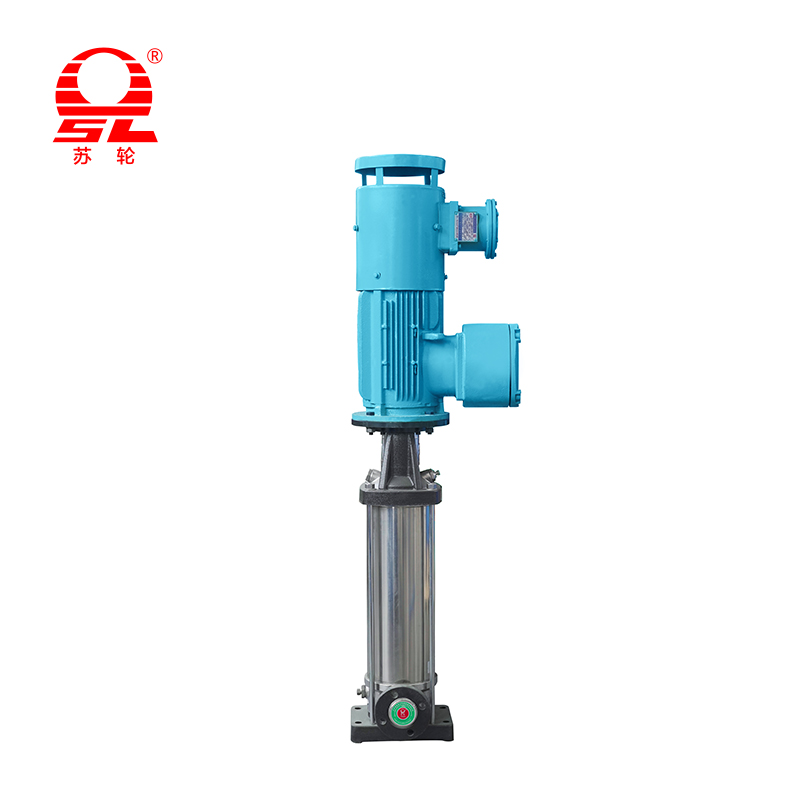
Bearing placement significantly influences shaft stiffness. Proper bearing spacing supports the shaft and reduces bending vibration. In multi-stage vertical pumps, axial forces from each impeller must be calculated, and shaft diameter or support structures optimized to improve overall stiffness. Shaft cross-sections are typically solid or hollow cylinders to ensure strength while controlling weight and inertia, reducing vibration during startup and shutdown.
Shaft stiffness must also match pump speed and operating conditions. High-speed pumps are prone to centrifugal vibration and resonance, requiring natural frequencies above operating frequencies to avoid resonance zones. Finite element analysis or vibration simulations can predict shaft deflection and stress under various conditions, providing critical data for design optimization.
Shaft length and stiffness design directly affect vibration mitigation. Overly long or flexible shafts may lead to misalignment, impeller imbalance, or mechanical resonance, generating periodic vibration. Optimizing shaft diameter, length, material, and support structure reduces both radial and axial vibration amplitudes.
Coordination with bearings and seals further suppresses vibration. Bearing arrangement impacts shaft support, while appropriate spacing minimizes axial movement and radial deflection. Seal design must consider added forces and thermal expansion effects to prevent uneven friction-induced vibration. Rigid connection between shaft and pump casing enhances structural stability and vibration resistance.
In multi-stage pumps, shaft length, stiffness, and impeller spacing must be optimized together, ensuring axial and radial forces on each stage remain within bearing capacity. Accurate calculation of shaft bending stress, vibration modes, and natural frequencies effectively prevents resonance and noise, improving operational stability and service life.

+86-0523- 84351 090 /+86-180 0142 8659


Add 1: Hongguang Industrial Park, Jingjiang City, Jiangsu Province, China
Add 2: No.68, Xinyi Road, Industrial Park, Jingjiang City, Jiangsu Province, China
+86-0523- 84351 090
+86-180 0142 8659
+0523-8435 5588