language
 русский
 عربى
 Indonesia
Home / Blog / Industry News / Self-Priming vs Non-Priming Pumps: What Industrial Buyers Need to Know
News


 2026.11.02
 Industry News
The difference between self-priming and non-priming pumps is where the liquid sits at startup and how the pump handles air. A self-priming pump keeps enough liquid inside its casing or priming chamber to create a working mixture, draw air out of the suction line, and return to normal pumping without manual filling on every restart. A non-priming pump, usually a standard centrifugal pump, expects the impeller to be flooded before it starts. If the suction line is dry or air reaches the impeller, the pump loses its pressure differential and can become air-bound.
That single behavior drives most purchase decisions. Self-priming designs are chosen for sumps, tank unloading, flood response, wastewater transfer, and any layout where the liquid level is below the pump and the suction line cannot stay flooded. Non-priming pumps are chosen for flooded suction, cooling loops, process circuits, and other duties where the liquid is already at the impeller and the priority is stable hydraulic efficiency. For a drainage layout that must recover from a dry suction line, a self-priming centrifugal drainage pump is often the more practical starting point; for a flooded process line, a standard centrifugal unit can be simpler and more efficient.
The short rule: choose self-priming when the pump must lift liquid and survive air in the suction line; choose non-priming when the pump can stay flooded and the system can guarantee liquid at the impeller. The rest of the decision is about suction lift, priming time, fluid properties, maintenance access, and the cost of a dry start.
“Non-priming” is not a single pump family. It is usually shorthand for a standard centrifugal pump that must be primed before operation. Priming means filling the casing and suction line with liquid so the impeller can generate pressure. On a flooded suction line, gravity keeps the casing full, and the pump starts like a normal centrifugal machine. On a suction lift, the operator must fill the line, open valves in the right order, and remove air before starting. If that routine is skipped, the pump may run without moving liquid, heat up, damage the mechanical seal, and create vibration.
Air binding is the key failure mode. A standard centrifugal impeller can move a liquid-solid mixture because the liquid has enough density to be accelerated outward. Air is much lighter. When air collects at the impeller eye, the impeller spins without building the pressure needed to push water up the discharge line. The pump sounds like it is running, but flow does not arrive. Operators sometimes open a vent, re-fill the casing, or wait for the line to flood. In a remote sump or an emergency drainage point, that delay is the real cost.
A non-priming pump can be reliable only when the system guarantees positive pressure at the suction. That may come from a tank above the pump, a flooded wet well, a cooling tower basin, or a process loop with a static head. A foot valve and a filled suction line can help, but they do not turn a standard pump into a self-priming pump. If the suction line can drain back after shutdown, the next start is a priming event. The datasheet may say “centrifugal pump,” but the installation decides whether it behaves as a flooded pump or as a pump that needs manual attention.
This is why two pumps with similar flow and head can behave very differently on site. One sits below a tank and starts every time. The other sits above a sump, loses its prime after shutdown, and needs a priming routine. The hydraulic curve is only half the story; the suction layout is the other half.
A self-priming pump does not create a perfect vacuum, and it does not pump air as if air were water. It creates a repeatable air-liquid mixing cycle. At the first start, the casing is filled with a charge of liquid. The impeller spins that liquid, and the liquid is recirculated through a priming chamber or a specially shaped volute. Air from the suction line is drawn into the casing and mixed with the liquid. The mixture is pushed toward the discharge, where air separates and escapes, while liquid returns to the priming chamber to pick up more air. The cycle continues until the suction line is full of liquid and the pump reaches a normal pumping condition.
Priming time is a specification, not a guess. It depends on suction lift, suction pipe diameter and length, the volume of air to be removed, the pump speed, the liquid charge, and the condition of the check valve. A pump that primes in 30 seconds on a short 3 m lift may take much longer on a long, high point, or leaking suction line. If the suction pipe has an air leak, the pump may cycle through priming without ever reaching full flow. That is why self-priming performance should be checked against the actual installation, not only against a catalog curve.
Many self-priming pumps rely on a check valve at the suction inlet or a foot valve in the sump. The valve keeps the casing and suction line charged after shutdown. If debris holds the valve open, the liquid drains back, and the next start takes longer. If the valve sticks closed, the pump may cavitate or starve. In wastewater and slurry service, the valve choice matters as much as the pump model. A clean-fluid self-priming pump and a trash-handling self-priming pump may look similar, but their valve arrangements and impeller clearances are different.
The table below compares the two behaviors in the terms that matter during selection: startup, air handling, suction layout, efficiency, maintenance, and typical duty. It assumes standard centrifugal pumps on both sides and a normal industrial installation. Actual results depend on hydraulic design, fluid, suction lift, pipe layout, and control logic.
| Selection point | Self-priming pump | Non-priming pump |
|---|---|---|
| First start | Needs an initial liquid charge in the casing or priming chamber. | Must be filled or flooded before the impeller can build pressure. |
| Restart after shutdown | Can re-prime automatically if the check valve holds and the casing retains liquid. | Usually needs the suction line to remain flooded or the operator must prime again. |
| Air in suction line | Handles an air-liquid mixture during the priming cycle. | Air binds the impeller and stops flow until the air is removed. |
| Suction layout | Can draw from a sump below the pump within its suction-lift limit. | Best with positive suction head or a reliably flooded line. |
| Efficiency | Priming passages and recirculation can reduce efficiency at some duty points. | Usually higher efficiency when the impeller is fully flooded at the duty point. |
| Maintenance focus | Check valve, priming chamber, seal, and suction-line air leaks. | Suction flooding, seal protection, and prevention of dry running. |
| Typical duty | Sump transfer, tank unloading, flood drainage, wastewater, mobile pump sets. | Cooling water, process loops, flooded transfer, booster service, closed circuits. |
The table should not be read as “self-priming is better” or “non-priming is better.” A self-priming pump on a flooded line may still work well, but it may carry a larger casing and a more complex internal path than needed. A non-priming pump on a suction lift may be cheaper at first, but the operating routine can cost more than the pump. Match the pump behavior to the system behavior.
Suction lift is the vertical distance plus friction loss between the liquid surface and the pump inlet. Self-priming pumps are often selected because they can tolerate a suction lift, but they are not unlimited. The practical lift depends on the pump’s priming capability, the liquid’s vapor pressure, altitude, temperature, pipe diameter, fittings, and the length of the suction line. A pump rated for an 8 m lift on clean water at 20 C may struggle with hot liquid, a long horizontal run, or a partly blocked strainer. The safe approach is to calculate the system NPSH available and compare it with the pump NPSH required, then add a margin for wear, fouling, and transient conditions.
Non-priming pumps can also be installed with a suction lift, but only if the system is primed and remains primed. A foot valve may hold liquid in the line, but it is not a substitute for a self-priming casing. If the line drains back, the pump loses its charge. In a flooded installation, the static head at the suction provides positive pressure, and the pump can operate close to its best efficiency point without a priming cycle. That is why cooling-water and process-loop pumps are often non-priming: the layout naturally keeps them flooded.
Avoid unnecessary high points in the suction line. Each high point can trap air and lengthen priming. Keep the suction pipe as short and direct as possible, use a diameter that keeps velocity reasonable, and make sure the pipe does not slope upward toward the pump unless the pump is designed for that layout. A strainer protects the pump but adds resistance; a clogged strainer can turn a good priming pump into a cavitating pump. For wastewater, use a suction arrangement that avoids rag accumulation and provides access for cleaning. For clean liquids, a concentric reducer or a properly sized eccentric reducer can prevent air pockets at the pump inlet.
Discharge layout also matters. A self-priming pump needs a place for air to escape during the priming cycle. If the discharge line is closed or has a high static head that prevents air from leaving, priming may stall. A discharge check valve, air-release point, or control sequence can make the difference between a clean prime and a pump that churns without flow. The installation drawing should show the priming path, the valve positions, and the expected liquid level at start and stop.
A self-priming pump is more tolerant of air, but it is not immune to dry running. It still needs liquid in the casing to create the priming mixture. If the casing is completely dry, the mechanical seal can overheat, the wear rings can score, and the pump may not develop enough vacuum to lift liquid. Many failures blamed on “bad priming” begin with a dry casing, a leaking suction flange, a worn check valve, or a control sequence that starts the pump before the line is charged.
A non-priming pump is even less forgiving. A standard centrifugal pump that runs dry can damage the seal within seconds to minutes, depending on the design and flush arrangement. The impeller may overheat, and the shaft may deflect. Protection should include a flow switch, pressure switch, level control, or power monitoring that stops the pump before damage occurs. For either pump type, a dry-run protection device is cheaper than a rebuild.
For a reliable self-priming installation, the check valve and the casing liquid inventory should be inspected as part of the regular maintenance route. For a non-priming installation, the suction pressure and the flooded condition should be verified at every start. The operator behavior that suits one pump can damage the other.
A non-priming pump on a flooded suction usually has the hydraulic advantage. The impeller is fully surrounded by liquid, the suction path is short, and there is no priming chamber recirculation. That is why a standard centrifugal pump can hold a high efficiency at its best efficiency point in a cooling loop or a process circuit. If the system can guarantee flooded suction, a non-priming design can be the lower-energy choice.
A self-priming pump adds a priming chamber, a recirculation path, or a special volute shape. Those features can reduce efficiency at some duty points, especially if the pump is run far from its best efficiency point. The penalty is not automatically large. A well-designed self-priming pump can still be efficient in its intended range. The bigger energy risk is operating a self-priming pump on a duty it does not need, or running a non-priming pump with a partly flooded suction that causes cavitation and unstable flow. Both conditions waste power and shorten life.
Compare candidates at the actual duty point, not at a single catalog maximum. Ask for the head-flow curve, efficiency curve, NPSH required curve, and power curve. Then check the operating range. A pump that is 3% less efficient at the design point may still be the better choice if it avoids a daily priming routine, a dry-run event, or a seal replacement. Conversely, a self-priming pump that must run far below its best efficiency point may cost more in energy than a flooded non-priming alternative with a simpler control scheme.
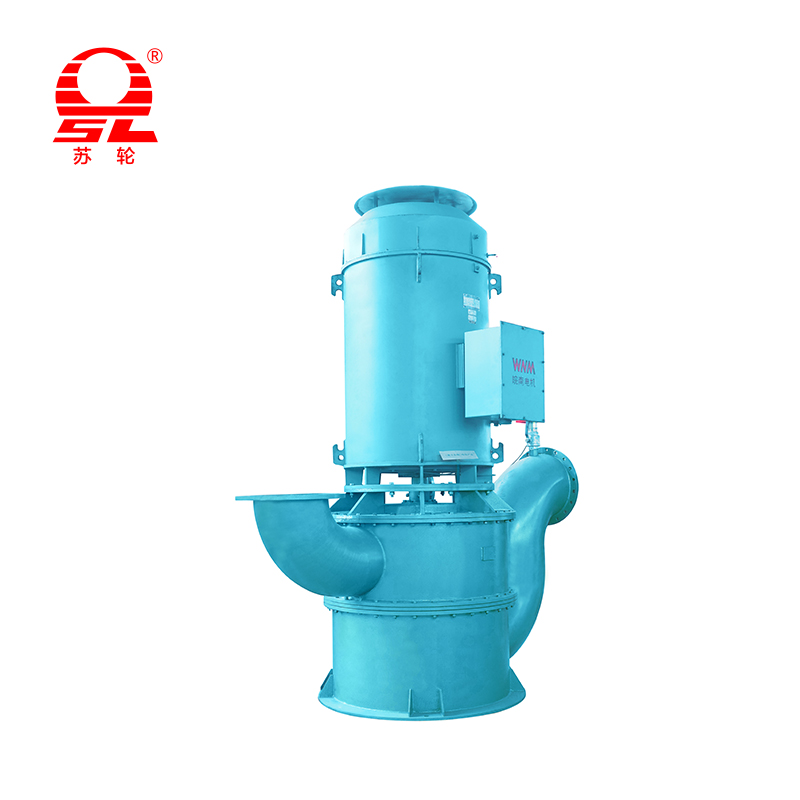 GZB Series Self-Priming Pump for Efficient Transfer DutiesSelf-priming pump with labyrinth airflow seal and multiple material options; check duty curve and suction layout before selecting.View Product →
Energy-saving automatic self-priming models are useful where starts are frequent and the system benefits from controlled priming, but the selection should still be based on the duty curve and the suction layout. Do not choose a model only because its name contains “efficient” or “energy-saving.” The pump needs to match the flow, head, fluid, and control sequence.
Self-priming pumps have more places to inspect: the priming chamber, the check valve, the separation path, and the suction line. That does not make them high-maintenance by default, but it changes the maintenance checklist. A slow prime is often the first sign of a worn check valve or an air leak. A pump that primes but loses flow may have a clogged strainer or a worn impeller clearance. A pump that overheats during priming may have too little liquid in the casing or a discharge path that traps air.
Non-priming pumps have a simpler hydraulic path, but they are less forgiving of operator error. The most common problems are dry running, cavitation from a starved suction, and seal damage after a line drains back. If the suction line is flooded and the control system prevents dry starts, maintenance can be straightforward. If the line is not flooded, the pump may need manual priming every time, which is a labor and safety issue rather than a repair issue.
For either design, check the availability of mechanical seals, wear rings, check valves, gaskets, and impellers before the pump is installed. A self-priming pump with a non-standard check valve can be difficult to return to service if the valve fails. A non-priming pump with a long suction line may need a foot valve that is hard to access. The maintenance plan should identify how the valve can be inspected without draining the whole system and how the casing can be refilled safely.
Seal selection also differs by duty. Clean water self-priming pumps may use a standard mechanical seal. Wastewater and slurry duties may need a flush arrangement, a wear-resistant seal face, or a different seal housing. A non-priming process pump handling hot or chemical liquid may need a seal plan that depends on flooded suction. In both cases, the seal is not an isolated part; it depends on the suction condition and the operating routine.
Use the application first, then confirm with the hydraulic calculation. The following cards show where each behavior tends to fit. They are starting points for a technical review, not a substitute for a system calculation.
Self-priming is often practical when the pump is mounted above the wet well and the liquid level varies. Confirm suction lift, priming time, and check-valve access. A flooded non-priming pump is possible only if the pump can sit low enough or a flooded suction pot is used.
Self-priming pumps can draw from the top of a tank or a low outlet without a flooded suction. Air entrainment at the end of the transfer is normal, so the pump must tolerate intermittent air without losing its charge. A non-priming pump may need a flooded outlet or a separate priming system.
Non-priming pumps are common because the loop keeps the suction flooded. Efficiency and stable NPSH are the main goals. A self-priming model can be used, but the priming feature may add cost and complexity without a real operating benefit.
Self-priming or rapid-priming units are useful when the water level appears without warning and the suction line may be dry. The control sequence should allow the pump to prime without overheating. Portable or skid-mounted sets need a reliable initial charge.
The fluid and seal arrangement matter more than the priming label. A self-priming chemical pump can unload a tank, but the materials, gaskets, and seal flush must suit the liquid. A non-priming chemical pump is better where the suction is flooded and the process needs stable flow.
Self-priming trash or slurry pumps can handle air and solids in sump service, but wear life depends on impeller clearance and valve design. A non-priming slurry pump is better on a flooded line with a steady feed and a wear-resistant wet end.
The matrix is deliberately practical. A pump that is technically self-priming may still be a poor choice if its check valve clogs easily, if the suction line has too many high points, or if the control system cannot protect it during a failed prime. A non-priming pump may be the better choice if the system can guarantee flooded suction and the operator wants a simpler hydraulic path.
The priming function is only as good as the hardware around it. Look at the casing volume, the priming chamber, the check-valve design, the impeller clearance, and the seal arrangement. A sealfree or non-sealed self-priming design can reduce leakage risk in certain wastewater and drainage duties, but it must still be matched to the fluid and the suction condition. A mechanical-seal self-priming pump may be better for clean liquids where seal flush is available and air ingress is controlled.
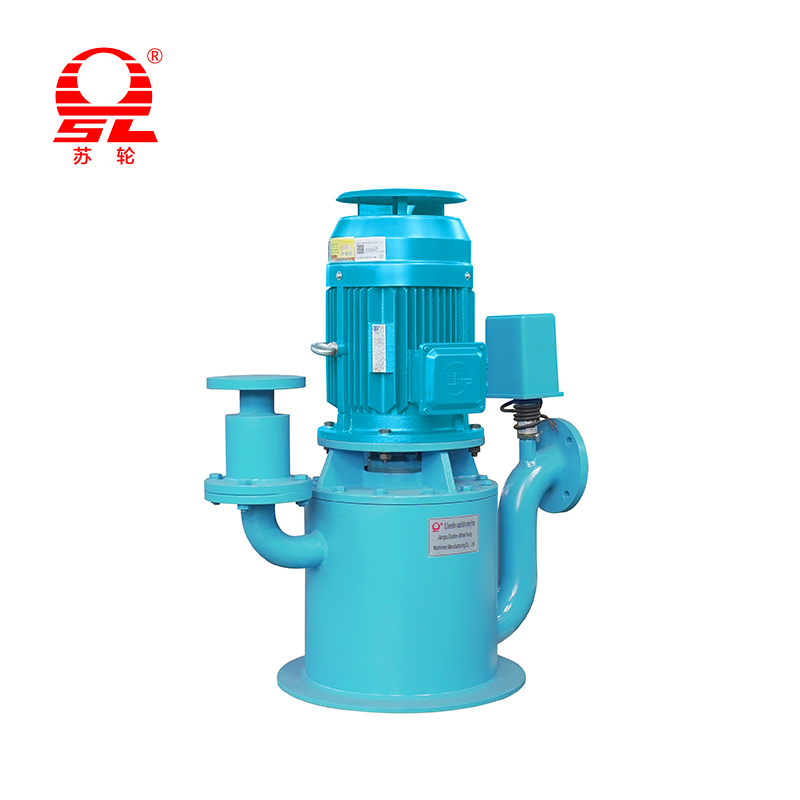 WFB Seal-Free Self-Priming Pump for Wastewater and DrainageSeal-free self-priming pump with up to 7 m priming height and under 150 s priming time; verify suction line and check valve.View Product →
A sealfree self-priming pump uses a design that avoids a conventional sealed shaft path in the wet end, which can be attractive when the liquid is dirty or when leakage at the seal is a concern. That does not remove the need for a proper initial charge, a functioning check valve, and a suction line that does not leak air. The advantage is in the construction, not in a promise that the pump can run dry forever.
These questions separate a useful self-priming selection from a catalog match. The pump should be chosen with the suction line, valve, and control sequence in view. A self-priming pump that is starved by a long, leaking suction line will not perform like the test-bench curve.
Wastewater sumps, stormwater pits, and flood-response points often have one thing in common: the liquid level is not steady, and the pump may start after the suction line has drained. A self-priming pump can sit above the pit, keep its casing charged, and re-prime when the level rises. That layout keeps the motor and controls out of the wet well and gives maintenance access without confined-space entry for every check. It also allows a portable skid or trailer-mounted pump to be set up quickly at a low point.
Solids handling changes the design. A self-priming trash pump needs a large enough passage, a wear-resistant impeller, and a check valve that does not jam on rags or debris. A standard self-priming clean-water pump is not a substitute. In flood duty, the suction strainer can clog with leaves, mud, or debris, so the operator needs a way to clean it without losing the casing charge. The discharge line should allow air to escape during priming and should not impose a closed valve on the pump during the priming cycle.
 WQ Series Submersible Sewage Pump for Solids-Laden WastewaterSubmersible pump-and-motor unit for sewage, wastewater, rainwater, and domestic water with solids; consider access and lifting for service.View Product →
A submersible sewage pump is a different answer to the same site problem: it sits in the liquid and does not need suction lift, but it puts the motor in the wet well and requires lifting equipment for service. A self-priming surface pump keeps the motor above the liquid but needs a reliable suction line and check valve. Neither is universally better. The choice depends on access, solids, floor space, control philosophy, and the cost of downtime.
For emergency drainage, the pump should be selected with a priming time that matches the response window. A pump that takes several minutes to prime may be acceptable for a slow sump but not for a rapidly rising flood point. The suction hose should be short, rigid enough not to collapse, and fitted with a strainer that can be cleared. The discharge hose should be laid out before the pump starts. A self-priming pump with a good casing charge and a tight suction line can start moving water quickly; a non-priming pump may need a flooded suction or a separate priming step that adds delay.
Chemical transfer often needs a self-priming pump for tank unloading, but the material choice is the first gate. Wetted parts, gaskets, and seals must suit the liquid. A self-priming pump with a standard cast-iron casing is not acceptable for an aggressive acid or solvent. A non-priming chemical pump may be better when the suction is flooded and the process needs stable flow with a simple seal flush. In both cases, the suction line should be arranged to avoid trapped air and the discharge should include a safe relief path.
Mining and mineral processing use self-priming pumps in sumps and spill recovery, where the pump may see air, grit, and variable level. Wear life depends on the impeller material, clearance, and the check-valve design. A non-priming slurry pump is usually better for a steady, flooded feed where the priority is wear life and hydraulic stability. The wrong choice is often a clean-water self-priming pump applied to a slurry duty; the pump may prime, but the wear rate and valve clogging will be unacceptable.
Irrigation and agricultural transfer can use either behavior. A self-priming pump is convenient when the source is below the pump, such as a canal, pond, or storage tank. A non-priming pump is efficient when the source is flooded or when a booster pump is fed from a pressurized line. For dirty water, the impeller and strainer selection matter more than the priming label. For clean water, the operating cost and the suction layout usually decide.
These properties should be written into the inquiry. A pump selected only for flow and head may fail on the first start because the fluid does not behave like clean water.
A good inquiry gives the pump supplier enough information to select the behavior, not only the hydraulic size. Include the liquid, temperature, density, viscosity, solids content, and whether the liquid is flammable or corrosive. State the suction condition clearly: flooded, suction lift, varying level, or unknown. Provide the static lift, suction pipe length, diameter, fittings, and high points. State the discharge head, flow range, and control method. Then ask for the curve, efficiency, NPSH required, priming time, and dry-run protection recommendation.
For international projects, add the site voltage, frequency, enclosure protection, and any local safety requirements. A pump that is correct on paper but unsuitable for the site power supply or maintenance practice will create problems after delivery. If the suction condition is uncertain, ask for a review of the installation layout before the model is fixed. A short conversation about the suction line can prevent a costly mismatch between a self-priming pump and a system that cannot hold its charge, or a non-priming pump and a sump that drains after every stop.
Share the duty point, fluid data, and suction layout with our team through the contact page if you want the selection checked against the actual installation. The most useful inquiry includes a simple sketch of the pump, sump, tank, and discharge line.
No. A self-priming pump needs an initial liquid charge to create the air-liquid mixture. Running a dry casing can overheat the seal and damage the impeller or wear rings. If the casing drains after shutdown, check the check valve, foot valve, and suction-line air leaks before blaming the pump.
In most industrial discussions, yes. “Non-priming” describes a standard centrifugal pump that must be primed or flooded before it can build pressure. It is a statement about the startup condition, not a separate hydraulic family.
A self-priming pump handles air better during the priming cycle because it is designed to mix air with liquid and separate it. A non-priming pump can become air-bound when air reaches the impeller. Neither pump should be used for continuous air ingestion; air in the suction line usually signals a leak, a vortex, or a poor layout.
Not always. The priming chamber and recirculation path can reduce efficiency at some duty points, but the actual penalty depends on the model and the operating point. A non-priming pump that suffers cavitation or frequent dry starts may use more energy and cost more to maintain than a well-selected self-priming pump.
Priming time depends on suction lift, pipe volume, pump design, liquid, and check-valve condition. A short, tight suction line may prime in seconds. A long line with a high point may take much longer. The correct value should be stated for the actual installation, and a sudden increase in priming time should be treated as a maintenance signal.
Not by adding a foot valve alone. Self-priming behavior comes from the pump casing, priming chamber, and internal flow path. A standard centrifugal pump with a foot valve still needs a filled casing and a flooded suction line. If the system cannot stay flooded, select a self-priming model rather than relying on an accessory to change the pump’s behavior.
Longer priming time, unstable flow, repeated priming cycles, and a pump that never reaches full discharge pressure are common signs. Check the suction flange, valve packing, hose connections, strainer, and foot valve. A small air leak on the suction side can be more serious than a visible leak on the discharge side because it prevents the pump from lifting liquid.
A self-priming pump is often more practical because it can recover after the suction line draws air, provided the casing retains its charge and the check valve holds. A non-priming pump may lose prime and need manual filling. For repeated complete empties, confirm the pump’s air-handling limit and the control sequence that stops the pump before it runs dry.

+86-0523- 84351 090 /+86-180 0142 8659


Add 1: Hongguang Industrial Park, Jingjiang City, Jiangsu Province, China
Add 2: No.68, Xinyi Road, Industrial Park, Jingjiang City, Jiangsu Province, China
+86-0523- 84351 090
+86-180 0142 8659
+0523-8435 5588