language
 русский
 عربى
 Indonesia
Home / Blog / Industry News / Vertical Long Shaft Pump vs Submersible Pump: Maintenance and Cost Compared
News


 2026.11.23
 Industry News
For most deep sump, wet-pit, tank, and intake applications where the motor can remain above the liquid, a vertical long shaft pump usually delivers the lower lifetime maintenance cost. The reason is not that the pump is simpler. It is that inspection, bearing service, motor checks, and coupling alignment can be done at floor level without lifting the entire unit out of the liquid. A submersible pump often has the lower installed cost in a compact wet well, but every seal failure, cable fault, or motor winding issue can turn into a lift-and-replace event.
The purchase price is the least reliable comparison point. A vertical long shaft pump may cost more in fabricated column, shaft, bearing bracket, and above-floor motor work. A submersible pump may cost less as a packaged unit but can carry higher life-cycle labor, crane time, and production interruption in aggressive duty. The correct choice depends on pit depth, fluid condition, access, redundancy, and how much downtime the process can absorb.
Motor and bearing housing sit above the liquid. Maintenance access is better, but shaft alignment, column joints, bearing lubrication, and long-shaft vibration need disciplined checks.
Best fit: deep wet pits, sumps, tanks, intake structures, and locations where crane access is limited.
Motor and pump are submerged as one unit. Installation is compact, but seal integrity, cable entry, winding insulation, and lifting equipment become critical maintenance factors.
Best fit: compact wet wells, dirty water transfer, portable duty, and applications with low headroom.
Long shaft pumps trade higher front-end fabrication for easier routine service. Submersible pumps trade lower installation cost for higher consequence when the unit must be removed.
Compare five-year total cost, not the quotation total.
Maintenance access is where the cost gap usually starts. A vertical long shaft pump keeps the driver above the mounting plate. A technician can inspect motor current, vibration, bearing temperature, coupling condition, and gland or seal support without entering the pit or pulling the pump. For a deep pit, this matters because the pump column may be several meters long and the impeller may sit well below the floor.
Routine work focuses on the bearing bracket, shaft coupling, lubrication, vibration signature, and motor insulation. If the impeller or bowl assembly needs attention, the pump may still need to be lifted, but the motor and drive remain accessible. In a well-designed installation, the maintenance plan can separate quick floor-level checks from planned major overhauls. That separation reduces unplanned production stops.
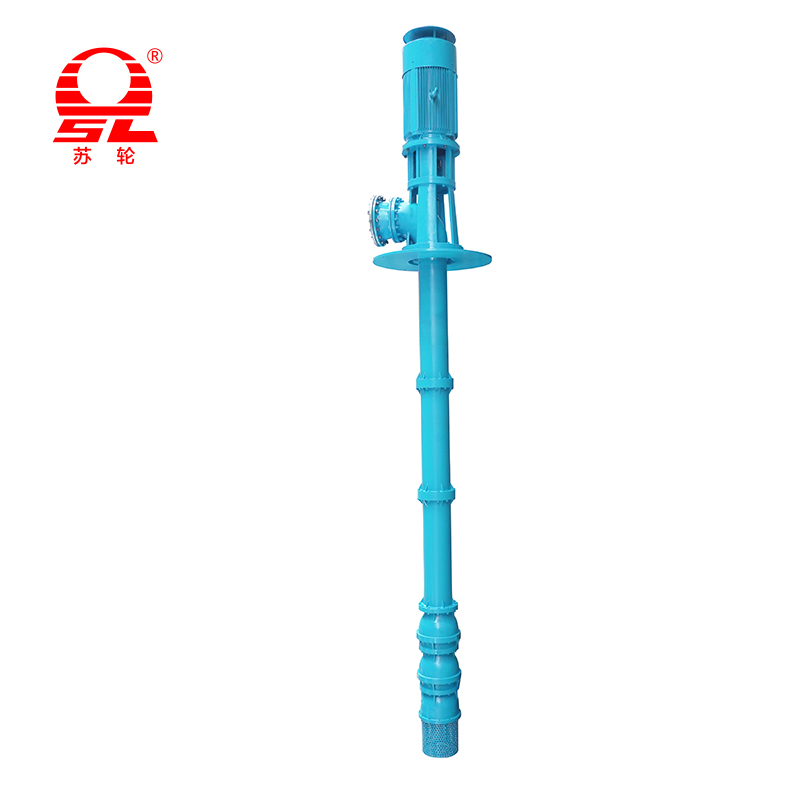 SLC Series Compact Vertical Long Shaft PumpFor deep-pit installations, this compact vertical long-shaft pump supports maintenance planning around shaft alignment, bearing checks, and defined lift procedures.View Product →
Column alignment and shaft straightness are not optional checks. A long shaft running slightly out of alignment can load the bearings, increase vibration, and wear the bowl clearance. The cost appears as bearing replacement, coupling wear, and eventually loss of head. For deep-pit service, a deep pit vertical long shaft pump should be specified with a maintenance plan that includes shaft runout checks, bearing lubrication intervals, and a defined lift procedure.
A submersible pump is maintained as a submerged package. The first sign of trouble may be a tripped protection relay, low insulation resistance, seal monitor alarm, or reduced flow. To inspect the seal chamber or impeller, the unit typically has to be lifted. In a wet well, that means crane access, guide rail condition, lifting chain inspection, and a safe isolation procedure. The maintenance itself may be straightforward, but the access setup determines the real cost.
Seal condition is central. A mechanical seal leak can allow moisture into the motor chamber, and cable entry damage can do the same. Frequent starts, abrasive solids, and poor power quality add stress. A submersible pump can be very reliable when selected correctly, but the maintenance strategy must treat seal monitoring and insulation testing as planned tasks rather than emergency responses.
The tasks below are the practical maintenance points that separate the two designs. The table is not a universal schedule. It is a planning comparison based on typical industrial wet-pit and sump duty, where continuous operation and contaminated water are common.
| Maintenance task | Vertical long shaft pump | Submersible pump | Procurement consideration |
|---|---|---|---|
| Routine vibration check | Accessible at the bearing housing or motor deck. | Requires external sensor or temporary access; internal condition is harder to observe. | Specify vibration limits and measurement points at order stage. |
| Bearing service | Usually accessible above the mounting plate; lubrication can be planned. | Bearing replacement often requires lifting and dismantling the motor section. | Ask for bearing type, lubrication method, and expected service interval. |
| Mechanical seal inspection | Seal area may be accessible from the top, depending on design and seal arrangement. | Seal chamber is inside the submerged unit; inspection usually follows a lift. | Include seal monitoring or moisture detection where duty is critical. |
| Motor insulation test | Terminal box and motor are above liquid and easier to isolate. | Cable and winding checks require isolation, drying, and sometimes removal. | Confirm cable length, cable entry protection, and insulation class. |
| Impeller wear check | Requires lifting the rotating assembly in many deep-pit designs. | Requires lifting the complete unit. | Keep a spare impeller and wear ring plan for abrasive duty. |
| Column or guide rail inspection | Column joints, shaft couplings, and support bearings need periodic checks. | Guide rails, lifting chain, and discharge connection need inspection. | Access steel is part of the maintenance cost, not an accessory. |
| Emergency response | Faults can often be diagnosed at floor level before lifting. | Flooding, seal failure, or cable damage may require immediate removal. | Hold a standby unit or plan a rapid exchange arrangement. |
A vertical long shaft pump quotation may include a long column, line shaft, bearing bracket, discharge head, and above-floor motor. A submersible pump quotation may look simpler because the motor, seal, and pump are packaged as one unit. Neither quotation shows the full cost of ownership. The items below should be priced separately during evaluation so that the comparison is honest.
Long shaft units often carry more fabricated components. Submersible units may have a lower packaged price at smaller sizes, but special cables, seal monitoring, and lifting equipment can narrow the gap.
Long shaft pumps need a stable mounting plate, alignment, and often a substantial floor opening. Submersible pumps need guide rails, lifting chain, discharge connection, and crane access for removal.
Both designs can be efficient. The difference comes from operating point, specific speed, motor cooling, and whether the pump runs at a stable duty or cycles frequently.
Floor-level access can reduce routine labor for long shaft pumps. Submersible maintenance may be less frequent but more labor-intensive per event because the unit must be lifted.
A planned bearing change is different from an unplanned wet-well failure. Downtime cost should reflect lost production, emergency labor, rental equipment, and environmental risk.
Long shaft pumps need bearings, shaft couplings, wear rings, and column seals. Submersible pumps need seals, cables, winding protection, and sometimes a complete standby unit.
A useful evaluation period is five years for continuous industrial duty. Over that window, the lower purchase price of a submersible unit can be offset by two seal events, one cable repair, and a crane lift. In another case, a long shaft pump may lose its advantage if the column alignment is poor or if the pit is too shallow to justify the extra structure.
Neither design is automatically more efficient. A vertical long shaft pump with a well-matched impeller and a stable operating point can run efficiently for years. A submersible pump with a compact motor can also be efficient, but motor cooling and cable losses deserve attention. The cost gap usually appears when the pump is throttled, oversized, or cycling instead of operating near its best efficiency point.
The chart is a planning illustration, not a guarantee. Actual hours depend on pit depth, lifting equipment, fluid abrasiveness, redundancy, and maintenance team experience.
For energy evaluation, ask for the full pump curve at the actual duty point. Check whether the selected impeller is trimmed or oversized. Confirm the motor efficiency at the operating load, not only at full load. For submersible units, review cable size and voltage drop because a long cable run can waste energy and reduce starting torque. For long shaft units, review bearing losses, shaft deflection, and whether the column is sized for the required flow velocity.
Downtime is often larger than the maintenance invoice. A wastewater wet well that loses a pump during peak inflow may need emergency pumping, temporary piping, and overtime labor. A steel mill cooling system may lose production if the sump pump cannot maintain return water flow. A chemical plant may face a controlled shutdown if a sump pump fails during a transfer operation.
Pit geometry can override a general preference. A deep, narrow sump with a dry motor deck favors the vertical long shaft design. A shallow wet well with limited headroom and frequent pump changes may favor a submersible unit. The following conditions should be checked before the specification is fixed.
 SCY Series Vertical Submersible PumpThis vertical submersible pump suits deep, narrow sumps where column length and mounting elevation must be checked before specification.View Product →
Long shaft pumps need enough column length and a stable mounting elevation. Submersible pumps need enough liquid above the suction to avoid vortexing and motor cooling problems.
A long shaft pump may need vertical space for shaft removal. A submersible pump needs crane or hoist access above the wet well. If neither is available, maintenance cost rises.
Clean water, abrasive slurry, and chemical waste create different wear paths. For aggressive fluids, review wetted materials, seal arrangement, and flush plans for either design.
Submersible pumps can be sensitive to suction conditions in shallow pits. Long shaft pumps may offer more flexibility in setting the impeller depth, but column losses must still be calculated.
Duty-standby operation changes the cost calculation. If a standby pump is installed, the cost of a submersible lift may be acceptable because the standby unit keeps the process running.
Long shaft pumps often use above-floor motors and standard starters. Submersible pumps need sealed cable entries, insulation protection, and sometimes special monitoring relays.
For projects where the pump must be selected against a defined sump layout, a review of the reasons to choose a long shaft pump over a submersible pump can help separate true process needs from habit. The decision should be documented with pit dimensions, liquid data, operating hours, and maintenance access assumptions.
A submersible pump is often the better choice when the wet well is compact, the unit must be portable, or the installation cannot support a long column and above-floor motor. It is also practical where the pump operates intermittently and the liquid is relatively clean. In these cases, the lower installed cost and simple package can outweigh the lifting risk.
 WQ Series Submersible Sewage PumpFor compact wet wells, this integrated submersible sewage pump handles solids and fibers, with a double sealing structure for easier maintenance.View Product →
Good applications include municipal sewage transfer, stormwater lift stations, basement drainage, small process sumps, and temporary bypass pumping. The key is to specify the right seal arrangement, cable length, motor protection, and impeller type for the solids present. A submersible pump should not be selected only by horsepower and discharge size. The solids passage, shutoff head, duty flow, and starts per hour all affect reliability.
A vertical long shaft pump is usually the better choice when the liquid surface is deep, the motor should stay dry, or the maintenance team needs floor-level access. It also suits applications where the pump runs continuously and the cost of lifting a submersible unit would be high. The design can handle large flow and high head when the column, shaft, and bearings are properly engineered.
Typical applications include intake pumping stations, cooling water sumps, wastewater wet wells, flood control stations, industrial process tanks, and deep pits with limited access. The pump can be configured with wear-resistant materials for abrasive duty or corrosion-resistant materials for chemical service. The maintenance plan should include shaft alignment checks, bearing lubrication, vibration monitoring, and a defined procedure for impeller inspection.
If the pump sits more than a few meters below floor level and the motor can be kept above the liquid, compare the five-year cost of a vertical long shaft pump first. If the pit is shallow, compact, and served by a reliable lifting system, compare a submersible package first.
The model below is deliberately simple so that it can be used in a tender review. Replace the figures with your own labor rates, energy price, and downtime cost. The purpose is to expose the items that are often left out of a pump quotation.
| Cost line | Vertical long shaft pump | Submersible pump | What to verify |
|---|---|---|---|
| Purchase and freight | Higher fabricated content; column length affects price. | Packaged unit; cable and guide rail may be separate. | Confirm scope includes discharge head, motor, cable, and controls. |
| Installation | Alignment, grouting, floor opening, and shaft check. | Guide rail, lifting chain, discharge connection, and cable support. | Include access steel and crane time. |
| Routine maintenance | Floor-level checks; bearing and coupling service. | Insulation and seal checks; periodic lift for inspection. | Use actual labor rates and planned hours. |
| Major maintenance | Impeller or bowl service requires a planned lift. | Seal or motor repair may require full removal. | Estimate frequency from fluid abrasion and operating hours. |
| Downtime | Often shorter for routine faults because diagnosis is at floor level. | Can be longer if the unit must be lifted and a spare is not ready. | Assign a cost per hour of lost production or environmental risk. |
| Energy | Depends on pump efficiency, column loss, and motor selection. | Depends on pump efficiency, cable loss, and motor cooling. | Compare at the actual duty point, not at rated flow only. |
Use the checklist below to keep the comparison factual. It also helps separate a low purchase price from a low life-cycle cost.
No. It is often cheaper when the motor is above the liquid and routine work can be done at floor level. It can lose that advantage if the column is misaligned, the pit is shallow, or the pump requires frequent impeller lifts. The real comparison is the five-year cost of access, labor, downtime, and spares.
Neither design wins by category. Wear depends on impeller geometry, material hardness, clearance, velocity, and solids concentration. A long shaft pump with a wear-resistant impeller and a submersible pump with an appropriate wear-resistant package can both work. The maintenance interval and spare parts plan matter more than the label.
Minor electrical checks may be done at the control panel, but seal, impeller, and motor work usually require the unit to be lifted. For critical duty, keep a complete standby unit or a rapid-exchange assembly so that repair does not stop the process.
Common causes include shaft runout, coupling misalignment, worn bearings, column joints that are not properly seated, cavitation, and operation away from the best efficiency point. Vibration should be checked at the bearing housing and compared with a baseline after installation.
Not necessarily. Energy use depends on the pump curve, motor efficiency, cable losses, and operating point. A submersible pump with a poorly sized cable or a throttled discharge can waste energy. A long shaft pump with a misaligned shaft or restricted column can do the same.
Use duty-standby operation with alternating run hours and a clear fault response. If the process cannot tolerate a lift delay, store a matched standby pump and the lifting hardware needed to exchange it. For long shaft units, keep bearings, couplings, and wear rings on site.

+86-0523- 84351 090 /+86-180 0142 8659


Add 1: Hongguang Industrial Park, Jingjiang City, Jiangsu Province, China
Add 2: No.68, Xinyi Road, Industrial Park, Jingjiang City, Jiangsu Province, China
+86-0523- 84351 090
+86-180 0142 8659
+0523-8435 5588