language
  русский
 عربى
عربى Indonesia
Home / Blog / Industry News / Why is a mixed flow pump the most efficient choice for large-flow industrial water transport
News


 2026.06.18
 Industry News
In high-difficulty fluid transport and large-flow drainage engineering, finding the optimum efficiency balance point between high flow rates and medium-to-low heads is a core technical challenge faced by engineering design and equipment selection personnel. Standard centrifugal pumps are often limited in head under high flow conditions, while axial flow pumps appear inadequate when a certain head lift is required. To fill this gap in the field of fluid dynamics, mixed fluid transport equipment combining the design advantages of both has become an indispensable solution in industrial and municipal fields.
From the perspective of design mechanism, the centrifugal axial mixed pump perfectly integrates the impeller design characteristics of centrifugal pumps and axial flow pumps. Standard centrifugal pumps rely mainly on the centrifugal force generated by the rotating impeller to move the fluid radially, while axial flow pumps rely entirely on the lift of the impeller blades to push the fluid forward axially.
The impeller shape of a mixed flow pump is intermediate between the two, with its blades arranged obliquely in a twisted shape. When the fluid moves in the impeller, it is subjected to both centrifugal force and axial lift, and the liquid particles flow out of the impeller at an inclined angle relative to the axis. This unique fluid dynamic characteristic enables the mixed flow pump to provide a much higher head than standard axial flow pumps, while significantly outperforming centrifugal pumps of the same power in terms of flow rate. This makes it incomparably efficient in scenarios requiring both large flow rates and specific pressure lifts, such as water conservancy drainage and irrigation, urban water supply, and industrial circulating water systems.
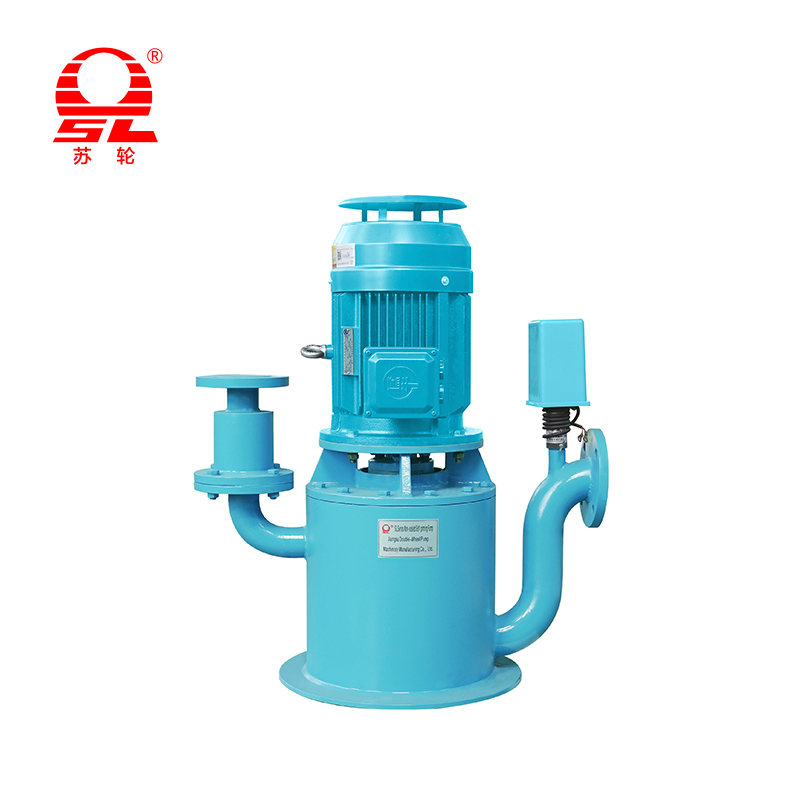
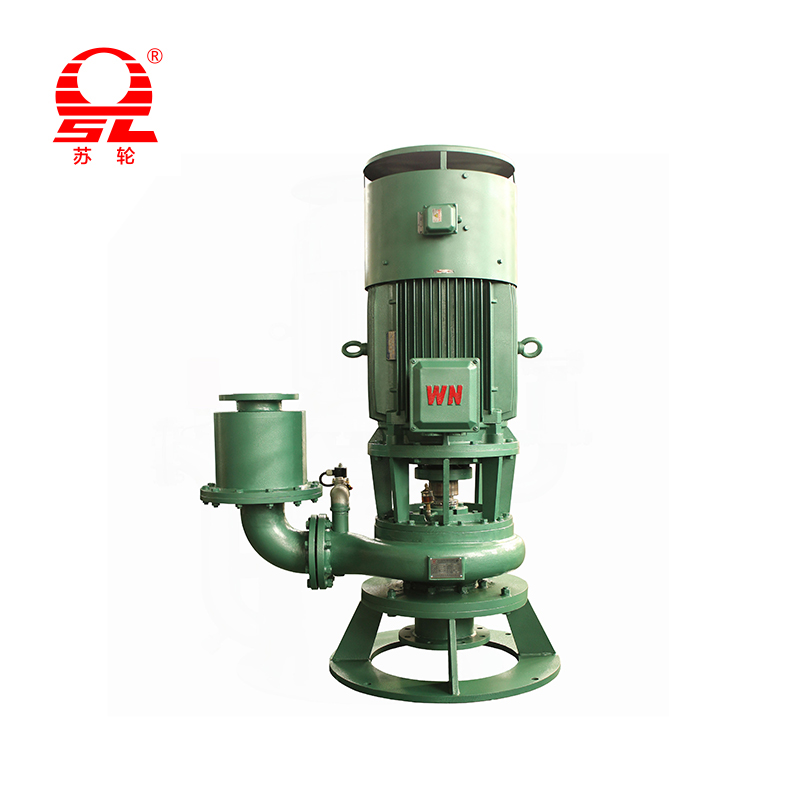
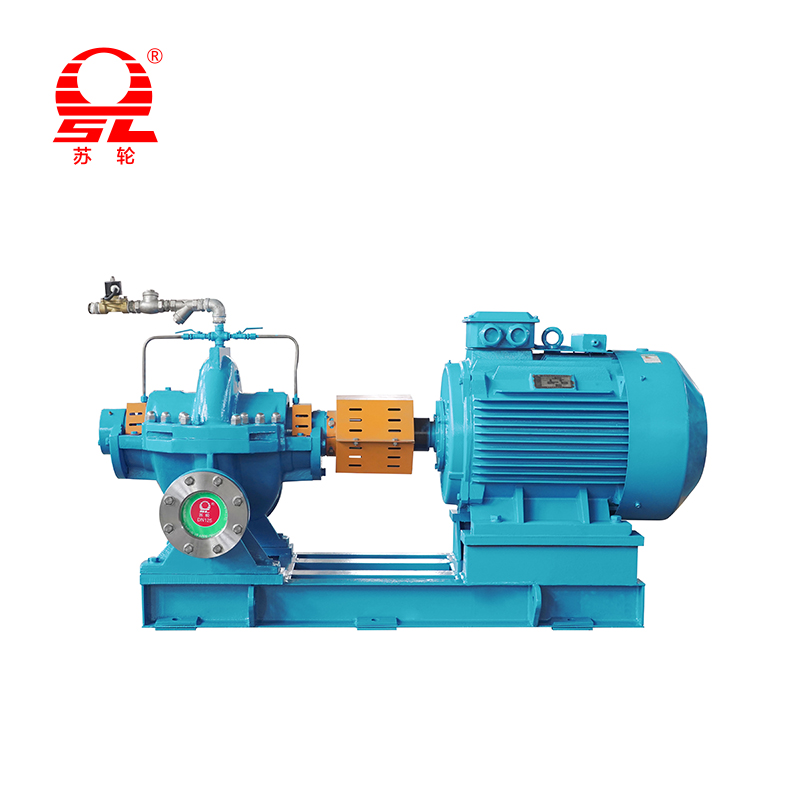
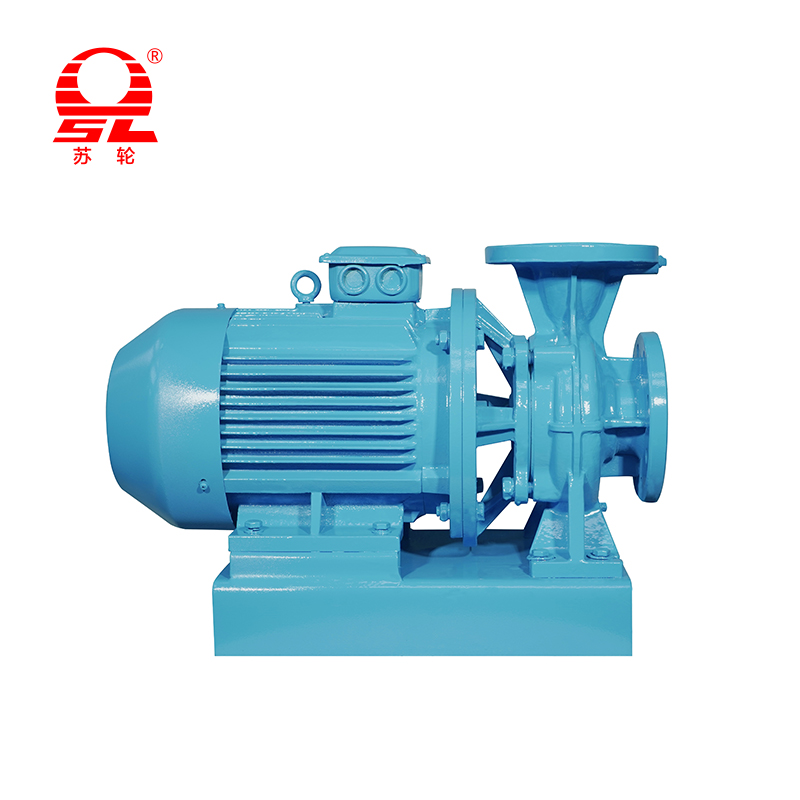
In actual engineering deployment, equipment is generally divided into horizontal installation and vertical installation according to space constraints and water source conditions. Among them, the vertical mixed flow pump occupies an extremely high application proportion in modern industrial infrastructure construction.
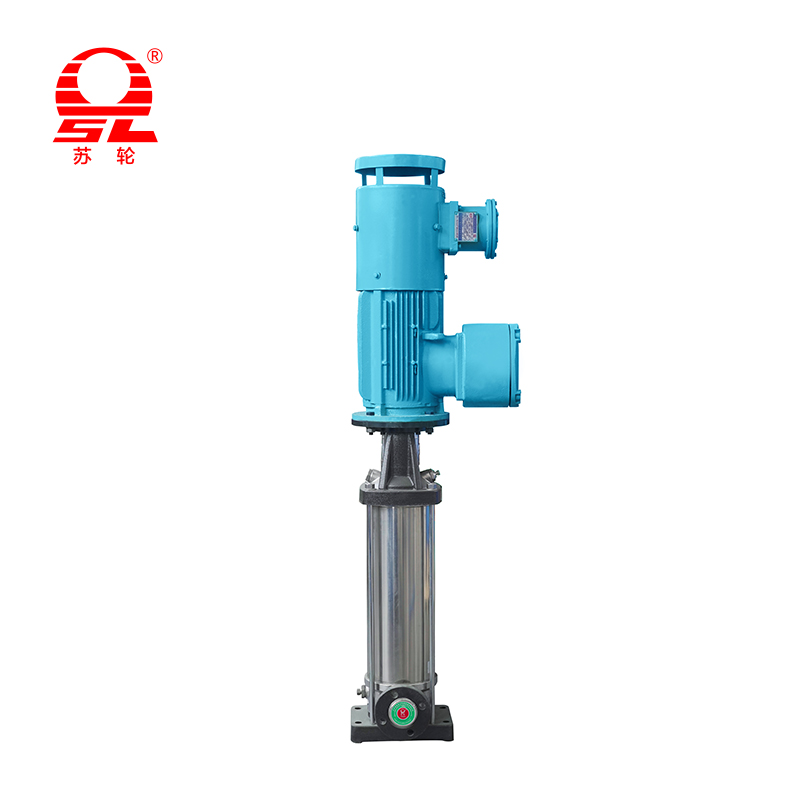
The axis of the vertical mixed flow pump is perpendicular to the horizontal plane, which brings significant engineering advantages. First, the vertical design greatly reduces the footprint of the pump house, which is crucial for space-constrained factory interiors and foundational pumping stations where land resources are tight. Second, the vertical structure allows the impeller to be directly submerged in the transported medium, which completely solves the priming difficulty before startup, achieves instant usability, and lowers the installation elevation of the pump, significantly improving anti-cavitation performance. The fluid enters directly from below and is discharged upward along the vertical axis, ensuring a smooth flow path and minimal hydraulic loss.
Facing complex conditions such as field flood control, river dredging, mine drainage, and reservoir water intake with huge water level fluctuations, traditional surface motor-driven pump sets are often restricted by flood control, suction lift limitations, and high installation and maintenance costs. At this time, the integrated advantages of the submersible mixed flow pump and the mixed flow submersible pump are fully demonstrated.
This type of integrated equipment directly connects the high-efficiency mixed flow impeller coaxially with a special submersible motor, and the whole unit is sealed inside an alloy casing to run completely submerged in water. The submersible mixed flow pump adopts a precision matching design of mechanical seals and flow channels, with multiple internal sensors to monitor the humidity and temperature inside the motor cavity in real time, preventing water infiltration. Because it eliminates long transmission shafts and complex surface pump house buildings, the mixed flow submersible pump drastically reduces civil construction investment costs and avoids mechanical vibration and alignment issues caused by long shaft operation. The natural cooling of the motor by the water body also gives the equipment a more stable thermal balance performance during continuous high-load operation.
To accurately evaluate equipment compatibility during the selection phase, it is crucial to understand the differences in key technical indicators among the mixed flow centrifugal pump, standard centrifugal pumps, and axial flow pumps. The core performance parameter characteristics under typical operating conditions are compared below:
| Performance Indicator | Traditional Centrifugal Pump | mixed flow centrifugal pump / mixed flow pump | Traditional Axial Flow Pump |
| Specific Speed (ns) | 30 to 300 | 300 to 600 | 500 to 1200 |
| Flow Rate Range | Small to Medium | Medium to Extremely High | Extremely High |
| Head Range | High Head | Medium-Low Head (Generally 5m to 30m) | Extremely Low Head (Generally 1m to 10m) |
| Power Curve Characteristics | Power increases as flow increases (Closed-valve startup) | Power curve is relatively flat (Wide stable operating range) | Power increases sharply as flow decreases (Open-valve startup) |
| Anti-Cavitation Performance (NPSHr) | Good | Excellent (Resistant to cavitation-induced flow interruption) | Poor (Extremely demanding on inlet water conditions) |
| Solid Particle Passing Ability | Weak | Strong (Wide impeller flow channels, not easily clogged) | Extremely Strong |
As shown by the parameter comparison, the specific speed range of the mixed flow centrifugal pump determines its higher operational efficiency in systems that handle large flow rates and require stable pressure to overcome pipeline resistance. Its relatively flat power curve means that when system pipeline pressure fluctuates, causing the actual operating flow to deviate from the design point, the motor will not easily overload and fail, significantly enhancing the robustness of system operation.
In actual operation, users often encounter problems such as the system running in low-efficiency zones due to inaccurate calculation of total head, or cavitation and vibration caused by vortices generated in the intake pool. When using the mixed flow pump series equipment, the key to solving these problems lies in the optimized design of the inlet flow channel and the correct installation depth.
For the vertical mixed flow pump, it must be ensured that the impeller has sufficient submergence depth to avoid the generation of air-intake vortices on the water surface. If encountering media containing a large amount of long fibers or large particle impurities, a submersible mixed flow pump equipped with an open or semi-open impeller should be preferred. Its spacious blade flow channels allow solid particles to pass smoothly, effectively avoiding motor burnout caused by jamming. Regularly checking the insulation resistance of the motor and the oil quality of the mechanical seal chamber is the key maintenance process to ensure the long-term stable underwater operation and extend the service life of the mixed flow submersible pump.

+86-0523- 84351 090 /+86-180 0142 8659


Add 1: Hongguang Industrial Park, Jingjiang City, Jiangsu Province, China
Add 2: No.68, Xinyi Road, Industrial Park, Jingjiang City, Jiangsu Province, China
+86-0523- 84351 090
+86-180 0142 8659
+0523-8435 5588