language
  русский
 عربى
عربى Indonesia
Home / Blog / Industry News / Can a Self-Priming Pump Run Dry? Risks, Limits & Protection Strategies
News


 2026.09.07
 Industry News
One of the most common questions plant engineers and maintenance teams ask when commissioning a new transfer system is whether a self-priming pump can handle temporary dry operation. The direct answer is: a self-priming pump should not run dry for more than a few seconds under normal circumstances, and even that brief window depends on the pump model, seal type, and impeller design. Running dry removes the liquid that lubricates and cools the internal components, which leads to overheating, seal failure, and mechanical damage. Understanding exactly what happens inside the pump during dry running, how long different designs can survive, and what protection measures are available will help you avoid costly downtime and premature pump failure.
Running dry refers to a condition where the pump operates without liquid inside the volute or casing. For a standard centrifugal self-priming pump, the liquid being pumped serves two critical functions beyond moving fluid: it lubricates the mechanical seal faces and it carries heat away from the stuffing box area, bearings, and the close-clearance zones between the impeller and the casing wear rings.
When a pump runs dry, the following sequence of events typically occurs:
The most immediate and observable damage is almost always at the mechanical seal. A dry-run mechanical seal failure presents as visible cracking or discoloration on the seal faces, often with a characteristic blue or brown heat tint. Once the seal leaks, the pumped liquid escapes, which can create safety hazards if the fluid is hot, corrosive, or flammable.
There is no universal dry-run time limit that applies to all pump designs. The safe duration depends on several construction-related factors:
| Pump Component / Feature | Typical Safe Dry-Run Duration | Failure Mode After Limit |
|---|---|---|
| Standard mechanical seal (carbon vs. silicon carbide) | 30 seconds to 2 minutes | Seal face cracking and leakage |
| Silicon carbide vs. silicon carbide seal faces | 2 to 5 minutes | Thermal fracture and leakage |
| Viton or EPDM elastomer components | 60 seconds or less | Elastomer melting and loss of sealing |
| Tungsten carbide seal faces | 30 seconds to 1 minute | Heat checking and wear |
| Pump with oil-filled seal chamber | 3 to 8 minutes | Oil degradation, then seal failure |
| Pump with external flush piping | Continuous with proper flush | Bearings may still overheat |
The values in the table above are approximate figures used for planning purposes. Actual safe dry-run time is also influenced by operating speed. A pump running at 2900 rpm will generate friction heat much faster than the same pump running at 1450 rpm. Similarly, a larger pump with more thermal mass inside the wetted parts will absorb heat for a longer period before critical temperatures are reached.
For pumps that need to handle occasional loss of suction, the safest approach is to install a dry-run protection device that stops the motor before temperatures reach damaging levels. Some heavy-duty industrial self-priming pumps are available with reinforced seal chambers and specialized seal face materials that improve dry-run tolerance, but this only extends the window from roughly one minute to several minutes; it does not make dry running a routine operating mode.
Understanding the common root causes of dry running helps operators address the problem before it damages the pump. The following scenarios are frequently seen across industrial plants, water treatment facilities, and agricultural applications:
A small air leak in the suction pipe, flange joint, or foot valve allows air to enter the system. The self-priming pump can initially remove the air and re-prime, but if the leak worsens or if the liquid level drops below the suction pipe inlet, the pump will draw only air and enter a dry-running state.
When the supply tank, pit, or well is emptied faster than it refills, the suction pipe eventually becomes exposed. This is one of the most common causes of dry running in wastewater transfer, stormwater drainage, and industrial sump applications.
A clogged strainer or foot valve restricts liquid flow while the pump continues to operate. Under this condition, the pump may create a vacuum that partially vaporizes the liquid, leading to cavitation and intermittent dry running at the seal area. This condition is sometimes mistaken for pure dry running, but the damage is similar.
A stuck-open check valve on the discharge side can allow liquid to drain back through the pump when it stops. On the next start, the pump must re-prime itself. If the liquid source is close to the pump and above the pump centerline, re-priming is usually quick. If the source is below the pump, a damaged foot valve means the pump must evacuate air from the entire suction line, a process that takes longer and may overheat the seal if the pump is not designed for prolonged self-priming operation.
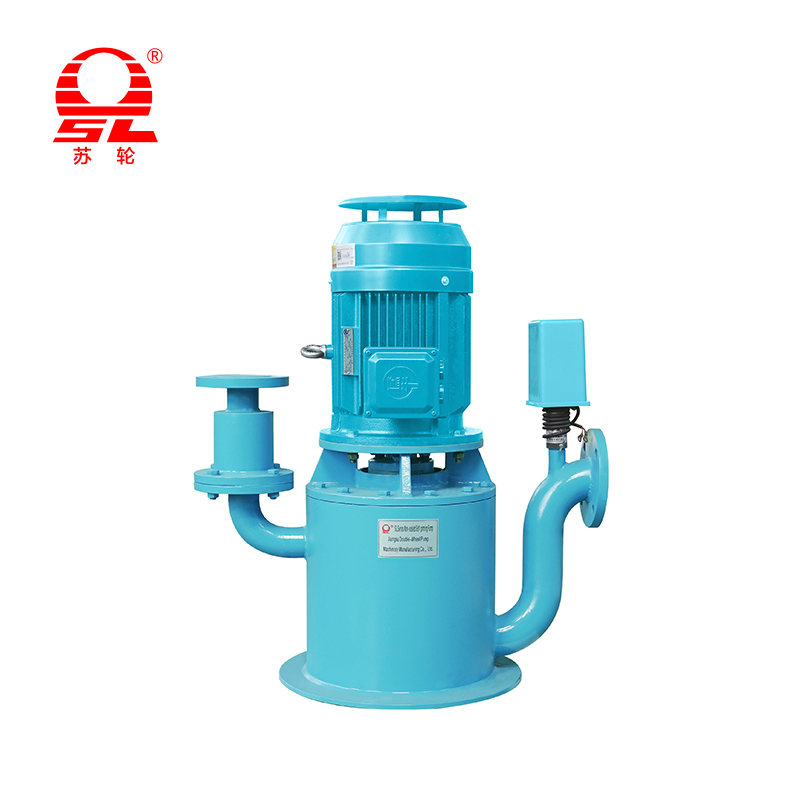
Not all self-priming pumps use the same internal construction. The WFB series non-sealed automatic self-priming pump, which is a signature product of Jiangsu Double-wheel Pump Industry, is designed without a conventional mechanical seal. Instead, it employs a sealless structure that eliminates the most vulnerable dry-run component: the mechanical seal.
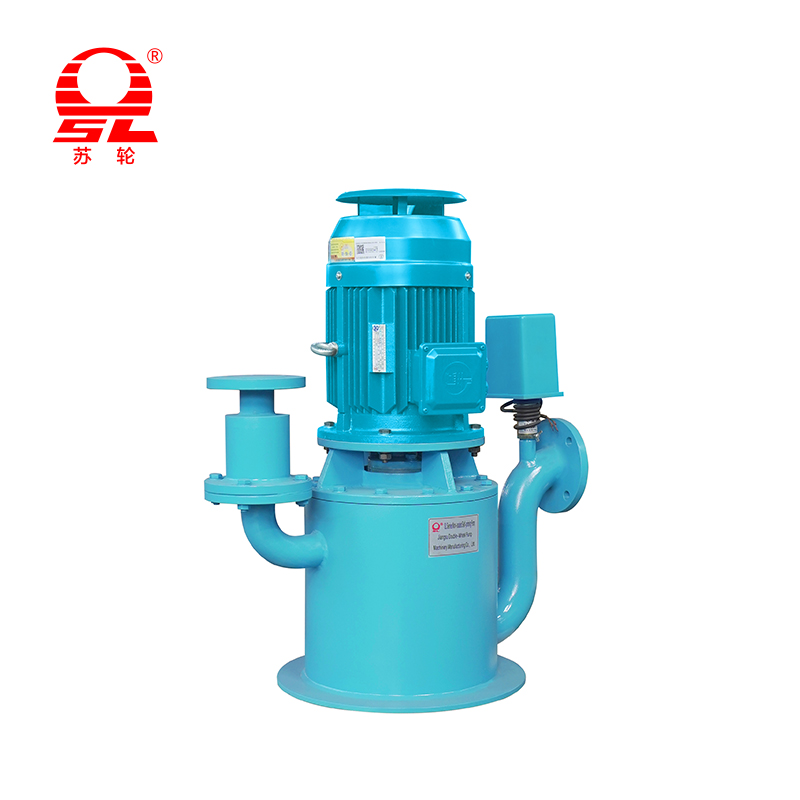 WFB Series Sealless Self-Priming Pump with Dry-Run ToleranceThis pump eliminates the mechanical seal, the most vulnerable dry-run component, allowing brief liquid-free operation during self-priming. Its sealless design suits variable suction conditions and repeated air evacuation, making it a robust choice for demanding industrial applications.View Product →
Because there are no seal faces to overheat and crack, the WFB series has inherently better dry-run tolerance than mechanically sealed pumps. The pump can briefly operate without liquid during the self-priming process without the immediate risk of seal destruction. This is a meaningful advantage in applications where suction conditions are variable and the pump must repeatedly evacuate air from the suction line.
However, "sealless" does not mean "maintenance-free under dry conditions." The impeller, casing, and internal wear components still require liquid for heat dissipation. Operating a sealless pump completely dry for extended periods can still cause thermal damage to the pump casing, impeller, and the rubber or polymer components used in the volute area. The improvement is in the allowable window, not in the elimination of all dry-run consequences.
Different self-priming pump series offered by industrial manufacturers have different levels of dry-run resistance based on their hydraulic design and sealing arrangement. The following table outlines the main construction types and their relative tolerance to dry operation:
| Pump Type | Seal Arrangement | Relative Dry-Run Resistance | Best Suited Applications |
|---|---|---|---|
| WFB series sealless self-priming pump | No mechanical seal | High | Wastewater, industrial sump, stormwater, chemical transfer |
| GJB high-efficiency automatic self-priming pump | Mechanical seal with reinforced cooling | Medium | Clean water, light slurry, agricultural irrigation |
| Heavy-duty self-priming trash pump | Large mechanical seal with oil reservoir | Medium-High | Sewage, sludge, debris-laden water |
| Standard end-suction self-priming pump | Single mechanical seal | Low | Booster duty, water transfer, industrial washing |
When selecting a self-priming pump for an application where suction loss is a realistic possibility, the WFB sealless design or a pump with a double mechanical seal and an external flush plan is recommended. These configurations significantly reduce the risk associated with accidental dry running.
Even the best pump design benefits from a layered protection approach. Depending on your budget, the criticality of the application, and the existing control system, you can choose from several protection methods.
The simplest and most cost-effective protection is a float switch or ultrasonic level sensor in the supply tank. The switch cuts power to the pump when the liquid level drops below a preset point. This method works well for sumps, tanks, and pits where the liquid level can be reliably measured.
Installing a pressure transmitter or pressure switch on the pump discharge line detects when the pump loses pressure due to dry running. The control logic stops the pump when the discharge pressure drops below a threshold for a set period. This method responds quickly and works for most pumped fluids.
A motor protection relay or variable frequency drive with current monitoring can detect the decrease in motor current that occurs when the pump transitions from pumping liquid to pumping air. Since the motor consumes significantly less power when unloaded, this method provides reliable dry-run detection without additional sensors in contact with the fluid.
A thermocouple or RTD mounted on the pump casing or near the seal chamber trips an alarm when temperature rises above a safe limit. This is a direct measurement of the actual damage-causing condition, which makes it highly reliable. However, the response can be slower because the sensor measures the casing temperature rather than the seal face temperature.
For self-priming pumps that start with an empty suction line, the control system can limit the self-priming time to a preset value. If the pump has not achieved prime within the allotted time, the motor stops and an alarm is triggered. This method prevents the pump from running in a dry state indefinitely while attempting to re-prime.
Each part of a self-priming pump responds differently to dry operation. Recognizing the specific damage patterns helps with root-cause analysis and future prevention.
The mechanical seal is the first component to fail during dry running. The primary damage mechanisms are:
A seal that has undergone dry-running damage may continue to operate for a short period, but it will almost certainly develop a leak. In many plants, the first visible sign of a dry-run incident is a small pool of liquid under the pump shaft area.
The impeller is the rotating component that transfers energy to the liquid. During dry running, the impeller still rotates at full speed, and if it contacts the casing or wear rings, the resulting friction generates localized heat and removes material. Over a prolonged dry-run event, the impeller may become permanently deformed, balanced, or seized inside the casing.
Although the bearings themselves are not directly wetted by the pumped liquid, the heat that radiates from the seal chamber and pump casing during dry running can raise bearing temperatures. In a long dry-run event, the bearing grease can liquefy and escape, leaving the bearings without lubrication. This leads to premature bearing failure, which shows up as vibration and noise long after the original dry-run incident.
When specifying a self-priming pump for a new project or replacing an existing unit, the question of dry-run tolerance should be part of the selection criteria. For applications with reliable suction conditions—such as a flooded suction from an elevated tank—the dry-run risk is minimal, and a standard mechanical seal pump is acceptable. But for applications where suction conditions are less predictable, the following factors should guide your decision:
For industrial users who need a pump with strong self-priming capability and the ability to handle occasional suction interruption, the WFB series sealless self-priming pump is a practical choice. This pump series eliminates the mechanical seal entirely, which removes the most common dry-run failure point. It also offers good corrosion resistance and wear resistance, making it suitable for a wide range of industrial liquid transfer duties.
Beyond equipment selection and protection devices, the way operators start and supervise self-priming pumps has a direct effect on dry-run frequency.
Before starting a self-priming pump, the operator should verify that the suction line is filled with liquid if the pump is below the source level, or that the pump casing contains sufficient liquid for initial priming. Many self-priming pumps can handle a partially empty casing, but starting with a dry casing increases stress on the seal and requires more time to achieve prime.
Regular inspections of the suction pipe, flanges, and foot valve should be part of the preventive maintenance schedule. A small air leak that goes unnoticed for weeks can cause frequent, hard-to-diagnose dry-running events that shorten the pump life. A simple pressure test or visual inspection of the suction line when the pump is off can reveal leaks.
If the self-priming pump is equipped with a foot valve at the bottom of the suction pipe, the valve should be inspected periodically for proper seating. A foot valve that leaks back allows the suction pipe to empty, forcing the pump to re-prime at every start. This repeated re-priming creates more opportunities for dry-running damage each time the water level in the suction line is low.
Tracking the self-priming time from start to flow delivery can be a useful diagnostic tool. If the priming time gradually increases, it suggests a developing suction line issue. Likewise, an increase in motor current or vibration may indicate that wear has already occurred from previous dry-run events. Maintaining accurate records helps identify these trends before they lead to a complete failure.
No. The pump should be primed before the first startup. Even a new pump can suffer mechanical seal damage if it runs dry for more than a few seconds. Fill the pump casing and suction line with liquid before energizing the motor, or follow the manufacturer's instructions for initial prime.
Many self-priming pumps are designed to re-prime automatically once the liquid source returns. However, the time needed for re-priming depends on the total suction lift and the available liquid in the casing. During the re-priming phase, the pump is operating partially dry, which creates a temporary high-temperature stress on the seal. Repeated re-priming cycles without adequate cooldown periods can still damage the pump.
No. Sealless designs such as the WFB series have a higher inherent tolerance because they lack a mechanical seal. Mechanical seal pumps with externally flushed seals or oil reservoirs also have improved resistance. The exact dry-run duration each pump can withstand is determined by its design details, not just by the "self-priming" label.
Cavitation occurs when vapor bubbles form in the liquid because the localized pressure drops below the vapor pressure. Dry running occurs when the pump has no liquid at all or only air in the casing. Both conditions cause damage, but cavitation primarily damages the impeller surfaces, while dry running primarily damages the seal and causes overheating.
A variable frequency drive can be programmed to monitor motor current and detect the reduced load of a dry-running pump. However, this requires proper configuration and a reliable threshold setting. A VFD alone does not provide automatic dry-run protection unless its protection features are correctly enabled and tuned for the specific pump and application.
Yes. Float switches, pressure sensors, current relays, and temperature sensors can all be added to an existing pump installation with minor modifications. For an existing mechanically sealed self-priming pump, adding a temperature sensor near the seal chamber and a current-based motor relay are the two most effective retrofits.
For plant engineers and procurement teams who want to reduce dry-run risk at the design stage, the following product families deserve attention.
The GZB series high-efficiency energy-saving self-priming pump is engineered for industrial applications where energy consumption and reliable priming are both important. This series uses a high-efficiency hydraulic design to achieve fast priming while maintaining good efficiency across the operating range. Its mechanical seal arrangement is designed for moderate dry-run resistance, which works well when the pump is paired with proper level control.
For applications involving wastewater, slurry, or fluids with solid particles, the GJB high-efficiency automatic self-priming pump provides a good balance of solid handling capability and self-priming performance. It is suitable for pumping water with suspended solids, small debris, and other contaminants that would quickly damage pumps with close clearances. However, this pump also relies on a mechanical seal, so using a level switch or current relay for dry-run protection is recommended.
If the application demands maximum dry-run tolerance and continuous operation in demanding environments, the WFB sealless self-priming pump is the most appropriate selection among the common industrial options. Its seal-free design removes the single most vulnerable component to dry-run damage, making it especially suitable for chemical plants, wastewater treatment stations, and other sites where pump outages can lead to expensive process interruptions.
The total cost of a dry-run incident goes far beyond the price of a replacement seal. Consider the following cost components when evaluating the value of protection systems:
In a mid-sized industrial facility, a single dry-run incident that goes unnoticed for 30 minutes can easily result in several thousand dollars of total cost when the indirect effects are included. Given that a complete dry-run protection package—sensor, relay, and wiring—typically costs only a small fraction of that amount, the return on investment is overwhelmingly positive.
For new pump installations at industrial sites, the following approach is recommended:
Following these recommendations will significantly reduce the frequency of dry-run events and extend the service life of your self-priming pump. When a dry-run event does occur, always inspect the seal, impeller, and bearings before returning the pump to service. Replacing a marginally damaged seal immediately is far less expensive than handling a complete pump failure later.
A self-priming pump can tolerate only a very short period of dry running before damage begins. The mechanical seal is usually the first component to fail, followed by thermal damage to the impeller, casing, and bearings. Sealless self-priming pump designs such as the WFB series offer improved dry-run resistance by removing the mechanical seal entirely, which makes them a strong choice for applications where suction interruptions are possible. Regardless of pump selection, the proper approach is to combine a pump with moderate dry-run tolerance, a protection device appropriate for your control system, and regular inspection of suction conditions. This three-layer strategy minimizes the risk of expensive failures and keeps your pumping system operating reliably even when abnormal conditions occur. Choose a pump that matches your actual dry-run risk profile, not one chosen only on the basis of initial price or maximum flow rate.

+86-0523- 84351 090 /+86-180 0142 8659


Add 1: Hongguang Industrial Park, Jingjiang City, Jiangsu Province, China
Add 2: No.68, Xinyi Road, Industrial Park, Jingjiang City, Jiangsu Province, China
+86-0523- 84351 090
+86-180 0142 8659
+0523-8435 5588