language
  русский
 عربى
عربى Indonesia
Home / Blog / Industry News / Centrifugal Pump vs Self-Priming Pump: Key Differences for Industrial Buyers
News


 2026.09.14
 Industry News
A newly installed pump sits above a collection pit. The operator presses start, the motor runs, and the impeller spins, but no liquid reaches the discharge pipe. After ten minutes of checking, the engineer identifies the classic problem: the pump is air-bound. The suction line is below the pump, and a standard centrifugal pump cannot pull liquid upward on its own when air remains in the casing.
That single event illustrates the difference between a centrifugal pump and a self-priming pump. A standard centrifugal pump needs its casing and suction pipe filled with liquid before it can build pressure. A self-priming pump evacuates air from the suction line automatically, using liquid retained in its casing to create the vacuum needed for priming. This design difference changes installation height, start-up reliability, efficiency, and the range of applications each pump can handle.
The sections that follow compare working principles, efficiency, installation requirements, maintenance characteristics, application scope, and selection criteria for both pump types, with reference to pump series used in industrial water handling, wastewater service, chemical transfer, and flood control.
The core difference between the two pump types is priming capability. A standard centrifugal pump cannot remove air from its suction line. If the pump casing contains air instead of liquid, the impeller simply churns the air, and no vacuum is generated. The pump must be primed manually, or the suction supply must arrive under positive pressure.
A self-priming pump solves this problem by keeping a permanent reservoir of liquid in its casing. During start-up, the impeller mixes air from the suction line with this retained liquid. The air-liquid mixture moves into a separation chamber where air escapes and liquid falls back for recirculation. After a short period, the suction line becomes fully liquid-filled, and the pump operates like a normal centrifugal pump.
This difference affects three practical areas:
A standard centrifugal pump converts the rotational energy of an impeller into kinetic energy in the liquid, then into pressure energy as the liquid passes through the volute. It is the most widely used pump type in industry because of its simple structure, low maintenance requirement, and high efficiency at the best efficiency point.
Key components of a typical horizontal centrifugal pump include the casing, impeller, shaft, bearings, and shaft seal. The impeller can be closed, semi-open, or open, depending on the fluid characteristics. Internal clearances are kept small to limit recirculation losses and maintain hydraulic performance.
The fundamental operating condition is a fully primed casing. In most installations, the pump is placed below the liquid supply so that liquid flows into the casing by gravity, or the suction line is fitted with a foot valve and filled manually before starting. If the pump loses prime during operation because of air ingress, vortex formation, or a leaking joint, the flow stops and the operator must re-prime the system manually.
For clean water pumping, cooling circuits, irrigation with flooded suction, and general industrial transfer duties, the standard centrifugal pump remains the most energy-efficient choice. In these installations, where the liquid source is always above or near the pump centerline, the absence of a priming mechanism is not a limitation but a simplification.
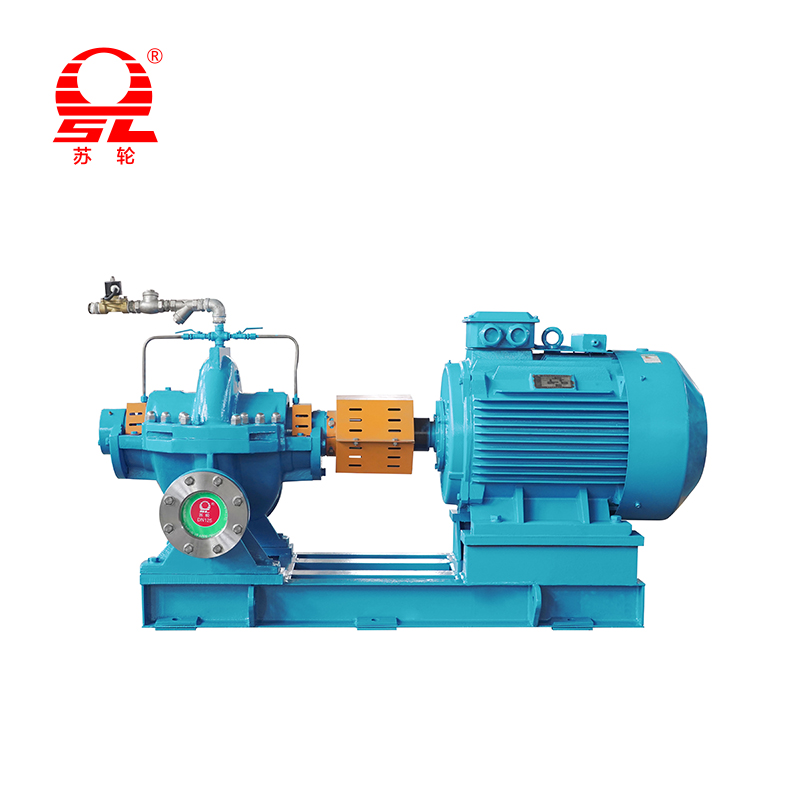
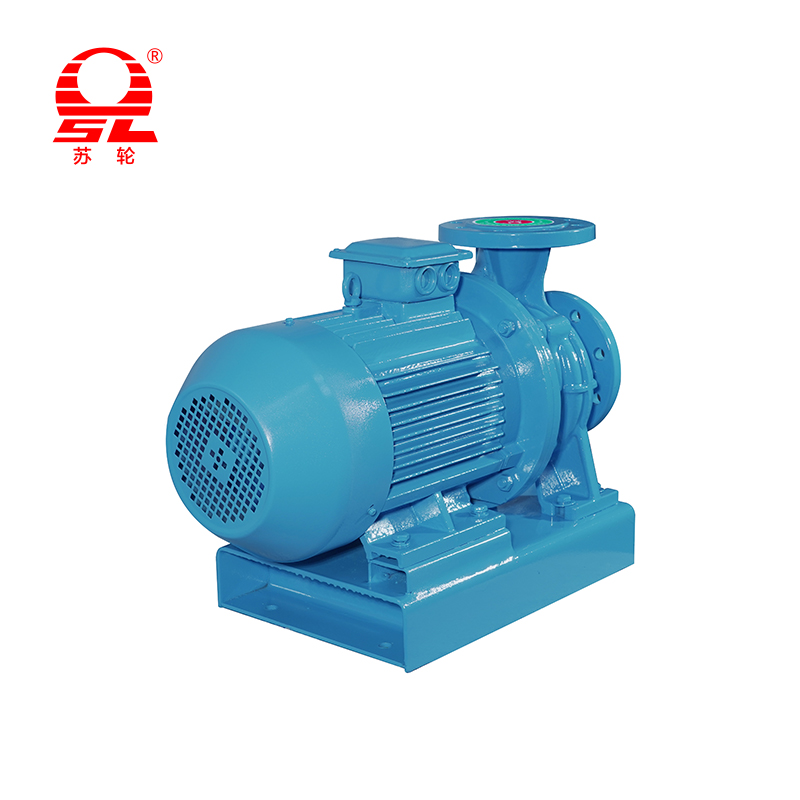 SLW Series Horizontal Centrifugal Pump for General Water TransferThis horizontal centrifugal pump suits clean water duties like cooling circuits, irrigation, and industrial transfer. Its compact design and low noise are worth considering for flooded-suction installations where standard pumps are the most energy-efficient choice.View Product →
A self-priming pump is a centrifugal pump with an additional internal priming stage. The casing is designed to retain a volume of liquid after the pump stops. When the pump is restarted with air in the suction line, the impeller mixes that retained liquid with the incoming air. The mixture travels to a separation chamber, where the air is released through the discharge side and the liquid falls back to the impeller area for another cycle. This process repeats until all air is evacuated and the pump transitions to normal liquid pumping.
The practical advantage is clear: a self-priming pump can handle a suction lift of roughly 5 to 7 meters without requiring a foot valve or manual priming. It is especially useful in wastewater lift stations, construction dewatering, chemical unloading, and other situations where the liquid level fluctuates or the pump operates intermittently.
Because the internal chamber and recirculation path add hydraulic losses, the efficiency of a self-priming pump is generally lower than that of an equivalent standard centrifugal pump. The gap typically sits between 3 and 8 percent, depending on the pump size and design. For applications where priming reliability matters more than a marginal efficiency difference, this trade-off is acceptable and often the determining factor.
The internal structure of a self-priming pump is worth studying before making a purchase decision, because the casing geometry and separation efficiency directly affect priming speed, air-handling capacity, and long-term reliability.
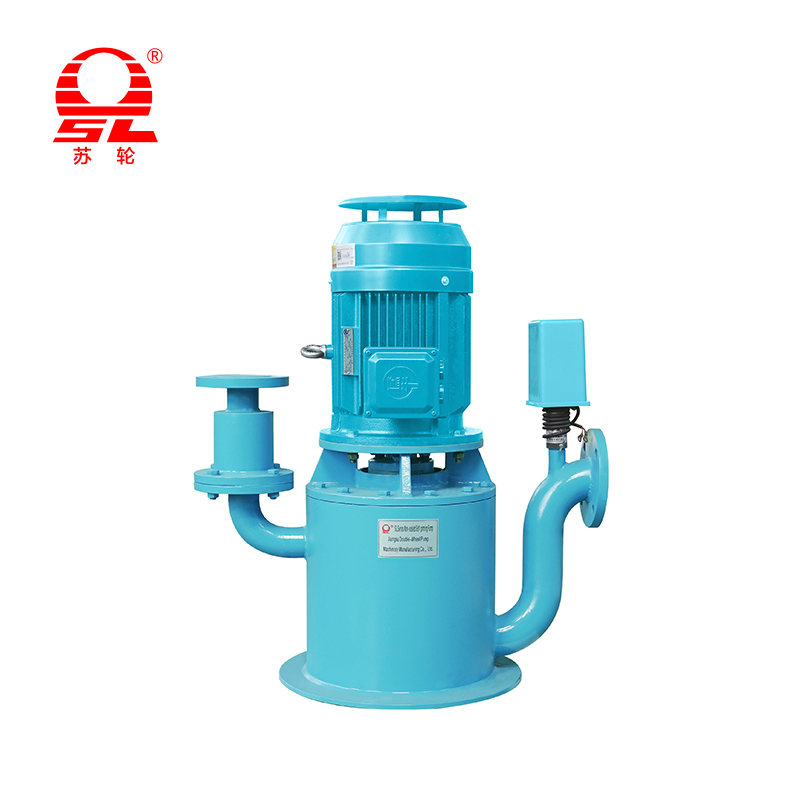
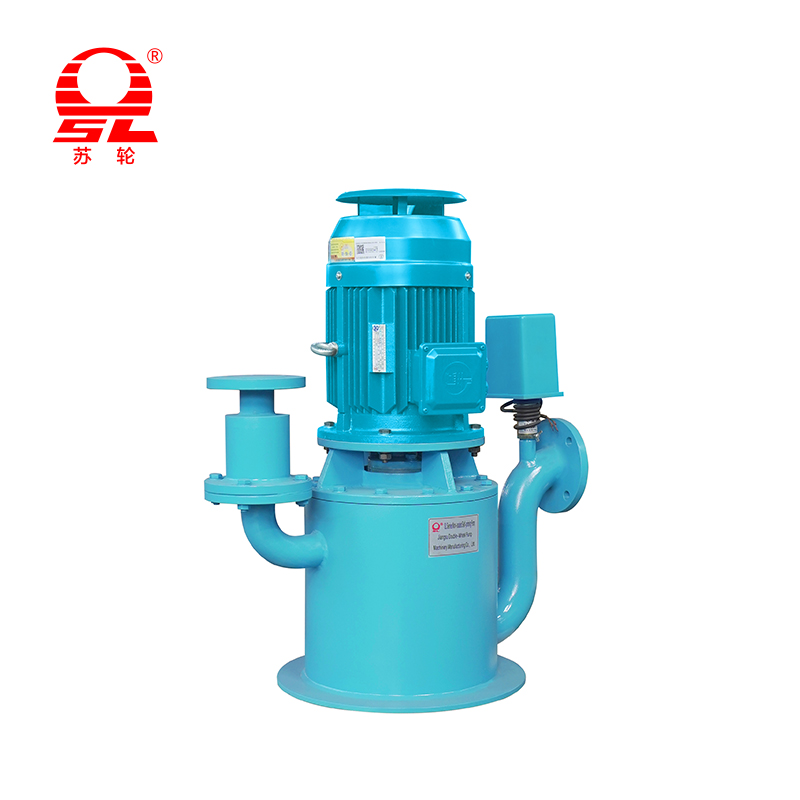 WFB Seal-Free Self-Priming Pump with Self-Priming CapabilityFor applications with fluctuating or open suction sources, this seal-free pump can self-prime up to 7 meters without anchor bolts or embedded parts. Its wide material options make it relevant when comparing self-priming and standard centrifugal pumps.View Product →
The table below summarizes the main differences between a standard centrifugal pump and a self-priming pump. Use it as a quick reference when discussing specifications with your engineering team or pump supplier.
| Feature | Standard Centrifugal Pump | Self-Priming Pump |
|---|---|---|
| Priming method | Manual priming or flooded suction required | Automatic, using liquid retained in the casing |
| Typical suction lift | None without external priming | 5 to 7 meters depending on design |
| Foot valve requirement | Usually required for non-flooded suction | Often not required |
| Hydraulic efficiency | Higher, typically 70 to 85 percent | Lower by 3 to 8 percent |
| Air handling | Poor; air binds the pump | Handles air during the priming cycle |
| Installation position | Below or close to liquid level | Can be installed above liquid level |
| Intermittent duty | Risk of losing prime | Re-primes automatically |
| Initial cost | Lower | Higher |
If air enters the suction line at any point, the low-pressure zone collapses, the pump loses prime, and the flow stops until the system is re-primed. For this reason, standard centrifugal pumps are sensitive to suction-side leaks, vortex formation in the supply tank, and intermittent duty cycles that allow the suction line to drain.
This internal recycling mechanism is what makes automatic re-priming possible. It also means the pump can tolerate a modest amount of air entrainment during normal operation without immediately losing prime, which is valuable in applications where the suction line occasionally swallows air.
For continuous operation with a flooded suction, a standard centrifugal pump is almost always the more efficient machine. The efficiency gap comes from the internal recirculation required for self-priming action. The chart below shows typical efficiency levels for both pump types at their best efficiency point in the 10-to-100-kilowatt power range.
Representative efficiency values at best efficiency point for pumps in the 10 to 100 kW range, based on typical hydraulic designs.
The actual efficiency of any specific pump depends on the hydraulic design, impeller workmanship, internal clearances, and the operating point relative to the best efficiency point. When a pump runs at a constant duty for thousands of hours per year, a 4 to 6 percent efficiency difference translates into a meaningful energy cost. However, when the pump operates intermittently, or when manual re-priming would cause significant operator downtime, the self-priming design is often the more cost-effective choice overall.
Consider a pump that runs 2,000 hours per year at 30 kilowatts of shaft power. At an electricity price of 0.12 US dollars per kilowatt-hour, each 1 percentage point of efficiency loss represents roughly 72 US dollars per year. A 5 percentage point efficiency gap creates an additional annual operating cost of about 360 US dollars. This figure is small compared with the labor cost of manual priming operations in remote or automated installations, where an operator visit to re-prime a standard centrifugal pump can cost far more than the energy difference.
A standard centrifugal pump works best with flooded suction. The pump is placed at or below the liquid level, which simplifies the suction piping and eliminates the need for priming devices. If the pump must be installed above the liquid level, the suction line needs a foot valve, an external priming source, and careful attention to pipe layout to avoid vortex formation and air ingress.
Self-priming pumps tolerate above-grade installations much more easily. A typical installation places the pump on a skid next to a pit or tank, with a suction hose dropped directly into the liquid. This arrangement is common in temporary dewatering, emergency flood control, and mobile tanker unloading operations.
Both pump types use similar impeller and shaft seal technology. The maintenance difference lies in the additional parts of a self-priming pump: the separation chamber and recirculation passages can be more difficult to clean after pumping dirty or fibrous liquids. On the other hand, a self-priming pump avoids the maintenance burden of a foot valve, which is a frequent source of trouble in standard suction-lift installations.
Self-priming pumps usually have a larger casing volume than an equivalent standard centrifugal pump, which means a larger footprint. If floor space inside a pump room is tight, this can become a deciding factor. A standard centrifugal pump with a flooded suction arrangement typically offers the most compact installation.
Start with the liquid level relative to the pump, then consider the operating pattern and the energy cost over the pump lifetime. The two cards below summarize the typical boundaries for each pump type.
For applications that frequently lose prime, such as pumping from open channels, settling tanks, or fluctuating sumps, a high-head self-priming pump can maintain reliable suction lift while delivering the discharge pressure needed for long pipeline runs.
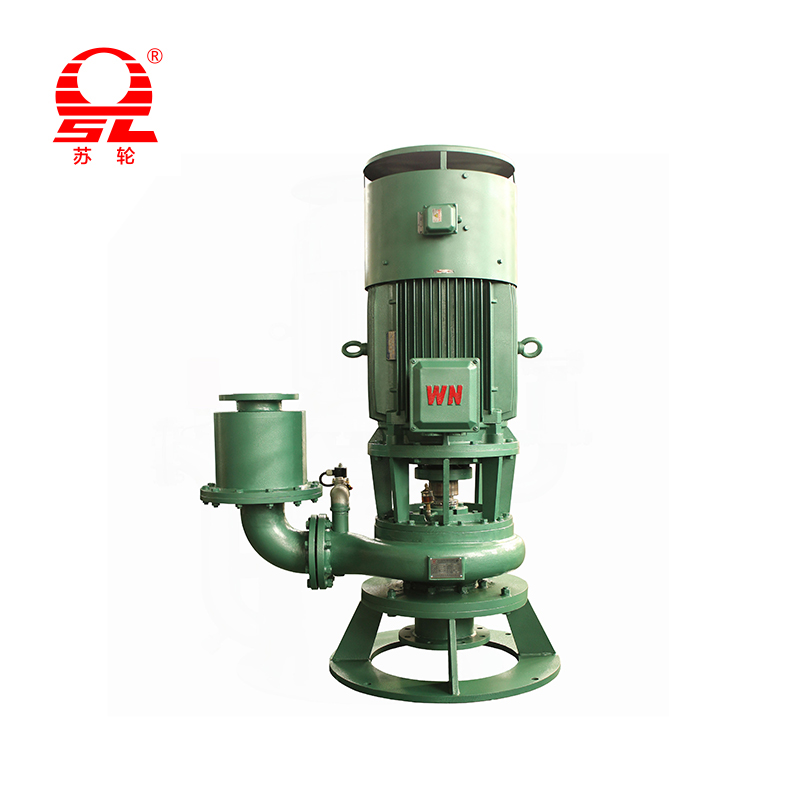
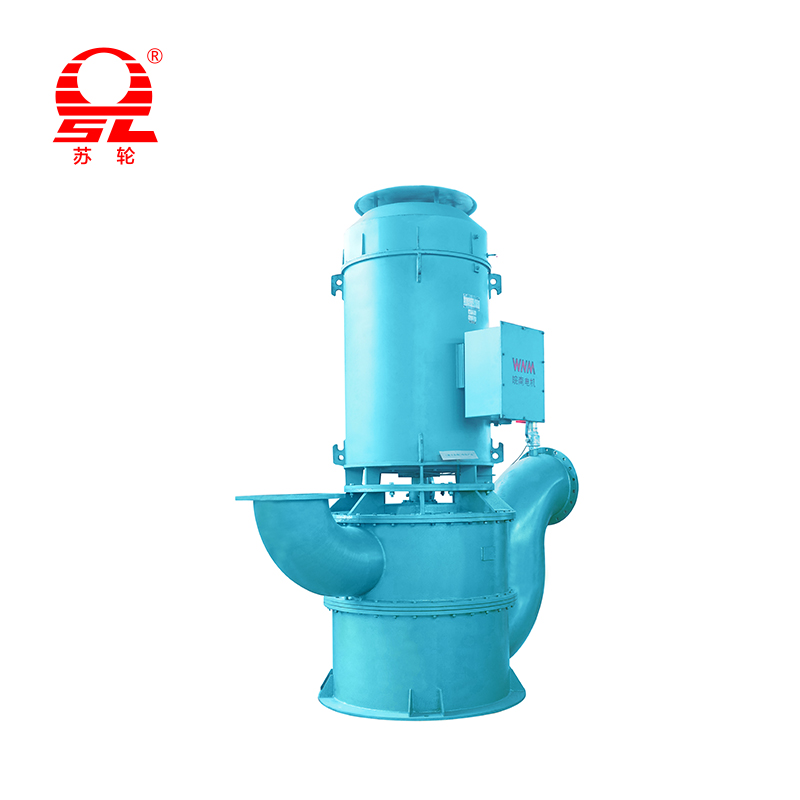 GZB High-Efficiency Energy-Saving Self-Priming PumpThis upgraded self-priming pump features a labyrinth centrifugal airflow seal that eliminates mechanical friction and leakage. It suits high-head duties with variable liquid levels, offering reliable suction lift and long pipeline discharge pressure across many materials.View Product →
Many industrial facilities use both pump types in different parts of the same plant. A water treatment plant, for example, might use standard centrifugal pumps for the main raw water intake where the source is always flooded, and self-priming pumps for chemical dosing sumps and sludge pits where the liquid level changes continuously. Matching the pump type to each specific duty keeps the overall installation cost low without sacrificing reliability.
Most standard centrifugal pumps cannot be converted simply by modifying the casing. A self-priming pump requires a separation chamber and a carefully sized internal recirculation path. In practice, adding an external vacuum priming system or an air separator is the only feasible conversion, and the result is usually less reliable than a purpose-built self-priming pump.
Under normal conditions at sea level, a self-priming pump can lift water from approximately 5 to 7 meters below the pump centerline. The exact value depends on the liquid temperature, altitude, friction losses in the suction line, and the pump design. The theoretical maximum suction lift for water at 20 degrees Celsius is about 10.3 meters, but real installations rarely exceed 7 meters.
Yes, generally by 3 to 8 percent. The internal recirculation needed for self-priming operation increases hydraulic losses. When the pump runs continuously at a steady duty point, a standard centrifugal pump is more energy-efficient. When the pump starts and stops frequently, the efficiency difference matters less than the automatic priming capability of the self-priming design.
Most self-priming pump installations do not require a foot valve at the end of the suction line. The pump keeps liquid in its own casing and re-primes automatically. However, a discharge check valve is still recommended in most installations to prevent backflow through the pump when it stops.
For suction-lift installations in wastewater service, a self-priming pump with a semi-open or open impeller is the common choice. It handles solids and re-primes automatically after intermittent operation. For simple flooded suction sewage transfer, a standard centrifugal pump is more efficient and lower in initial cost.
Priming time depends on the suction lift, pipe diameter, and the pump design. For a typical installation with 3 to 5 meters of suction lift, priming usually completes within 20 to 60 seconds. Larger diameter suction lines take longer because more air must be evacuated from the pipe.
When you are selecting between a standard centrifugal pump and a self-priming pump, let the installation conditions and duty pattern drive the decision rather than a single performance parameter.
If your liquid supply is flooded, the pump room floor space is tight, and the pump will run for long hours at a steady flow and head, choose a standard centrifugal pump. The higher efficiency and simpler construction reduce the lifetime operating cost.
If your liquid source sits below the pump, the liquid level rises and falls, or operators cannot realistically prime the pump manually before every start, choose a self-priming pump. The higher initial cost is offset by the elimination of foot valves, the reduced risk of dry-running damage, and the ability to restart automatically after a power failure or intermittent duty.
In borderline cases, compare the total cost of ownership over at least five years, including initial purchase price, piping and valve costs, energy consumption, maintenance labor, and the cost of unscheduled downtime. That comparison will give you a decision that fits the actual operating environment rather than a theoretical preference.

+86-0523- 84351 090 /+86-180 0142 8659


Add 1: Hongguang Industrial Park, Jingjiang City, Jiangsu Province, China
Add 2: No.68, Xinyi Road, Industrial Park, Jingjiang City, Jiangsu Province, China
+86-0523- 84351 090
+86-180 0142 8659
+0523-8435 5588