language
  русский
 عربى
عربى Indonesia
Home / Blog / Industry News / What Are Common Problems with Self-Priming Pumps? Causes and Fixes Explained
News


 2026.09.21
 Industry News
At 6:40 a.m. on any working day, a municipal wastewater lift station can call the service line with the same complaint: the lead self-priming pump ran normally overnight, but discharge pressure has dropped to zero and the high-level alarm is flashing. The on-call technician arrives, opens the priming plug on the pump casing, pours in two buckets of water, restarts the motor, and the pump picks up prime within 40 seconds. No spare parts were used. No pipe was changed. The maintenance record simply reads: "Re-primed pump after loss of prime."
If you have operated or maintained self-priming pumps, this scene will feel familiar. These pumps are designed to evacuate air from a suction line automatically, yet a large share of field failures are still air-related, suction-related, or caused by a small blocked passage inside the casing. As a manufacturer with two production bases covering nearly 60,000 square metres, six machining workshops, two assembly bays, and a dedicated pump performance test platform that handles diameters from 32 mm to 1200 mm, we have analysed hundreds of returned units and service records. In our experience, more than 80 percent of self-priming pump problems trace back to a small set of repeatable causes.
Key point: Before inspecting the motor, the electrical controls, or the impeller, check the suction side. Air leaks, lost prime, excessive lift, and a blocked recirculation port are responsible for the majority of self-priming pump failures.
This article summarises the most common problems with self-priming pumps, explains the mechanism behind each one, and gives your maintenance team practical checks that do not require specialised instruments.
A self-priming pump keeps a quantity of liquid in the pump casing after the initial fill. When the impeller rotates, it draws air from the suction line and mixes it with the liquid held in the casing, producing an air-liquid mixture that is discharged into an air-separation chamber. In that chamber the velocity drops, air bubbles escape through the discharge outlet, and the heavier liquid falls back and is recirculated to the impeller. The cycle repeats until all air in the suction pipe is expelled and liquid reaches the impeller continuously.
This self-priming process depends on three conditions: the casing must retain enough liquid at all times; the suction line must hold a vacuum without leaking; and the small internal channels that support recirculation must stay open. When any one of these fails, the pump can spin at full speed for hours while delivering little or no liquid.
The distribution below reflects the failure causes we have recorded on pumps returned for analysis and in field service records from municipal drainage, chemical plants, steel mills, and mining sites. It is a practical reference rather than a formal industry statistic.
Because the suction side operates below atmospheric pressure, any imperfection in flanges, threaded joints, gaskets, or the pipe wall itself allows air to be drawn in. A leak in the suction line does not need to drip liquid to be harmful: a hairline crack of one or two millimetres can allow enough air to break the vacuum. The pump then surges, discharge pressure fluctuates, and flow drops. To locate the leak, pour water over each joint while the pump runs; the water temporarily seals the opening and the suction pressure will rise. Replace damaged gaskets with material compatible with the liquid, reapply thread sealant, and tighten flanges evenly.
A self-priming pump is self-priming, not self-filling. The casing must contain liquid before the first start, and it must remain full during idle periods. A leaking foot valve, a suction check valve held open by debris, or slow evaporation after a long shutdown can drain the casing. When the impeller churns only air, it cannot build the vacuum needed to lift liquid. Check the liquid level in the casing, refill it, and repair or replace the valve that allowed the liquid to drain back into the sump.
The theoretical suction lift at sea level with cold water is about 10.3 metres, but the practical limit for most self-priming pumps is 5 to 8 metres of static lift once friction losses, liquid temperature, and the volume of air in the pipe are taken into account. When the lift is too high, the pump must evacuate more air and overcome a higher vacuum, and it may never fully prime. Measure the static lift and the total equivalent pipe length. If the value is near or above the pump rating, relocate the pump closer to the liquid source, enlarge the suction pipe, or select a pump with higher suction performance.
Self-priming pumps used in sewage, mining, and chemical service often handle rags, plastic film, welding slag, or crystallised residue. When debris lodges between the impeller vanes or keeps the foot valve from seating, the pump loses its ability to generate pressure. The motor sounds normal, but flow falls and the pump may eventually overheat. Dismantle the suction cover, clean the impeller and check valve, and install a strainer with an opening small enough to protect the pump but large enough to avoid excessive friction loss.
The recirculation port is a small passage that returns liquid from the air-separation chamber back to the impeller eye. In dirty-water duty, sand and fibrous solids can pack into this port. With the port blocked, recirculation stops and the pump cannot purge air from the suction line, even when the casing is full. This failure is easy to miss because the impeller itself looks clean. Open the inspection cover, confirm that the port is clear, and add it to the monthly cleaning schedule for dirty-water installations.
Cavitation happens when the pressure at the impeller inlet falls below the vapour pressure of the liquid. Vapour bubbles form and collapse violently, making a noise like gravel passing through the pump and eroding the impeller edges. A self-priming pump cavitates when the suction lift is high, the liquid is warm, the suction line is too long or restricted, or the sump level drops close to the suction opening. Measure the available NPSH and keep it above the required value. Our article on solving cavitation in sewage pumps explains the same mechanism and offers detailed corrective steps.
After a motor overhaul or a change in the electrical supply connections, a three-phase motor can run the impeller in reverse. A self-priming pump running backwards still moves some liquid, but flow drops dramatically and the impeller nut can work loose, eventually allowing the impeller to slide along the shaft. Always verify the rotation direction before coupling the motor, and check for the directional arrow on the pump casing. If rotation is wrong, swap any two phases and test again.
Flexible hoses are convenient for temporary hook-ups, but their actual bore is often smaller than the nominal size. A 2-inch flexible hose, for example, may have a true internal bore of only 1.5 inches, and the corrugated inner wall adds friction loss. The combined effect can prevent a pump from achieving its rated suction performance. Use a rigid suction pipe, equal to or one size larger than the pump inlet, for the first metre closest to the pump; if flexible hose is unavoidable for vibration isolation, keep it as short as possible.
When water remains in the casing and suction pipe at temperatures below freezing, expanding ice can crack the volute, distort the impeller, and push the bearing housing out of alignment. Freeze damage is a seasonal cause of self-priming pump failures in cold regions. Drain the pump and the suction line before any extended shutdown during winter, or provide heat tracing and insulation on the casing and exposed piping.
Self-priming pumps fitted with a mechanical seal can lose suction when the seal face wears; air enters through the gap even though no liquid is visibly dripping. Gaskets between the casing halves also age and compress over time, creating additional leakage paths. Inspect the seal chamber and casing joints during routine maintenance and replace worn parts at the scheduled interval.
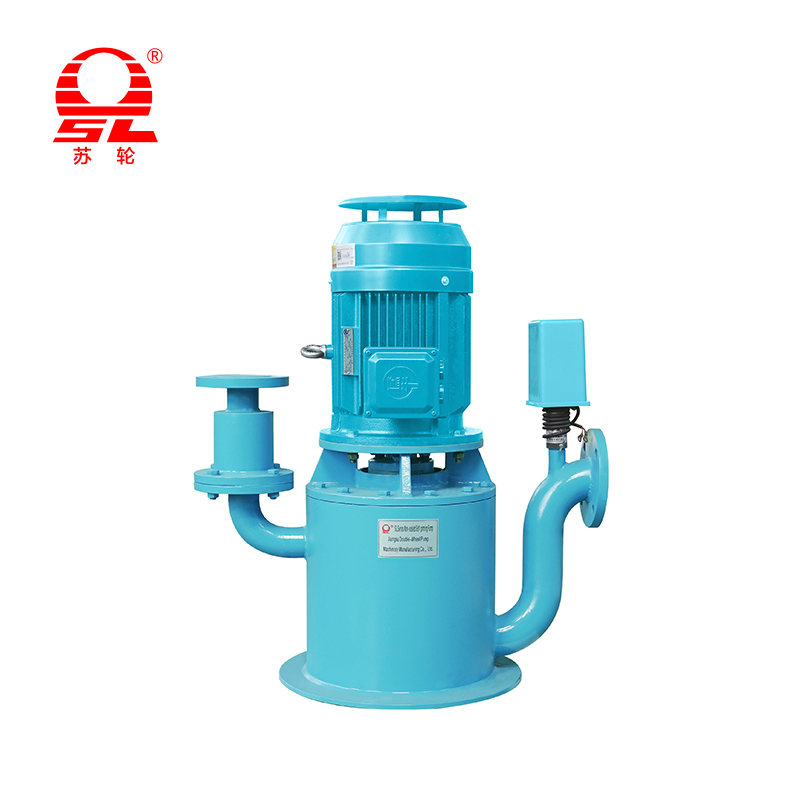
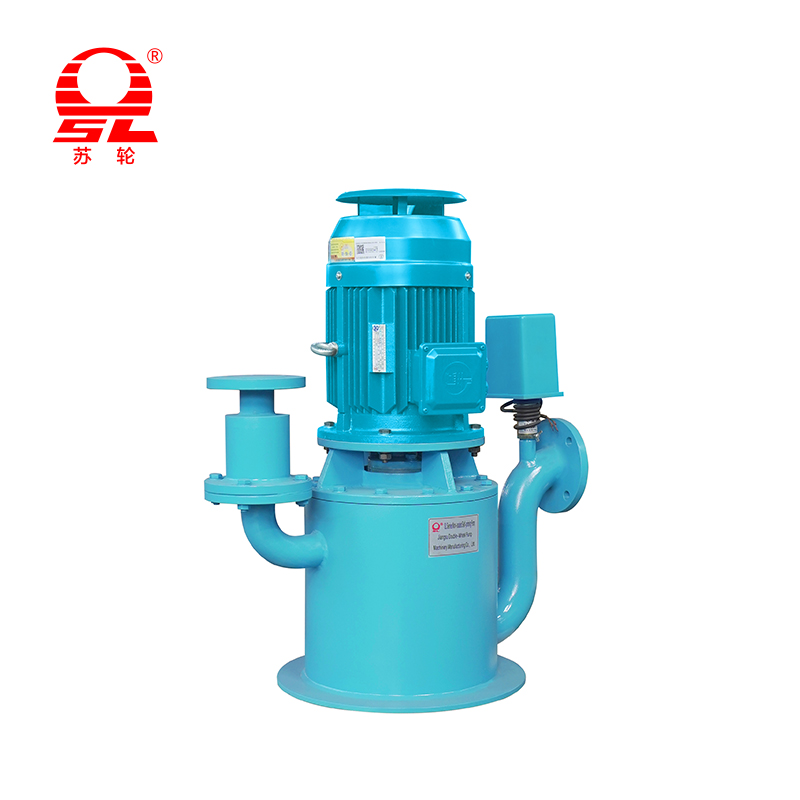 WFB Series Seal-Free Self-Priming Pump for Leak-Prone ServicesThis pump replaces vulnerable mechanical seals with a gap-type seal arrangement, eliminating air leakage caused by seal face wear. It suits plants where recurring seal leaks compromise suction performance and require frequent maintenance.View Product →
In service conditions where seal leakage is a recurring problem, a sealfree pump design removes this entire failure mode. The WFB series sealfree self-priming pump, one of our core product lines, replaces the mechanical seal with a gap-type seal arrangement so there is no wearing seal face that can leak air into the suction chamber.
The table below links the most common symptoms to their likely causes and first actions. It is intended for use at the pump site without dismantling the unit.
| Symptom | Most likely cause | First action |
|---|---|---|
| Motor runs, no discharge, no pressure | Loss of prime; air leak in suction line; reverse rotation; plugged recirculation port | Refill casing; test suction joints with water; verify rotation; clean recirculation port |
| Slow priming and sputtering discharge | Air leak; suction lift too high; long suction line; reduced-bore flex hose | Water-test joints; measure static lift; replace flex hose with rigid pipe |
| Noise like stones passing through | Cavitation; debris in impeller | Check available NPSH; clean impeller; reduce lift or raise sump level |
| Normal sound but low flow | Blocked foot valve or screen; worn impeller; low motor speed | Inspect screen and foot valve; compare motor speed with nameplate; check voltage |
| Rapid starting and stopping | Low sump level; leaking foot valve causing loss of prime | Check sump level; repair or replace foot valve; adjust level control |
| Water leaking from the shaft area | Worn mechanical seal or casing gasket | Replace seal and gaskets; consider a sealfree pump design |
Most of the problems described above can be prevented with a disciplined maintenance routine. The intervals below are based on typical industrial duty in sewage, water supply, and chemical transfer; adjust them if your liquid is especially abrasive, corrosive, or high in solids.
Testing is not only for the factory. Our production facility includes a comprehensive pump test platform covering diameters from 32 mm to 1200 mm and motor power from 1.1 kW to 1200 kW at voltages from 380 V to 10 kV. For critical installations, we recommend the same discipline: measure flow, head, absorbed power, and vibration level, and compare the values with the original curve. A deviation of more than 5 percent in flow or head is a clear warning that the pump needs attention.
Several common faults can be prevented at the specification stage. A detailed pump selection review should cover the sealing concept, hydraulic efficiency, automation level, and material grade, rather than price alone.
For long-running installations where energy consumption is a significant cost, high-efficiency hydraulic design makes the largest difference. The GZB series uses an optimised impeller profile and volute geometry to reduce specific energy consumption while maintaining the suction capability needed for automatic priming.
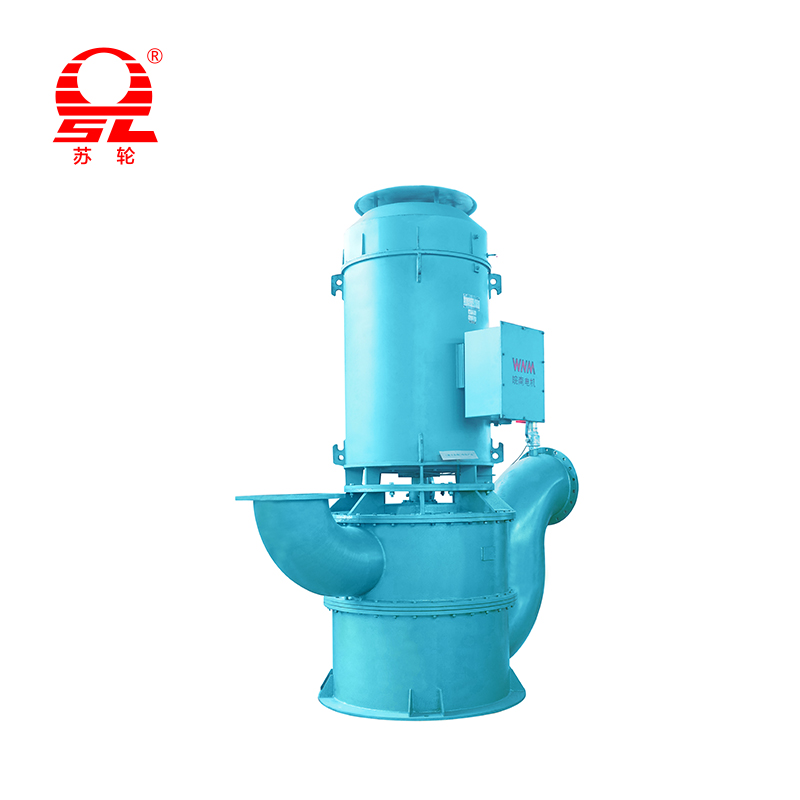 GZB Series High-Efficiency Energy-Saving Self-Priming PumpWith an optimized impeller and volute, this pump cuts specific energy consumption while keeping reliable priming. Its combined labyrinth centrifugal airflow seal avoids mechanical friction, addressing permanent seal leakage without auxiliary vacuum equipment.View Product →
Where the pump must start and stop unattended as sump level changes, the GJB automatic self-priming pump adds automatic filling and priming control, so operators do not need to visit the station to refill the casing after a low-level event.
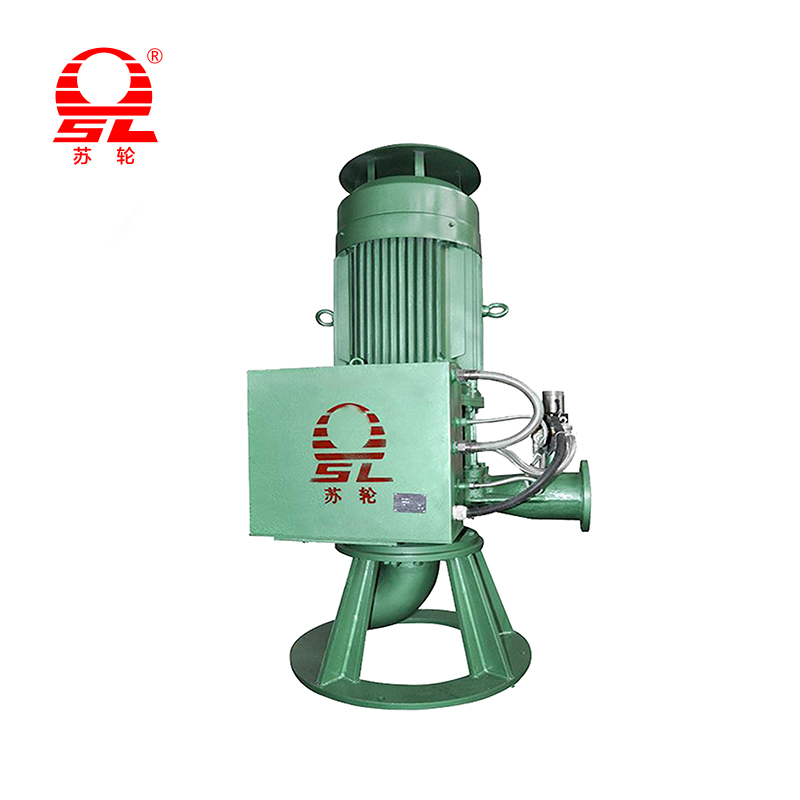 GJB Automatic Self-Priming Pump with Intelligent ControlThis pump adds automatic filling and priming control for unattended start-stop operation as sump levels change. Its compact vertical derrick design reduces footprint and installation costs, with suction port orientation customizable to site constraints.View Product →
For a broader comparison of sealfree and sealed configurations, see our non-sealed automatic self-priming pump product overview, which explains how the sealfree architecture helps plants that frequently battle seal-related air leaks.
The usual cause is a leaking foot valve or a suction check valve that no longer seats properly. The liquid in the casing drains back to the sump when the pump stops, so the next start finds an empty casing. Refill the casing, repair or replace the faulty valve, and re-test the suction line with a vacuum gauge.
No. The liquid held in the casing is also the cooling and sealing medium for the impeller area and the seal chamber. Running dry heats the casing, damages the seal, and can eventually cause impeller seizure. If a dry condition is possible in your process, install a level switch or a dry-run protection module.
At sea level, with cold water and a short suction line, most self-priming pumps operate reliably up to about 6 to 8 metres of static lift. The practical lift value decreases as liquid temperature, altitude, or suction-line friction losses increase.
If the pump has a full casing, correct rotation, and a leak-free suction line, but still cannot build pressure, suspect the recirculation port. Open the inspection cover and look for packed solids in the port; clean it and check that liquid returns to the impeller eye.
Self-priming pumps carry a small hydraulic penalty because some energy is used to recirculate liquid and separate air. However, modern high-efficiency designs reduce that gap, and the simpler installation without a foot valve and external priming equipment often offsets the difference in real systems.
Field experience with self-priming pumps consistently leads to the same conclusion: look at the suction side first. Air leaks, lost prime, excessive lift, and blocked internal passages account for the majority of all incidents, and each of these faults has a simple detection method. Add the recirculation-port check to the monthly maintenance list, verify rotation direction after any electrical work, replace long flexible suction hoses with rigid pipe, and drain the pump before freezing weather arrives.
When those measures do not solve the problem, evaluate the pump design itself. A sealfree model removes the shaft-seal air path; a high-efficiency model reduces operating cost; an automatic priming system removes the human error factor from startup. Our engineers regularly help plant operators select the correct self-priming pump for a specific liquid, lift, and duty cycle. Send us your pump size, liquid characteristics, and site conditions through the contact page, and we will provide a practical recommendation based on test-backed performance data.

+86-0523- 84351 090 /+86-180 0142 8659


Add 1: Hongguang Industrial Park, Jingjiang City, Jiangsu Province, China
Add 2: No.68, Xinyi Road, Industrial Park, Jingjiang City, Jiangsu Province, China
+86-0523- 84351 090
+86-180 0142 8659
+0523-8435 5588