language
  русский
 عربى
عربى Indonesia
Home / Blog / Industry News / Horizontal vs. Vertical Centrifugal Pumps: Key Differences
News


 2026.08.31
 Industry News
A pump selection mistake often surfaces months after installation, not on the datasheet. The pump delivers the specified flow and head but occupies the wrong space, complicates maintenance, or struggles with suction conditions. That is the real cost of choosing the wrong orientation.
Centrifugal pumps share one operating principle: an impeller spins inside a casing and converts rotational energy into fluid velocity and pressure. Whether the shaft sits horizontally or vertically affects far more than the pump's posture — footprint, piping layout, maintenance access, and driving options all depend on that choice.
This guide compares horizontal and vertical centrifugal pumps across seven dimensions: shaft design, space, efficiency, NPSH, maintenance, driving options, and installation cost. A five-step checklist at the end helps you apply the comparison to your own system. For a shorter overview, our earlier comparison of horizontal and vertical pumps covers the basics.
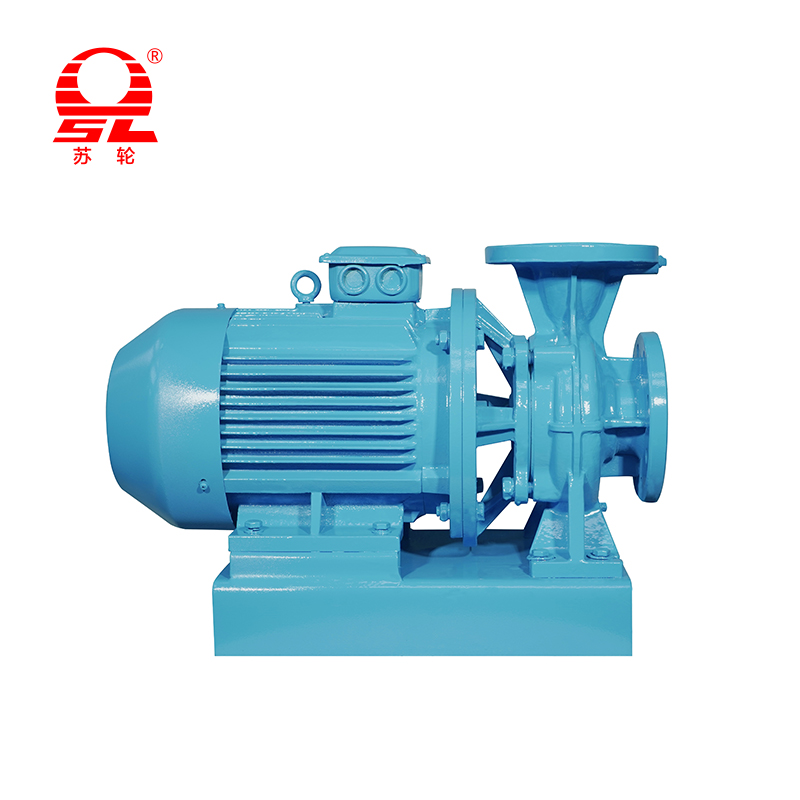
A horizontal centrifugal pump has its shaft arranged in the horizontal plane, with the casing and driver mounted on a common baseplate. Fluid enters axially through the suction nozzle, is accelerated by the impeller, and leaves radially through the volute casing. Rotor support varies by design:
Horizontal pumps dominate general industrial service because they are easy to install, inspect, and repair. The casing is split or removable, the shaft seal is accessible, and the coupling is exposed for alignment checks.
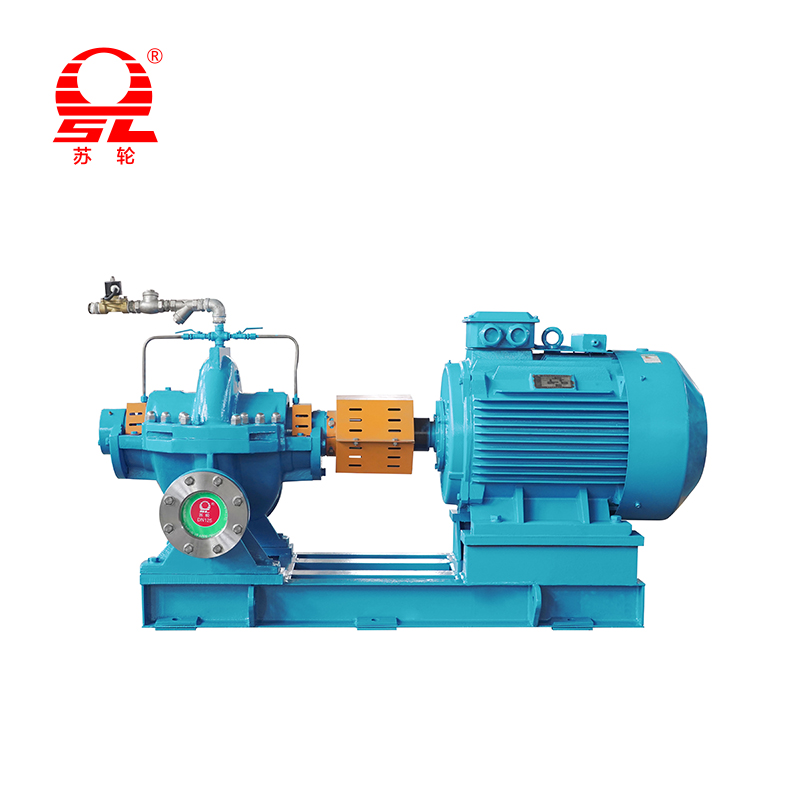
A typical example from our range is the SLW series horizontal centrifugal pump, a workhorse configuration for water supply, HVAC circulation, and general industrial transfer.
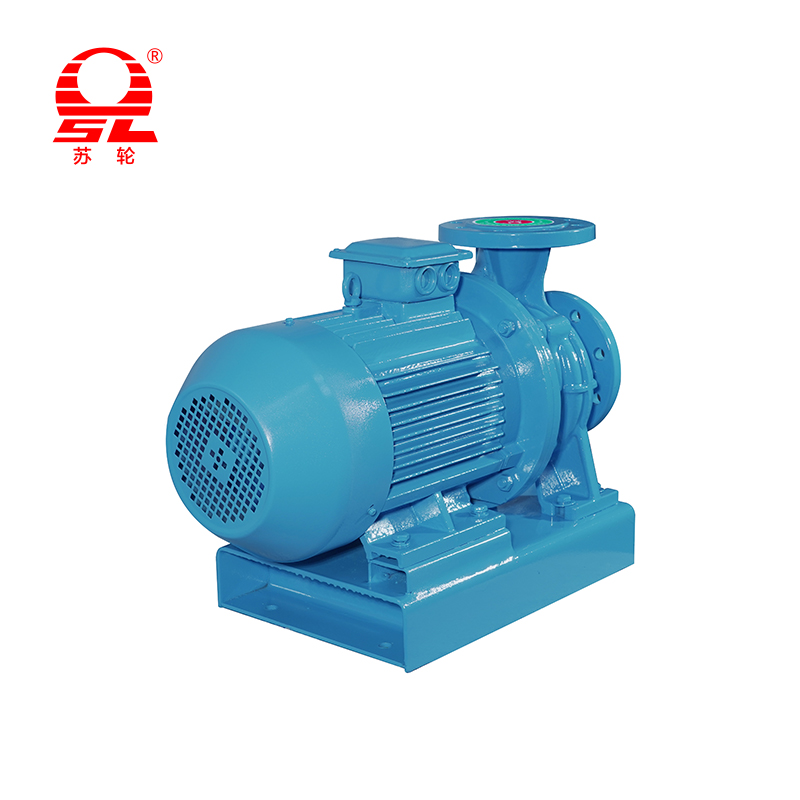 Wholesale SLW Series Horizontal Centrifugal Pump Manufacturers, OEM/ODM Factory Jiangsu Double Wheel Pump Machinery Manufacturing Co., Ltd. is China SLW Series Horizontal Centrifugal Pump Manufacturers and OEM Factory...View Product →
A vertical centrifugal pump positions its shaft vertically, with the motor mounted above the pump body. Two families dominate the category:
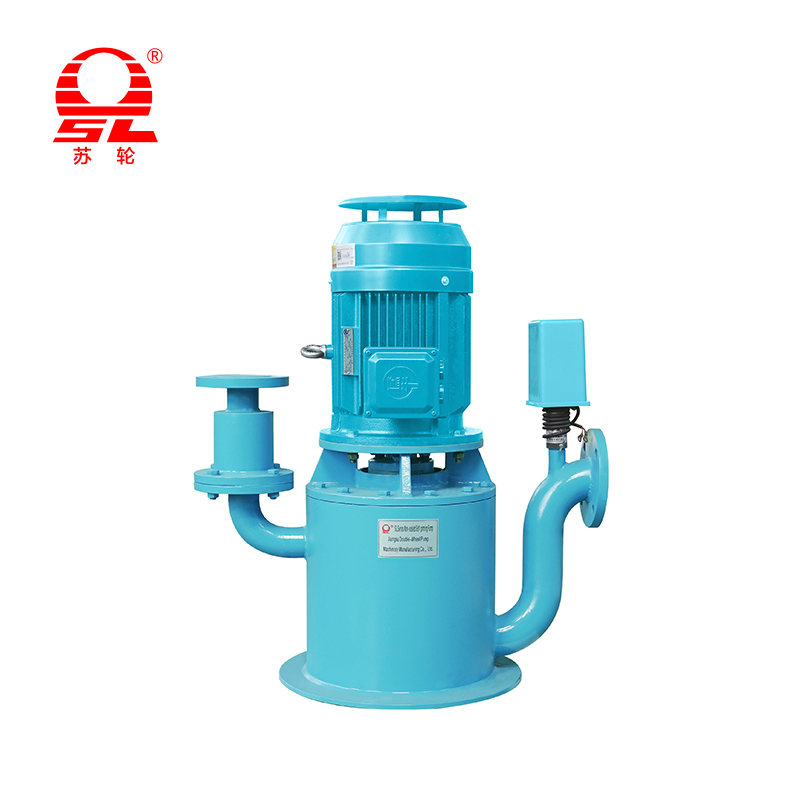
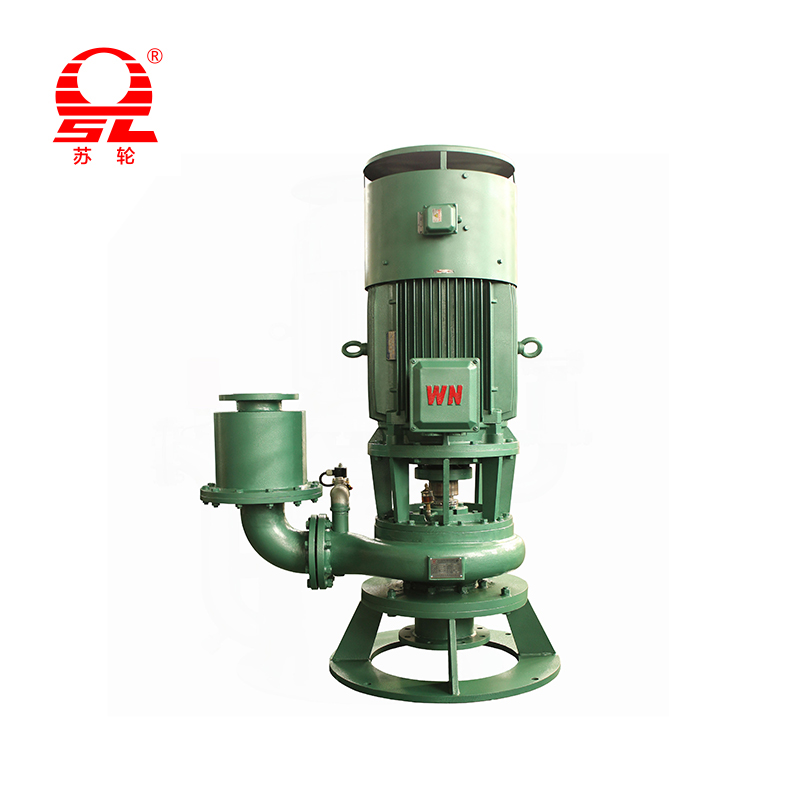
The vertical arrangement suits sites with scarce floor space or a liquid source below the pump access level. By placing the impeller near or inside the liquid, a vertical pump handles sump drainage, condensate recovery, and deep well intake without a separate priming system.
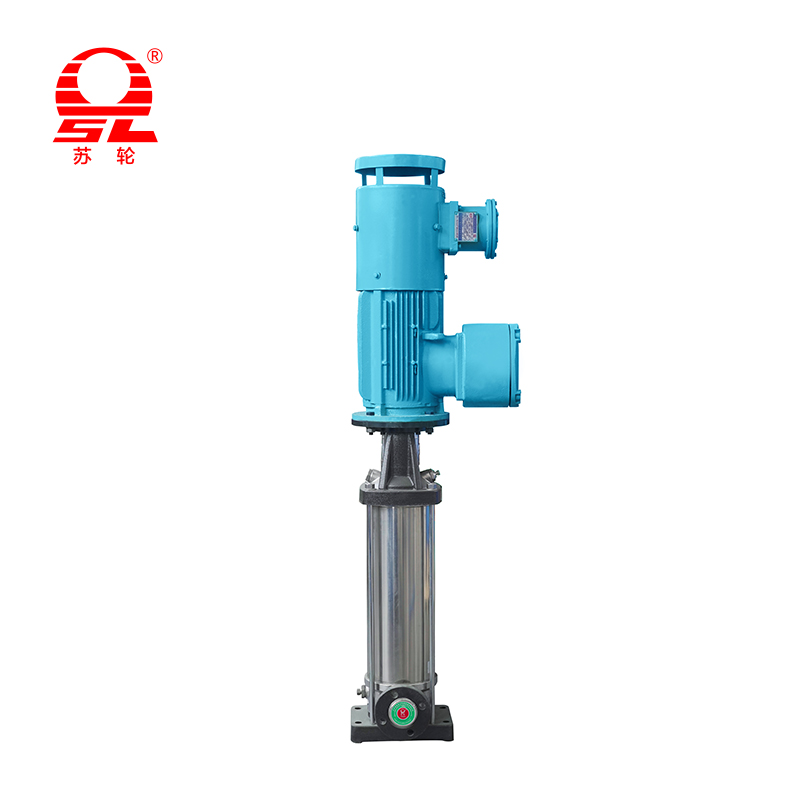
For an inline configuration, our vertical pipeline centrifugal pump bolts directly into a pipe run and occupies almost no floor area.
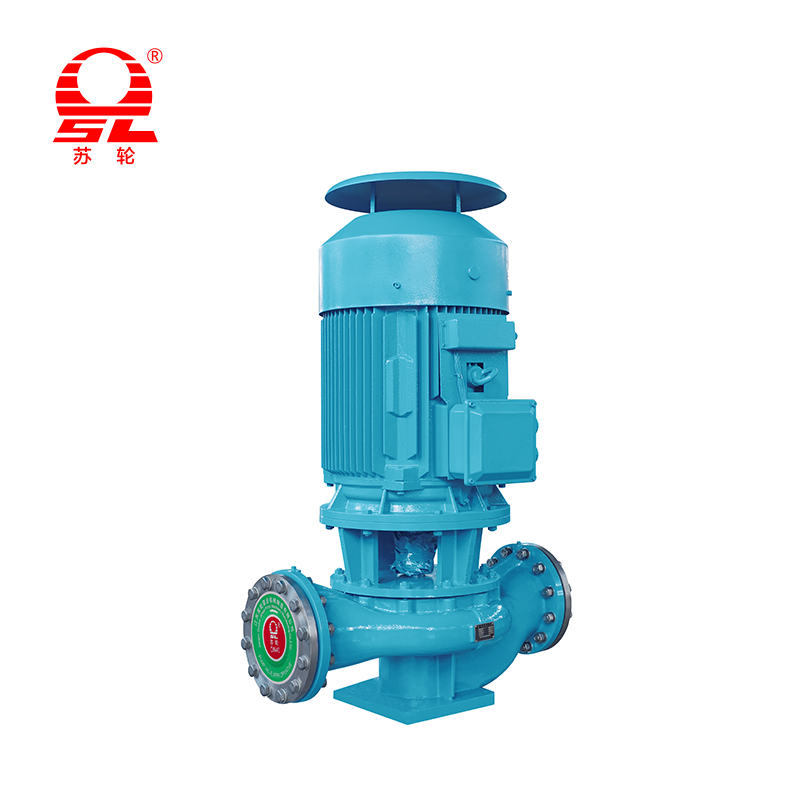 Wholesale SLG Vertical Pipeline Centrifugal Pump Manufacturers, OEM/ODM Factory Jiangsu Double Wheel Pump Machinery Manufacturing Co., Ltd. is China SLG Vertical Pipeline Centrifugal Pump Manufacturers and OEM Factory...View Product →
Shaft orientation is the root difference. In a horizontal pump, the shaft lies parallel to the ground and the rotor weight rests on radial bearings. In a vertical pump, the shaft stands perpendicular and the rotor weight transfers through thrust bearings in the motor or a bearing bracket.
This decision cascades: casing geometry, seal position, bearing layout, and coupling method all follow. Space needs, NPSH behavior, maintenance access, and driver options trace back to shaft orientation.
Horizontal pumps demand more floor area for the pump, motor, baseplate, and working space. Vertical pumps trim the footprint to roughly the size of the motor and pump head — valuable on offshore platforms, in ship engine rooms, and in underground stations.
That saving costs headroom. A long-shaft pump extends several meters above its mounting plate, and pulling the rotor requires vertical clearance for a hoist. Under a low ceiling or inside an enclosed pit, that space may not exist. An open floor favors horizontal; a compact footprint with overhead clearance favors vertical.
At equal duty, horizontal pumps usually achieve slightly higher efficiency than comparable vertical designs. The flow path is shorter and the bearing arrangement simpler, so friction losses stay lower. The gap narrows with well-engineered vertical pumps but rarely disappears at high flow rates.
Curve shapes differ too. Vertical turbine-type pumps produce a steeper head-flow curve: head changes noticeably as flow varies, which suits fluctuating static head with stable flow. Horizontal pumps deliver a flatter curve, keeping head relatively constant across a broad flow range, so the operating point stays predictable.
NPSH, or net positive suction head, is the pressure head required at the pump suction to prevent cavitation. A lower NPSH requirement means more tolerance of high suction lift, warm liquid, or long suction pipe.
Horizontal end-suction pumps generally have lower NPSH requirements because the impeller eye sits close to the suction flange. That is why they suit tank drawdown, long suction lines, and elevated installations.
Vertical long-shaft pumps take a different approach: the impeller sits submerged, so suction-lift problems disappear entirely — no long suction pipe to prime. That makes them the natural choice for sumps, wells, and condensate pits. Vertical pipeline pumps, by contrast, sit above the liquid and usually need a positive static head or a booster because their NPSH requirement runs higher.
This is where the two designs differ most in daily operation. Horizontal pumps are service-friendly: to replace a mechanical seal, a technician unbolts the casing cover, slides out the impeller, and swaps the seal at waist height. No lifting equipment is needed for most sizes.
Vertical pumps demand more planning. Replacing the seal or lower bearings of a long-shaft pump means lifting the motor and pulling the entire shaft assembly. A vertical pipeline pump requires unhooking the motor and disassembling the back pullout unit. Either way, you need overhead clearance, a hoist, and careful realignment. Expect longer downtime and higher labor cost per repair.
Horizontal pumps accept a wide variety of drivers. With the shaft at floor level, you can couple it to an electric motor, diesel engine, steam turbine, or hydraulic motor via direct coupling, gearbox, or belt drive. That matters for remote sites without reliable grid power and for stations that run on engine power during peak demand.
Vertical pumps are usually limited to electric motor drive. The motor mounts on top of the pump, so its weight, frame size, and cooling needs must fit the top structure. If your site has no grid power or you plan to run on engine backup, that alone points to a horizontal pump.
The quoted price of a vertical pump is often lower for equal capacity, but total installed cost differs. Horizontal pumps need a concrete foundation, baseplate grouting, shaft alignment, and piping supports. Once installed, however, they are easier to commission because every component is visible.
Vertical pumps simplify the hydraulic connection — a pipeline pump bolts inline, and a long-shaft pump drops into a barrel or pit — but the supporting structure gets expensive. You need a support deck, discharge head, long shaft, intermediate bearings, and possibly a drip-proof cover. The civil work for a deep pit or sump can exceed the pump price itself.
Operating cost follows the same pattern. Horizontal pumps run longer between major overhauls and cost less per repair. Vertical pumps, especially deep long-shaft types, accrue higher parts and labor costs over their lifetime. Evaluate total cost of ownership, not just the first invoice.
Both designs have established roles. The table below maps typical industrial duties to the preferred configuration.
| Industry | Typical Duty | Recommended Configuration | Why |
|---|---|---|---|
| Chemical processing | Corrosive liquid transfer, process circulation | Horizontal chemical pump | Corrosion-resistant trim, accessible seal for frequent checks |
| Municipal drainage | Sump drainage, lift stations, rainwater pits | Vertical long-shaft pump | Submerged impeller handles low liquid levels reliably |
| Water supply and HVAC | Circulation, booster duty, cooling water | Horizontal end-suction or split-case pump | Higher efficiency, flat curve, low maintenance effort |
| Mining | Mine dewatering, sump clearance, wash-down | Vertical long-shaft pump | Compact footprint for confined shafts and pits |
| Power generation | Condensate extraction, cooling water circulation | Vertical multistage or horizontal split-case | Space constraints and duty-specific head requirements |
| Steel mills | Cooling systems, descaling, process water | Horizontal heavy-duty pump | Robust casing, easy access for frequent servicing |
For deep-pit drainage, wet-pit sludge handling, and raw water intake from rivers, a vertical long-shaft pump is often the only practical solution because the impeller stays submerged even when the water level drops.
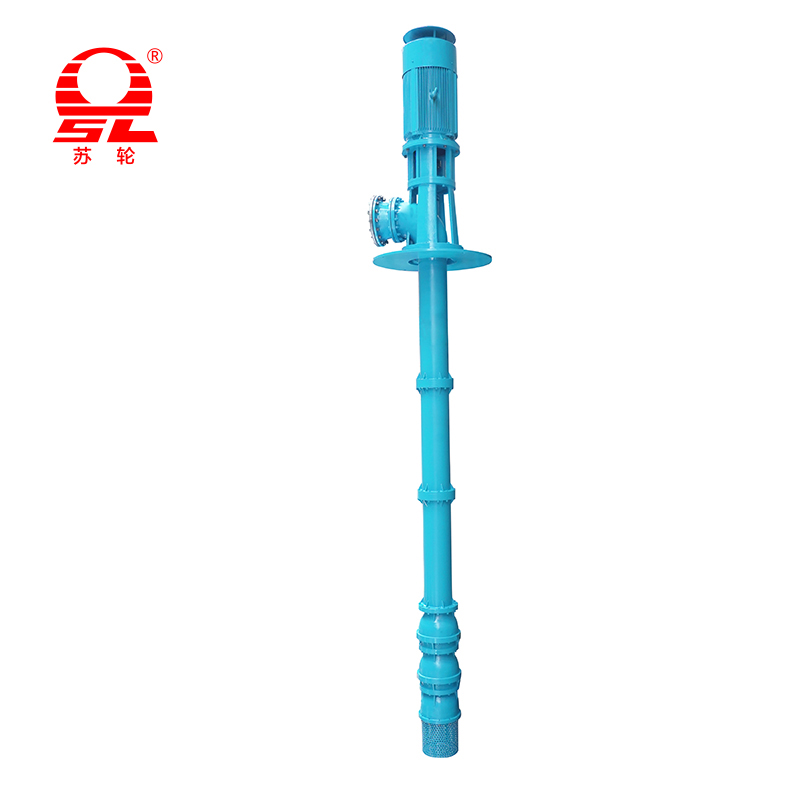 Wholesale SLC Series Compact Vertical Long Shaft Pump Manufacturers, OEM/ODM FacJiangsu Double Wheel Pump Machinery Manufacturing Co., Ltd. is China SLC Series Compact Vertical Long Shaft Pump Manufacturers and OEM Fa...View Product →
Work through these five steps in order, and the right configuration usually becomes obvious.
Applying this sequence during plant design prevents the regret of switching pump configurations after the concrete has been poured.
No configuration is universally better. Horizontal centrifugal pumps win on efficiency, maintenance access, and driver flexibility. Vertical centrifugal pumps win on compact footprint and the ability to draw liquid from deep pits, wells, and tanks. If floor area is generous and the process demands easy service, choose horizontal. If space is tight, the liquid source sits below the pump, or the discharge head varies widely, choose vertical.
Discuss your duty point, site constraints, and existing pump performance with your pump manufacturer's application engineer before finalizing the selection. A short conversation about NPSH margin and installation space can prevent expensive rework later.

+86-0523- 84351 090 /+86-180 0142 8659


Add 1: Hongguang Industrial Park, Jingjiang City, Jiangsu Province, China
Add 2: No.68, Xinyi Road, Industrial Park, Jingjiang City, Jiangsu Province, China
+86-0523- 84351 090
+86-180 0142 8659
+0523-8435 5588