language
  русский
 عربى
عربى Indonesia
Home / Blog / Industry News / What Is a Horizontal Centrifugal Pump? Working Principle & Types
News


 2026.08.24
 Industry News
In almost any industrial site that moves water, a horizontal centrifugal pump sits at the heart of the system. It is one of the most common pump configurations in the world, used in municipal supply, wastewater transfer, cooling circuits, chemical processing, and agriculture. What exactly is a horizontal centrifugal pump, and why has it become so dominant? This article covers its working principle, main components, structural types, selection criteria, and typical applications.
A horizontal centrifugal pump is a pump with a horizontally mounted shaft and a rotating impeller that creates centrifugal force to move liquid. The impeller spins inside a stationary casing, accelerating the liquid and turning the motor's mechanical energy into velocity and pressure.
The classification depends on shaft orientation. When the shaft runs parallel to the ground, the machine is a horizontal centrifugal pump. When it runs perpendicular to the ground, it is a vertical pump. The impeller and casing may be nearly identical in both configurations, but the orientation changes installation, maintenance, and hydraulic behavior.
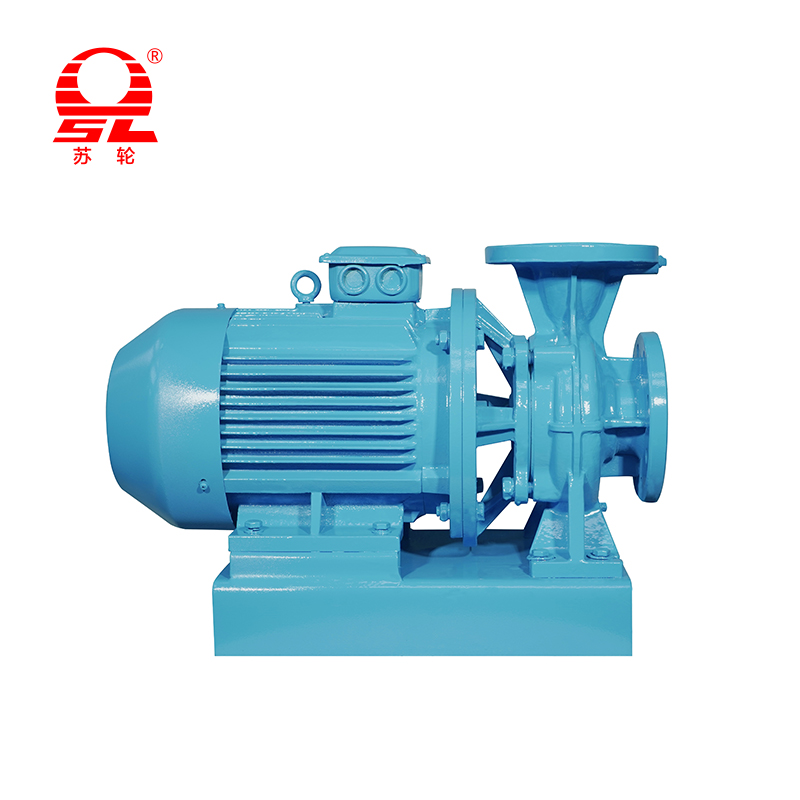
One representative example is the SLW series horizontal centrifugal pump, a single-stage end-suction machine widely used for clean water and light industrial service.
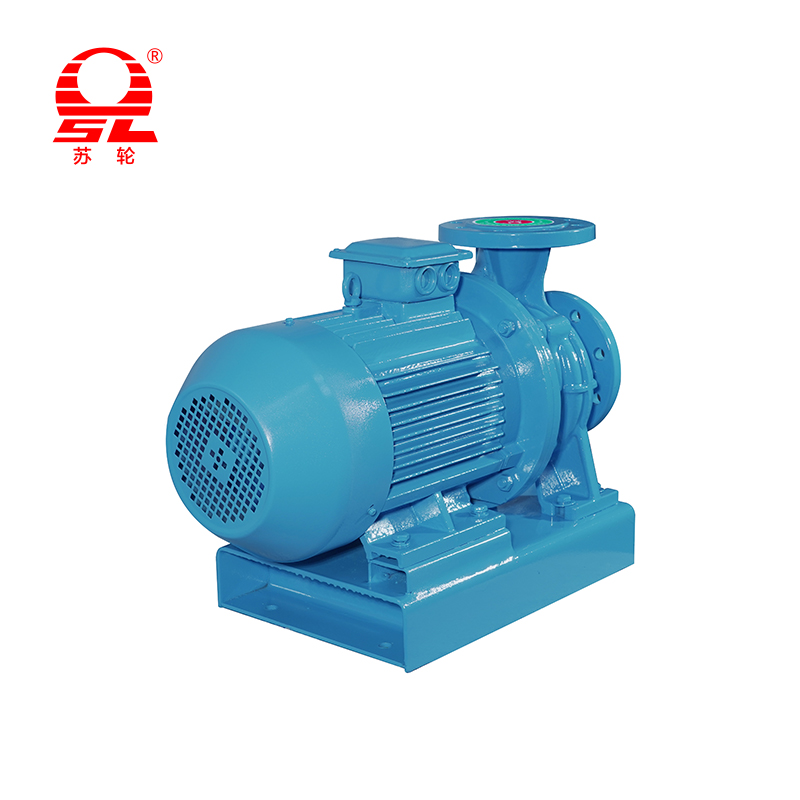 Wholesale SLW Series Horizontal Centrifugal Pump Manufacturers, OEM/ODM Factory Jiangsu Double Wheel Pump Machinery Manufacturing Co., Ltd. is China SLW Series Horizontal Centrifugal Pump Manufacturers and OEM Factory...View Product →
All centrifugal pumps work on the same principle. The motor rotates the shaft, the shaft spins the impeller, and the impeller forces liquid outward. Liquid enters through the suction nozzle into the impeller eye, the low-pressure zone at the center of the rotating element. The curved vanes catch the liquid and accelerate it toward the outer diameter. From the impeller tip, the liquid moves into the volute casing, a spiral channel whose cross-section gradually widens. As the flow slows, kinetic energy converts into pressure energy, and the pressurized liquid leaves through the discharge nozzle.
In short, the pump converts mechanical energy into kinetic energy, and then into pressure energy capable of overcoming pipe friction, static lift, and system resistance.
Centrifugal force is what pushes liquid outward from the center of rotation. A wet umbrella spun quickly shows the same effect: water flies off the edge. Inside the pump, the rotating impeller throws liquid toward the casing wall. Higher impeller speed means more kinetic energy, and the casing converts that kinetic energy into higher discharge pressure.
Correct operation follows a fixed sequence:
Every horizontal centrifugal pump is built around five core components:
Supporting parts include the baseplate, which carries the pump and driver, and the coupling, which connects the two shafts. Larger machines may add a water-cooled bearing housing to manage heat.
Choosing between a horizontal and a vertical pump is one of the first decisions in system design. The shaft orientation changes the installation footprint, maintenance access, and suction behavior. The table below compares the main selection criteria.
| Criteria | Horizontal centrifugal pump | Vertical centrifugal pump |
|---|---|---|
| Shaft orientation | Horizontal, parallel to the ground | Vertical, perpendicular to the ground |
| Floor footprint | Large; needs a baseplate and clear floor area | Small; fits tight floor spaces |
| Installation | Ground level; easy alignment with the driver | Motor on top; hydraulic end suspended in a pit or tank |
| Maintenance access | Casing opens at the top; internals are easy to reach | Internals are harder to reach; often requires lifting the motor or shaft |
| NPSH behavior | Lower suction losses in many piping layouts | Flooded suction helps when the pump sits below the liquid source |
| Typical duties | Water supply, cooling, chemical transfer, high-flow service | Pits, sumps, condensate service, limited-floor-space plants |
Horizontal pumps mount on a concrete foundation or baseplate at or near ground level. The open layout makes alignment with an electric motor, diesel engine, or turbine straightforward, and the flanges are easy to reach. Vertical pumps support the motor on top and suspend the hydraulic end in a pit, tank, or well. They save floor space but require vertical headroom, which makes them attractive for deep pits, condenser wells, and below-grade stations.
Horizontal pumps are easier to service. The casing opens from the top, and on split-case models the upper half lifts off without disturbing the piping. Vertical pumps usually require lifting the motor and pulling the shaft assembly, adding downtime and crane cost. Efficiency depends mainly on the impeller and casing design, not on shaft orientation, but horizontal arrangements allow larger impellers and double-suction inlets, which is why they dominate high-flow duties. Easier access and shorter downtime also mean a lower total cost of ownership.
Horizontal centrifugal pumps fall into two main casing arrangements.
End-suction pumps are the most common and economical. Liquid enters the impeller from one end, and the casing forms a single volute around it. These pumps are compact, inexpensive, and available in a wide range of materials, making them the default for water supply, HVAC circulation, and light chemical service.
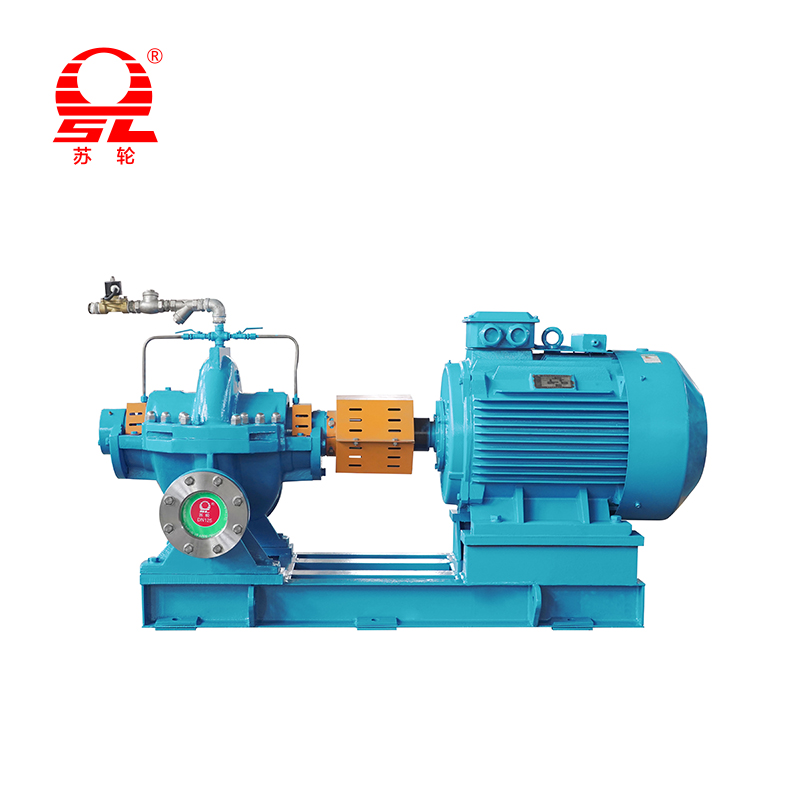
Split-case pumps divide the casing along a horizontal plane through the shaft centerline. Lifting the upper half exposes the impeller, shaft, and bearings while the piping stays connected. This is why the horizontal split-case centrifugal pump is preferred for large municipal, power, and industrial installations where quick maintenance and reliability matter. Many split-case units use a double-suction impeller, which balances axial thrust and handles very large flows efficiently.
 Wholesale SLOTS Horizontal Split Case Centrifugal Pump Manufacturers, OEM/ODM FaJiangsu Double Wheel Pump Machinery Manufacturing Co., Ltd. is China SLOTS Horizontal Split Case Centrifugal Pump Manufacturers and OEM F...View Product →
Selection starts with defining the duty, not with choosing a brand. The critical parameters are:
The reliable approach is to prepare a datasheet with the duty point, pipe geometry, suction conditions, and fluid data, then let the manufacturer select the impeller, materials, and seal. Many manufacturers also test the finished pump on a performance bench to confirm that the delivered curve matches the specification.
The horizontal centrifugal pump is the workhorse of industrial liquid handling. Typical applications include:
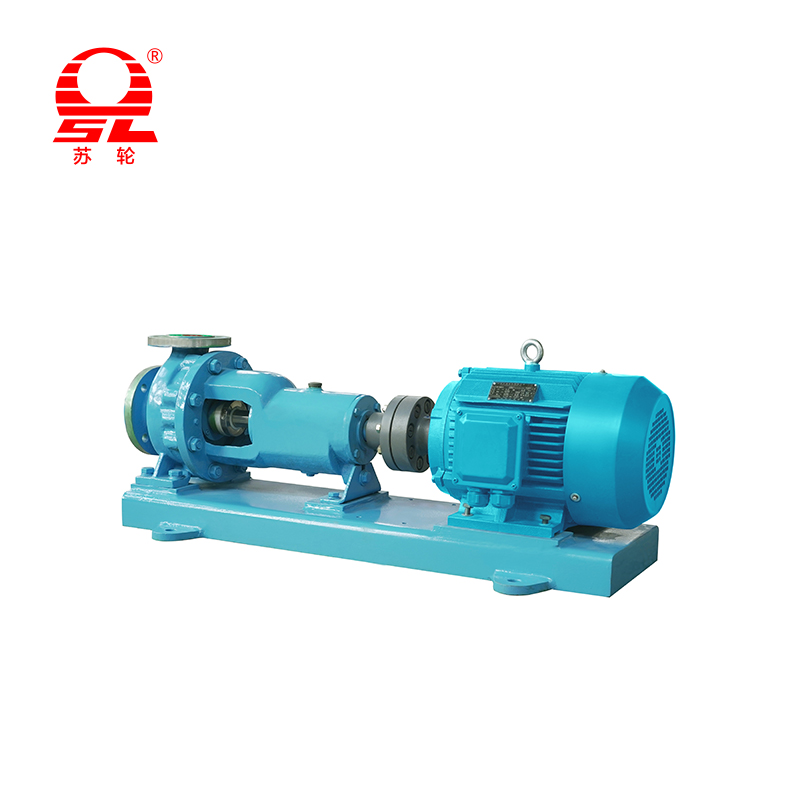 Wholesale IH Series Horizontal Chemical Centrifugal Pump Manufacturers, OEM/ODM Jiangsu Double Wheel Pump Machinery Manufacturing Co., Ltd. is China IH Series Horizontal Chemical Centrifugal Pump Manufacturers and OEM...View Product → with appropriate alloys and sealing.
The common thread is predictable performance, easy maintenance, and a broad choice of materials.
Even a reliable pump fails when the surrounding system is poorly designed or neglected. The most frequent problems are:
With disciplined preventive maintenance, a well-built horizontal centrifugal pump can stay in service for decades.
The horizontal centrifugal pump earns its leading position through a simple working principle, robust construction, and convenient maintenance. The horizontal shaft orientation provides an accessible layout, favorable suction behavior, and flexibility in driver selection. Whether the machine is an economical end-suction model or a large split-case unit for high-capacity duty, the working principle remains the same: a rotating impeller creates centrifugal force, and the casing converts velocity into pressure. Once flow, head, liquid properties, and available NPSH are defined, the selection process becomes a straightforward engineering match. To compare specific machines, a manufacturer's horizontal centrifugal pump product range is a practical place to start.

+86-0523- 84351 090 /+86-180 0142 8659


Add 1: Hongguang Industrial Park, Jingjiang City, Jiangsu Province, China
Add 2: No.68, Xinyi Road, Industrial Park, Jingjiang City, Jiangsu Province, China
+86-0523- 84351 090
+86-180 0142 8659
+0523-8435 5588