language
  русский
 عربى
عربى Indonesia
Home / Blog / Industry News / Vertical vs Horizontal Pump NPSH: Which Performs Better
News


 2026.08.06
 Industry News
Does vertical centrifugal pump have better NPSH than horizontal? That question comes up in nearly every pump selection meeting where the suction side is tight, the liquid is hot, or the tank level sits low. The short answer is yes: in most installations, a vertical pump delivers a higher available NPSH than a horizontal pump mounted above the liquid level, which is why vertical pumps cavitate less in low-suction-head applications. The longer answer, which is more useful for your design work, depends on whether you are comparing NPSHa or NPSHr.
NPSH stands for net positive suction head. It is the margin between the pressure at the pump suction inlet and the vapor pressure of the liquid. When local pressure drops to the vapor pressure, the liquid flashes into vapor bubbles. Those bubbles travel into the impeller and collapse violently, generating shock waves that erode the impeller and casing surfaces. Cavitation of this kind reduces hydraulic performance, raises vibration and noise, and shortens the life of seals and bearings.
Two different numbers carry the NPSH label. NPSHr (required) is a pump property: the suction energy the impeller needs to avoid significant cavitation at a given flow and speed, as published by the manufacturer. NPSHa (available) is a system property: the suction energy that the tank level, piping, and pump elevation actually supply at the suction flange. Engineering practice keeps NPSHa comfortably above NPSHr, with a margin of at least 0.5 m (1.6 ft) and often 1.0 m or more when the liquid is near its boiling point, the flow varies, or the level fluctuates.
A simple analogy helps. A milkshake through a short straw is easy because the liquid surface sits near your mouth. With a long straw, you strain harder, and the low pressure at the straw inlet makes the liquid bubble sooner if it is close to boiling. The pump is your mouth, the suction line is the straw, and NPSH measures how much suction effort remains before the liquid starts flashing.
Once you separate NPSHa from NPSHr, the contradictions in online discussions disappear. Engineers who say "there is no perceptible difference between vertical and horizontal versions" are talking about NPSHr: two pumps built from the same hydraulic design have nearly identical required suction head. Engineers who say vertical pumps have better NPSH are talking about NPSHa, which depends far more on installation geometry than on the orientation of the shaft.
NPSHa comes from three system variables: static suction head (the vertical distance from the liquid surface to the pump suction inlet), suction piping friction loss, and the pressure on the liquid surface. In metric terms, NPSHa equals the absolute pressure above the liquid, plus the static suction head, minus the vapor pressure, minus the friction loss, all in meters of liquid column.
| Installation factor | Vertical pump (submerged or long shaft) | Horizontal pump (above liquid level) |
|---|---|---|
| Suction inlet position | Below the liquid surface, near the lowest level | At or above the pump centerline, usually above the tank |
| Static suction head | Positive; the liquid column pushes into the impeller | Negative (suction lift) when mounted above the liquid surface |
| Suction piping length | Very short; the inlet is part of the casing or column | Long horizontal run from the tank or pit to the pump |
| Friction loss | Minimal | Significant; depends on pipe diameter, length, bends, and valves |
| Priming | Automatic when submerged | Usually required when installed above the liquid level |
| Resulting NPSHa | Naturally higher | Lower unless carefully designed |
The table explains the core conclusion: a vertical pump improves NPSHa because its suction inlet sits below the liquid surface and the suction path is short. A horizontal pump must lift the liquid through a longer pipe, and every meter of suction lift or friction loss directly reduces NPSHa.
Why does NPSHr stay roughly the same regardless of orientation? Because it is set by the impeller inlet geometry, the rotational speed, and the flow rate. The impeller does not know whether the shaft runs vertically or horizontally; it only responds to the flow conditions entering its eye. Two pumps sharing the same hydraulic design will therefore have nearly identical NPSHr values.
One nuance matters for vertical multistage pumps: the first-stage impeller sits at the bottom of the column, close to the suction inlet, keeping the inlet flow short and direct. But this is a design detail, not a general law. Orientation alone does not lower NPSHr; the hydraulic design does.
Vertical pumps earn their NPSH reputation through mechanical arrangement. Three mechanisms explain the advantage.
A vertical submersible pump or vertical long-shaft pump places the suction inlet at the bottom of the machine, below the minimum liquid level. The vertical distance from the liquid surface down to the inlet becomes a positive static head that adds directly to NPSHa. This is what engineers mean when they say the installation "buries" the pump: the suction end sits deep enough to enjoy the full liquid column above it. SCY series vertical submersible pumps, for example, are built around this principle for industrial sumps and pits.
 Submersible Pump Manufacturers, Vertical Submersible Pump SuppliersJiangsu Double Wheel Pump Machinery Manufacturing Co., Ltd. is China Submersible Pump Manufacturers and Vertical Submersible Pump Supplie...View Product →
Because the suction inlet is integral with the pump casing or column, there is no long horizontal suction line. Friction losses from pipe length, elbows, and foot valves largely disappear. In deep pit and collector-well service, the pump sits directly in the pit and the only path between the liquid and the impeller is the short inlet bell. Every meter of friction loss avoided is a meter added to NPSHa.
When the suction inlet stays below the liquid level, the pump primes itself by design. There is no air pocket to purge and no long suction line to seal against vacuum leaks. Air entering a horizontal suction line is a common source of cavitation-like symptoms; a submerged vertical pump removes that failure mode entirely.
The NPSH advantage of vertical pumps does not make horizontal pumps obsolete. Most pumping stations still rely on horizontal end-suction, split-case, or chemical process pumps, and for good reasons:
Horizontal pumps are the natural choice when the suction side is favorable: a tank above the pump floor, a controlled liquid level, and a short suction pipe. In chemical service, where the medium is corrosive and maintenance access is critical, engineers often stay with IH series horizontal chemical centrifugal pumps when those conditions hold. For general industrial water supply, booster, and cooling circuits, SLW series horizontal centrifugal pumps cover most duties without requiring a deep pit.
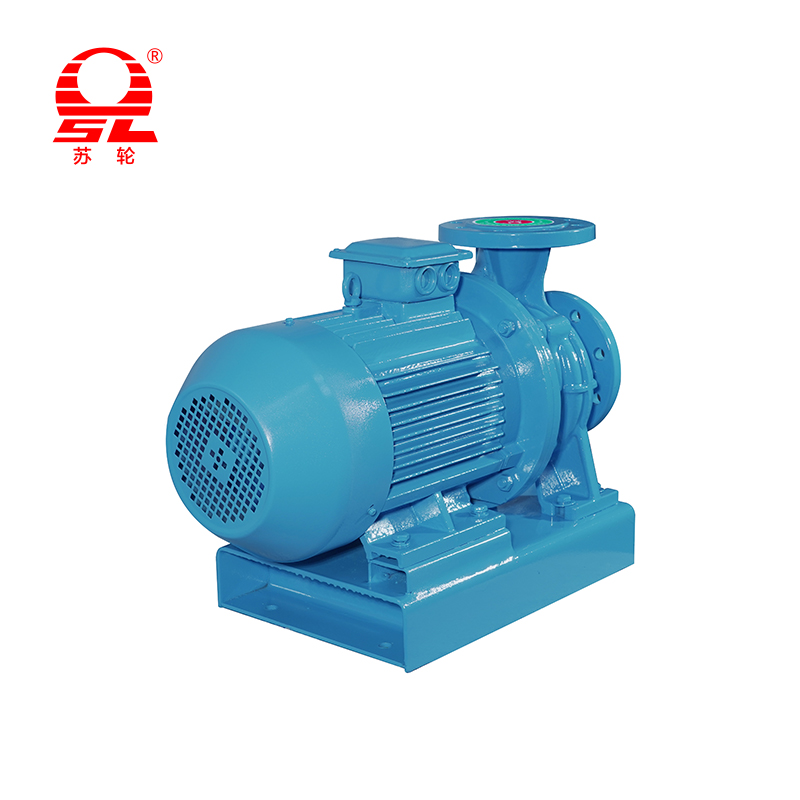 Wholesale SLW Series Horizontal Centrifugal Pump Manufacturers, OEM/ODM Factory Jiangsu Double Wheel Pump Machinery Manufacturing Co., Ltd. is China SLW Series Horizontal Centrifugal Pump Manufacturers and OEM Factory...View Product →
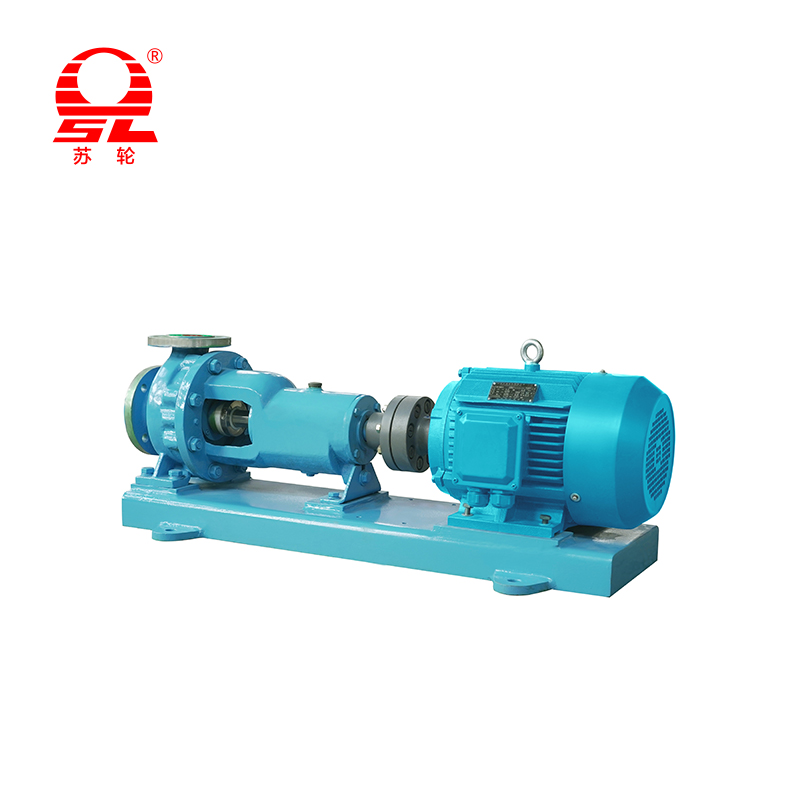 Wholesale IH Series Horizontal Chemical Centrifugal Pump Manufacturers, OEM/ODM Jiangsu Double Wheel Pump Machinery Manufacturing Co., Ltd. is China IH Series Horizontal Chemical Centrifugal Pump Manufacturers and OEM...View Product →
If your application leans horizontal but the calculated NPSHa is too low, fix the system rather than abandoning the pump orientation:
Whichever orientation you choose, verify the numbers before placing an order. Use this five-step checklist:
Ask the manufacturer for the full NPSHr curve, not just a single minimum point, because the curve shows how the pump behaves across its operating range. The test platform at our facility covers pump diameters from 32 mm to 1200 mm and motor powers from 1.1 kW to 1200 kW, so hydraulic performance and suction behavior can be verified before a unit leaves the factory. If your suction conditions are unusual, contact our pump engineering team with the operating point and a piping sketch for verification.
The selection follows directly from the NPSHa/NPSHr distinction.
Choose a vertical pump — a vertical submersible pump, vertical long-shaft pump, or vertical liquid pump — when the liquid level is low, the pit is deep, the suction head is marginal, or the fluid must be drawn from a sump. The submerged suction inlet and short suction path deliver a naturally higher NPSHa, and the margin against cavitation is more forgiving when levels fluctuate.
Choose a horizontal pump when the installation height is limited, maintenance access is a priority, and the suction side can be controlled — for example, a pump room where the supply tank sits above the pump floor. With correct suction pipe sizing, horizontal pumps handle most clean water and chemical services reliably.
Keep the two numbers separate when you read conflicting advice online. If someone says vertical pumps have better NPSH, they mean NPSHa. If someone says there is no difference, they mean NPSHr. Both statements can be true at once. We covered the broader mechanical trade-offs in our earlier comparison of horizontal and vertical pumps.
Before finalizing any pump specification, check NPSHa against the manufacturer's NPSHr curve at every operating flow point and confirm the margin at the lowest expected liquid level. A few minutes of calculation now can prevent years of cavitation-damaged impellers and unplanned downtime.

+86-0523- 84351 090 /+86-180 0142 8659


Add 1: Hongguang Industrial Park, Jingjiang City, Jiangsu Province, China
Add 2: No.68, Xinyi Road, Industrial Park, Jingjiang City, Jiangsu Province, China
+86-0523- 84351 090
+86-180 0142 8659
+0523-8435 5588