language
  русский
 عربى
عربى Indonesia
Home / Blog / Industry News / What Is the Best Centrifugal Chemical Pump for Corrosive Fluid Transfer
News


 2026.07.23
 Industry News
Selecting the right chemical centrifugal pump is one of the most consequential engineering decisions a process plant will make. Corrosive media, elevated temperatures, abrasive solids, and strict safety codes all converge on a single piece of rotating equipment, and the wrong specification can lead to unplanned downtime, product contamination, or safety incidents. As centrifugal pumps manufacturers for chemical industry applications, our engineering team works directly with process engineers, EPC contractors, and plant operators to translate complex fluid-handling requirements into dependable pump packages that run for years without intervention.
This page outlines how our factory approaches design, materials engineering, manufacturing quality control, and after-sales technical support for centrifugal chemical pumps used across acid production, fertilizer plants, petrochemical refining, pharmaceutical intermediates, dye and pigment manufacturing, and water treatment facilities.
Every centrifugal chemical pump we manufacture is matched to the exact chemical composition, concentration, and operating temperature of the fluid being handled. Our metallurgy team maintains casting capability across stainless steel 316L, CD4MCu duplex alloy, Hastelloy C, titanium, and high-silicon iron, alongside fluoroplastic-lined constructions for the most aggressive acids.
Impeller and volute geometries are modeled using computational fluid dynamics to keep the pump operating close to its best efficiency point across the full duty range, reducing radial loads, vibration, and premature bearing or seal wear on chemical transfer centrifugal pump installations.
Depending on the toxicity, volatility, and hazard classification of the process fluid, our centrifugal chemical pumps can be configured with single mechanical seals, double mechanical seals with barrier fluid systems, or fully sealless magnetic drive arrangements for zero-leakage operation.
Hydrostatic pressure testing, performance curve verification, dynamic balancing, and non-destructive examination of castings are carried out on every unit prior to dispatch, ensuring the pump meets its rated flow, head, and NPSH values under real operating conditions.
Standard water-service pumps are not suitable for chemical duty. The moment a process fluid contains chlorides, sulfates, free acid, or organic solvents, the wetted parts of a generic pump begin to degrade through pitting corrosion, stress corrosion cracking, or erosion-corrosion. This is the core reason chemical plants specifically search for centrifugal chemical pumps manufacturers for chemical industry rather than general industrial pump suppliers. A dedicated manufacturer understands that pump selection is not only about flow and head, but about compatibility charts, vapor pressure margins, solids content, and the mechanical behavior of alloys under cyclic thermal and chemical stress.
Our engineering department reviews the full process datasheet before recommending a pump model: fluid specific gravity, viscosity, vapor pressure at pumping temperature, suspended solids percentage and particle size, pH range, chloride ion concentration, and any intermittent cleaning or CIP (clean-in-place) cycles the pump will be exposed to. This data-driven approach prevents the common failure mode of a chemical centrifugal pump being installed with the wrong seal face combination or an undersized NPSH margin, both of which shorten service life dramatically.
| Process Fluid | Recommended Wetted Material | Typical Temperature Limit | Recommended Seal Type |
| Sulfuric Acid (below 50%) | High-silicon cast iron | 90°C | Double mechanical seal |
| Hydrochloric Acid | PTFE / PFA lined | 110°C | PTFE bellows seal |
| Sodium Hypochlorite | CD4MCu duplex steel | 60°C | Magnetic drive, sealless |
| Caustic Soda (NaOH) | Stainless steel 316L | 120°C | Single mechanical seal |
| Organic Solvents | Stainless steel 316L / Hastelloy | 150°C | Double seal with barrier fluid |
| Slurry with Fine Solids | Duplex steel with hardened impeller | 80°C | Flush-type mechanical seal |
A frequent cause of premature failure in centrifugal chemical pumps is operation far from the best efficiency point (BEP). When a pump runs at less than 70% of BEP flow, radial thrust on the shaft increases sharply, accelerating bearing wear and increasing the risk of seal face separation. Our application engineers verify the intersection of the pump curve and the customer's system resistance curve before finalizing impeller trim, ensuring the selected chemical centrifugal pump operates within 80%-110% of BEP under normal conditions.
Baseplate and coupling dimensions follow ANSI B73.1 or ISO 2858 standards, allowing straightforward integration with existing piping and foundation layouts without custom civil work.
Seal chambers accept multiple cartridge seal configurations, letting plants upgrade from packing to mechanical seals, or from single to double seals, without replacing the entire pump casing.
Impellers, shaft sleeves, and wear rings are manufactured to controlled tolerances across production batches, so replacement parts fit consistently even years after the original centrifugal chemical pump was commissioned.
Net Positive Suction Head Available (NPSHa) must always exceed the pump's NPSH Required (NPSHr) with an adequate margin, typically 0.5 to 1 meter depending on fluid vapor pressure sensitivity. In chemical service, many fluids operate close to their boiling point or contain dissolved gases, making cavitation a real risk even when suction piping appears adequately sized. Cavitation in centrifugal chemical pumps produces characteristic symptoms: a rattling or gravel-like noise from the pump casing, fluctuating discharge pressure, and accelerated erosion at the impeller vane inlet edges. Our hydraulic design team routinely recommends larger suction nozzle diameters, lower NPSHr impeller options, or double-suction impeller configurations for services where suction conditions are marginal.
For chemical transfer centrifugal pump applications handling fluids near their vapor pressure, such as light hydrocarbons or hot condensate, we also offer inducer-equipped impeller designs that reduce NPSHr requirements by up to 50% compared to standard impeller geometry, allowing the pump to be installed with lower suction head without redesigning existing tank or vessel elevations.
| Configuration | Flow Range (m³/h) | Head Range (m) | Maximum Working Pressure |
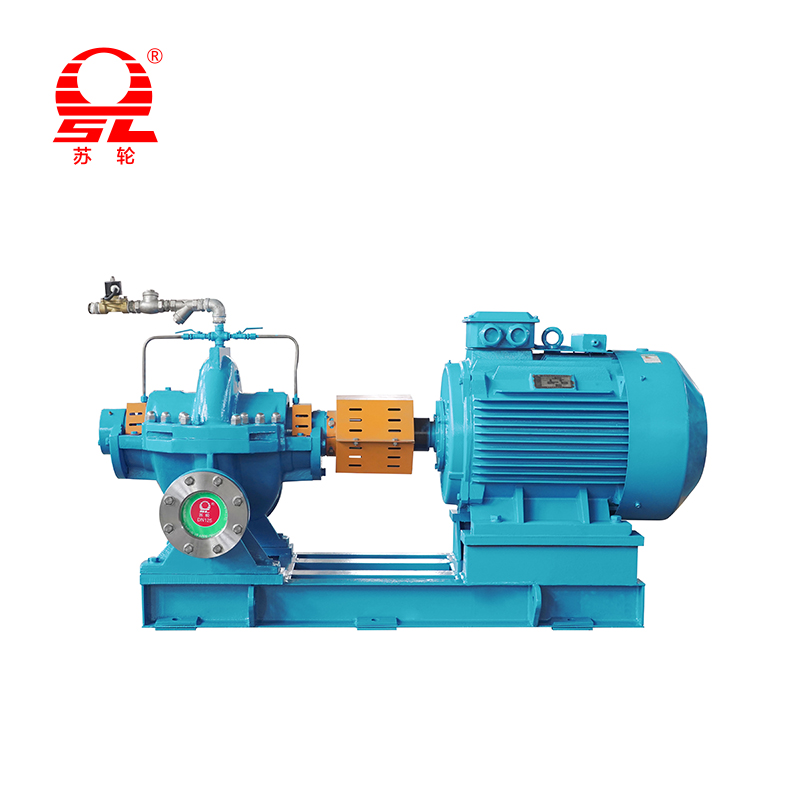
| Standard end-suction chemical pump | 2 - 400 | 5 - 100 | 1.6 MPa |
| Magnetic drive sealless pump | 2 - 200 | 10 - 120 | 2.5 MPa |
| Fluoroplastic-lined pump | 2 - 150 | 5 - 80 | 1.0 MPa |
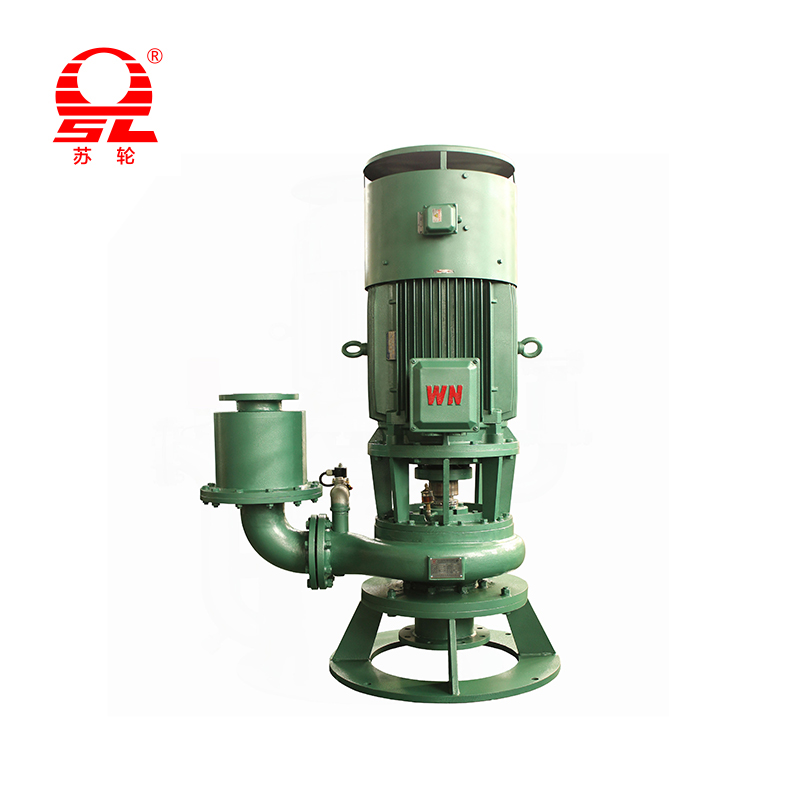
| Vertical sump / submerged pump | 5 - 300 | 5 - 60 | 1.0 MPa |
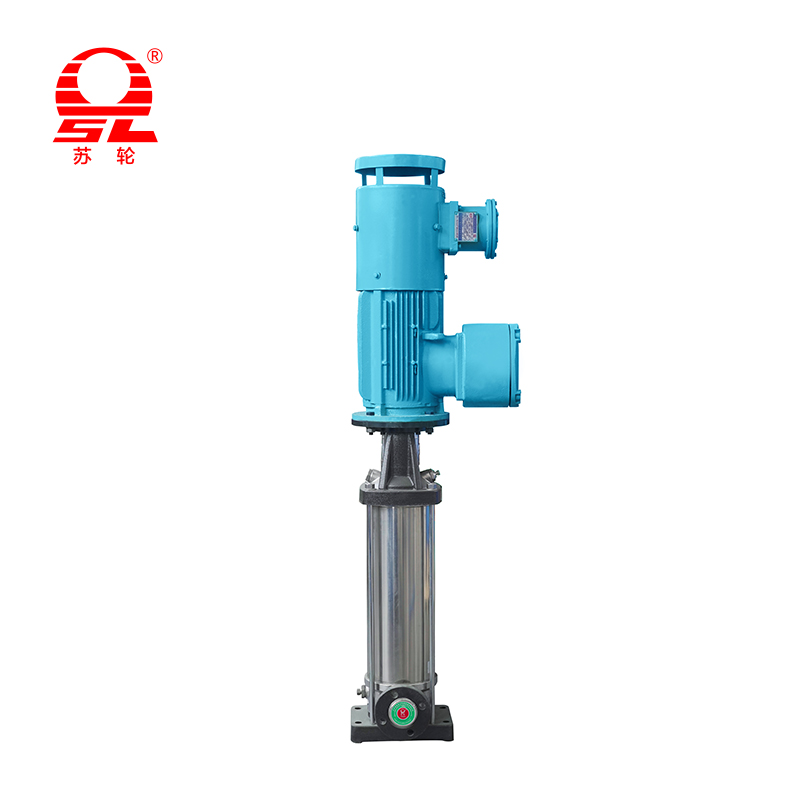
| Multistage high-pressure pump | 2 - 120 | 50 - 300 | 4.0 MPa |
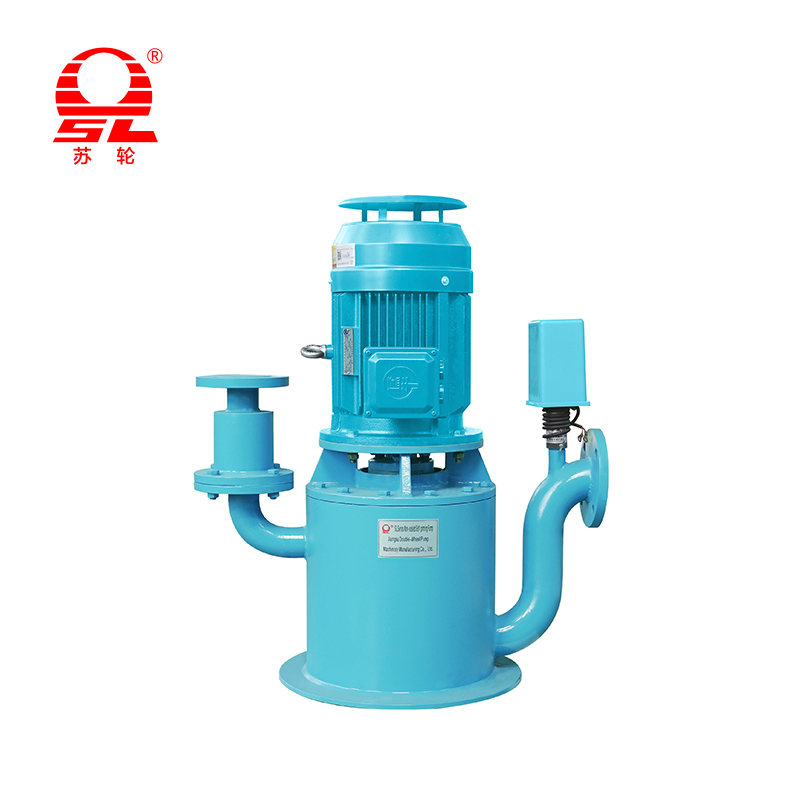
A chemical centrifugal pump is engineered with corrosion-resistant wetted materials, chemically compatible seal faces and elastomers, and hydraulic geometry designed to minimize turbulence and localized erosion. Standard industrial pumps typically use cast iron or carbon steel construction, which corrodes rapidly in acidic, alkaline, or oxidizing environments.
Impeller diameter is selected by plotting the required duty point against the pump's full performance curve family, then trimming the impeller to match the system's actual head and flow requirement while keeping operation within the recommended efficiency band. Oversized impellers waste energy and increase radial loading; undersized impellers fail to meet process flow demand.
Yes, with modified impeller and casing geometry. Semi-open or recessed impeller designs, combined with hardened wear rings, allow centrifugal chemical pumps to handle low-to-moderate solids content without rapid erosion, though dedicated slurry pump designs are recommended above approximately 15% solids by weight.
Under stable operating conditions with correctly matched seal faces, mechanical seals in chemical centrifugal pumps commonly achieve 12 to 24 months of continuous service before inspection. Seal life is shortened significantly by dry running, pressure spikes, or exposure to fluids outside the seal's chemical compatibility range.
Magnetic drive pumps eliminate shaft seal leakage risk entirely, making them the preferred choice for toxic, flammable, or environmentally regulated fluids. However, they are less tolerant of dry running and require clean or filtered fluid to protect the internal bushing, so a double mechanical seal design may be more practical for fluids containing solids.
Every casting used in our centrifugal chemical pumps undergoes chemical composition verification and dye penetrant or radiographic inspection to detect porosity or inclusions before machining begins. Machined components are measured against engineering drawings using coordinate measuring equipment, and finished pumps are assembled in a controlled environment to prevent contamination of precision-fit components such as shaft sleeves and wear rings.
Before any chemical centrifugal pump leaves the factory, it is mounted on a closed-loop test bench where flow, head, input power, and NPSH are measured across multiple points and compared against the certified performance curve. Vibration levels are checked against ISO 10816 guidelines, and mechanical seal chambers are pressure tested to confirm leak-free operation. This documented test data is provided to the customer as part of the final quality dossier, giving process engineers verified performance data before the pump is even installed on site.
Our technical team reviews process data sheets, P&ID drawings, and site conditions to recommend the correct chemical centrifugal pump model, materials, and seal plan, rather than offering a one-size-fits-all catalog selection.
We supply dimensionally interchangeable centrifugal chemical pumps that allow plants to replace aging or corroded units without re-engineering baseplates, piping, or motor couplings.
Material certificates, hydrostatic test reports, and performance curves are issued for every chemical transfer centrifugal pump, supporting plant maintenance records and regulatory compliance audits.
Beyond initial selection, the long-term reliability of a centrifugal chemical pump depends heavily on installation practices and ongoing monitoring. Baseplates should be grouted and leveled to prevent soft foot conditions that induce shaft misalignment. Suction piping should be designed with a minimum straight run before the pump inlet to avoid uneven flow distribution across the impeller eye, which can cause axial thrust imbalance and premature bearing wear.
Routine condition monitoring, including vibration analysis, bearing temperature tracking, and seal chamber pressure checks, allows plant maintenance teams to detect early signs of impeller wear, seal degradation, or bearing fatigue before an unplanned shutdown occurs. For centrifugal chemical pumps operating in continuous duty, we recommend establishing a baseline vibration signature at commissioning, then comparing quarterly readings against that baseline to identify developing faults early.
Where process conditions change over time, such as increased solids loading or a shift in fluid concentration, it is worth revisiting the original pump selection. A chemical centrifugal pump specified for clean liquid duty may not perform reliably if the process later introduces suspended solids or a more aggressive chemical concentration, and in such cases an impeller or material upgrade is often more cost-effective than a full pump replacement.

+86-0523- 84351 090 /+86-180 0142 8659


Add 1: Hongguang Industrial Park, Jingjiang City, Jiangsu Province, China
Add 2: No.68, Xinyi Road, Industrial Park, Jingjiang City, Jiangsu Province, China
+86-0523- 84351 090
+86-180 0142 8659
+0523-8435 5588